The Nubian Desert

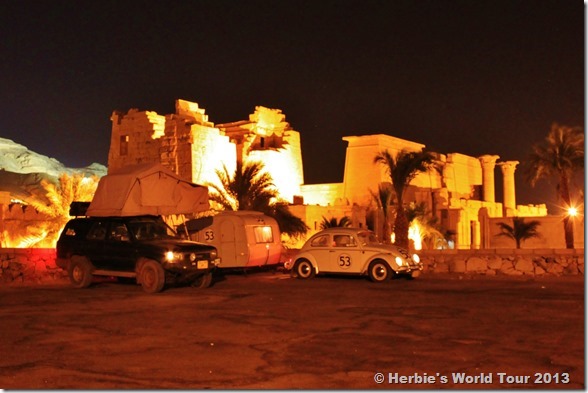
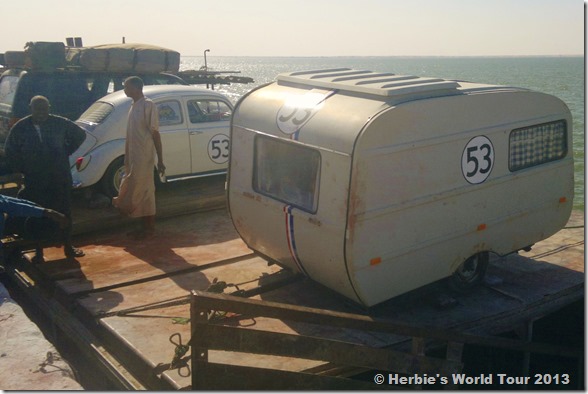
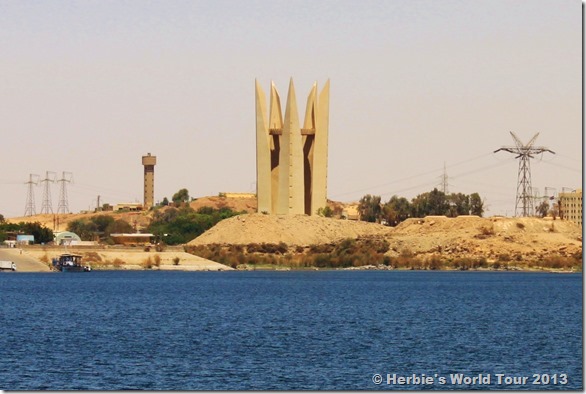
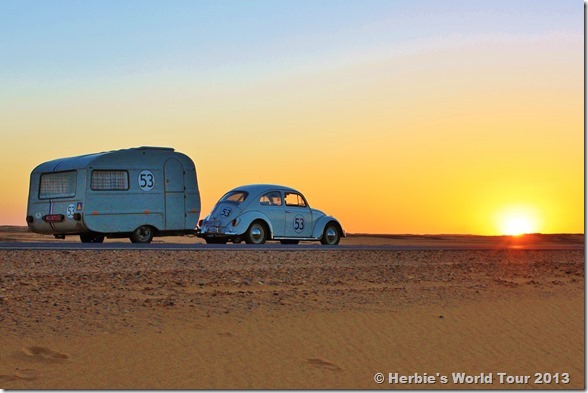
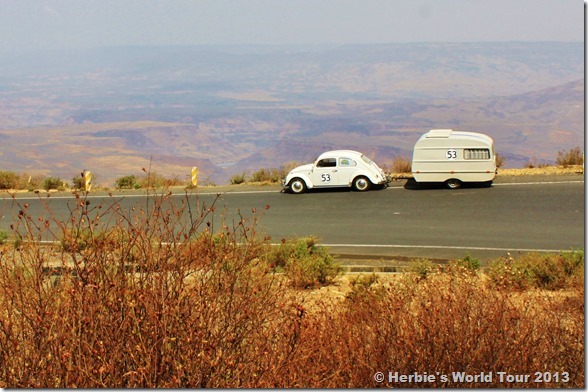
We had to cross the Bayuda as well as the Nubian Desert in order to reach the town of Wadi Halfa at Lake Nuba (or Lake Nasser) – the “gateway” to Egypt.

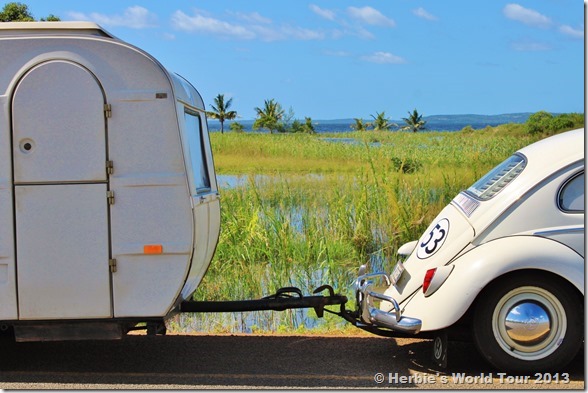
As the desert winds blew south in Sudan, we were driving only 65 km/h (or 40 mph) in third gear for hundreds and hundreds of miles across this huge country.

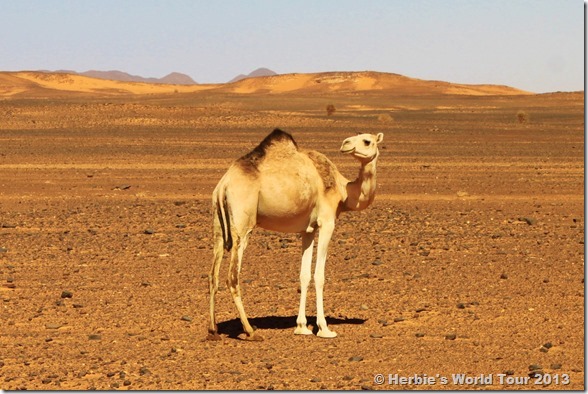
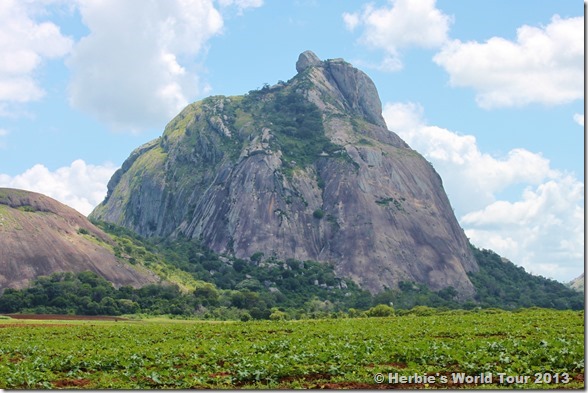
In the deserts you cannot find any life except really tough creatures like camels. And sometimes you even notice some people who make their living along the highway.

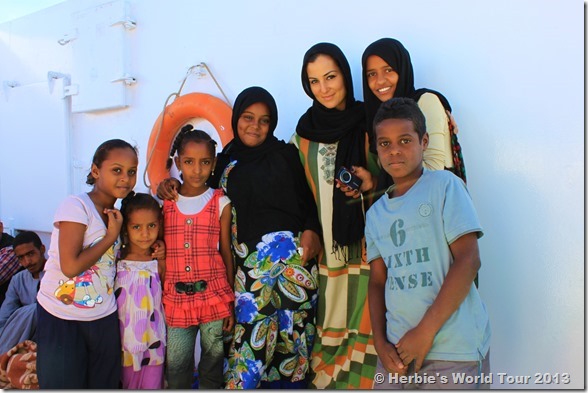
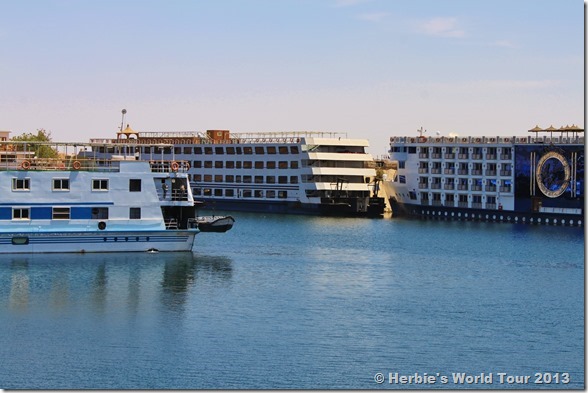
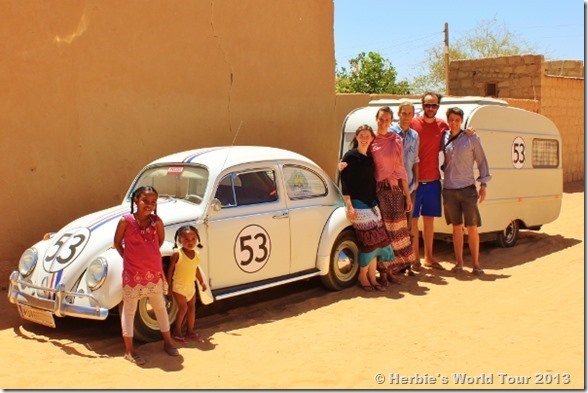
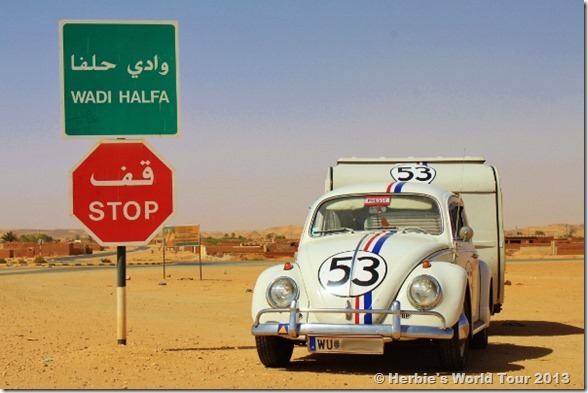
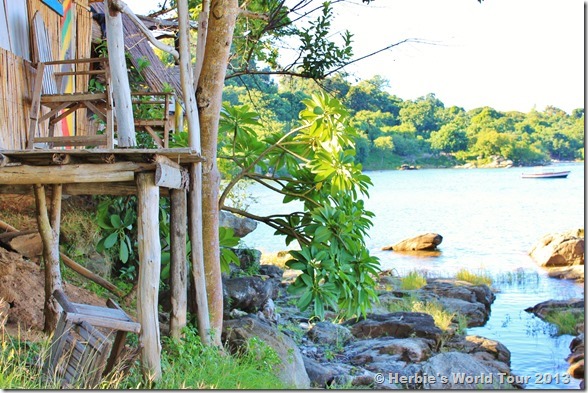
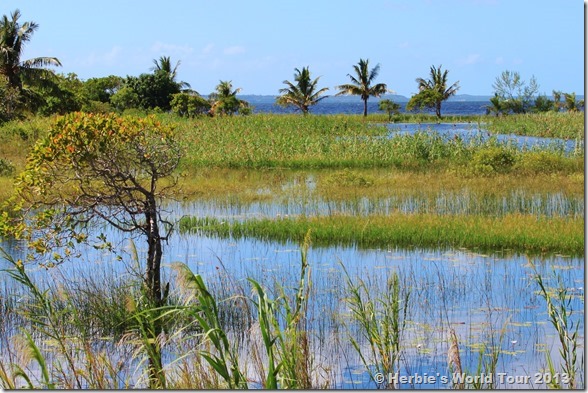
After crossing deserts and following the Nile downstream, we arrived in the Northern most town of Sudan, Wadi Halfa. From here we want to go to Egypt next.

The Ancient Sudan

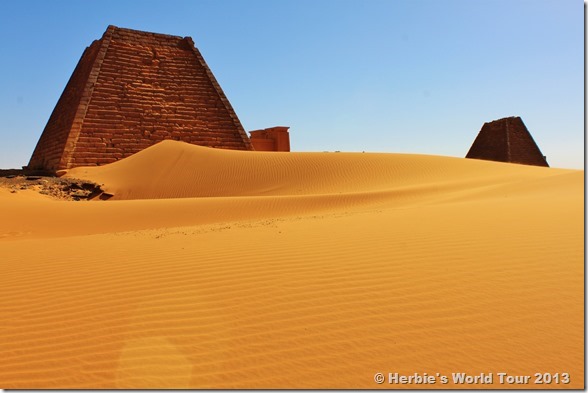
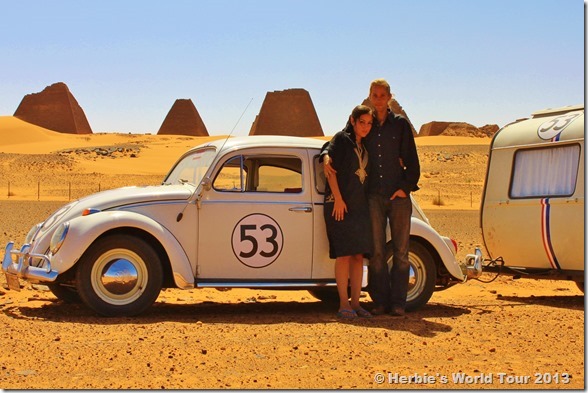
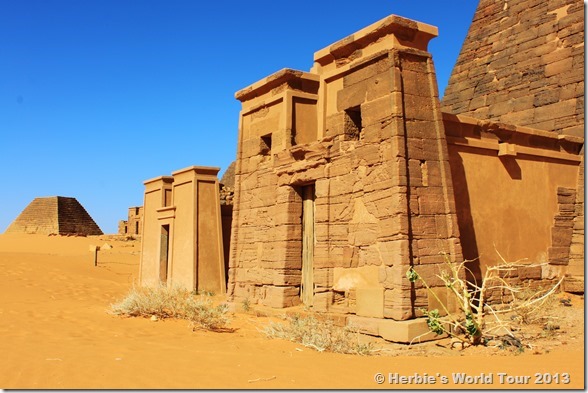
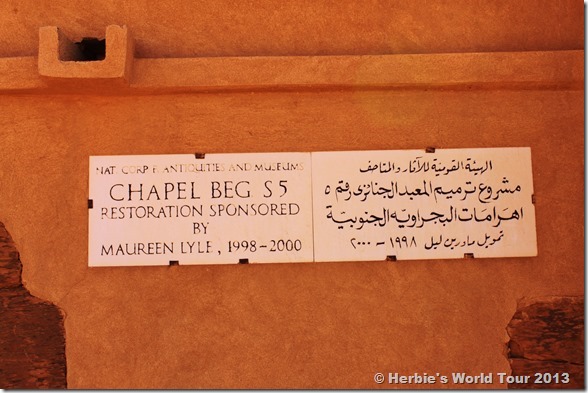
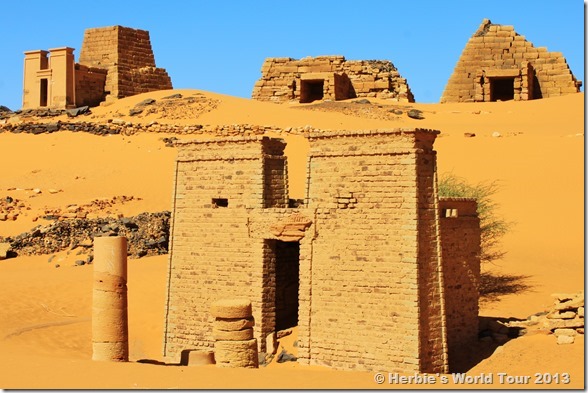
Yesterday we visited the ancient Royal Cemetery of Meroe and the Pyramids of Jebel Barkal. These are two of numerous archeological sites along the Nile in Sudan.

As we followed the Nile from Khartoum downstream, we passed a town called Shendi. Just a couple miles further up north we reached Meroe’s Royal City (or rather “Cemetery”) on the right hand side. Later on we crossed the Bayuda Desert heading west and reached Karima as well as the Pyramids of Jebel Barkal.

Crossing Ethiopia

If you’re driving on the highway noticing somebody screaming “You!” or even “You! You! You! You! You! …”, then you know, that you are in Ethiopia. Right after we crossed the border, we got to listen to kids and adults shouting stuff like that for our entire stay.

We entered Ethiopia by crossing the border at Moyale, coming from the Kenyan “Trans-East-African Highway”. The curiosity of Ethiopians can be really tiring, because they are literally everywhere. It reminded us of traveling through India.

It is weird, but interesting, that borders apparently still have such a strong influence on people’s behavior, because right after we crossed over to Sudan, we stopped on the highway for lunch and kids were passing by, just politely greeting us.

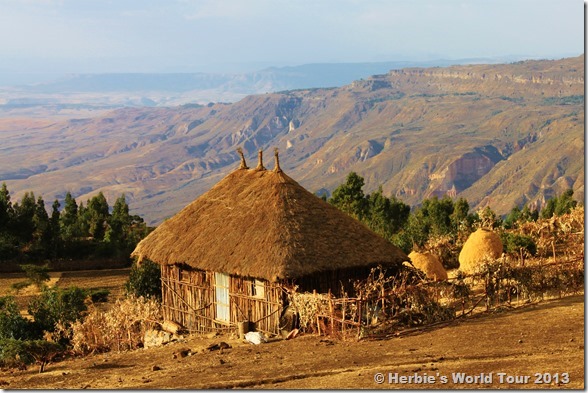
We toured across the fertile South, got our way through the chaotic capital Addis Ababa, climbed the high elevated mountain areas and eventually reached the dry North. At Metema or Gallabat we crossed the border to Sudan.

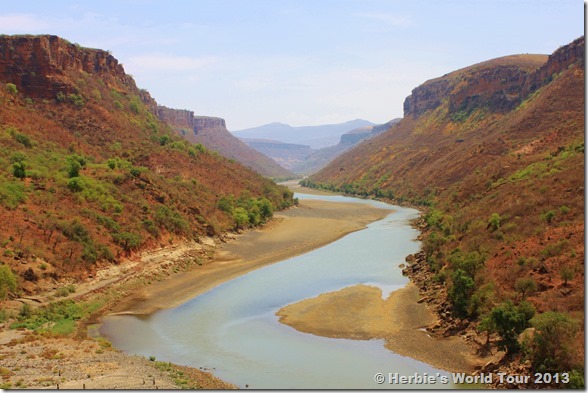
The most impressive pieces of nature in Ethiopia were probably those huge canyons. But also the green and fertile South was very nice to see. There we stocked up fruits and veg for our ongoing trip across the Sudanese desert.

The Trans-East-African Highway

On our way up north we had to manage the so-called Trans-East-African Highway which connects Kenya with Ethiopia. We definitely had to face a lot of nerve wrecking challenges. On a stretch of hundreds of miles we found every kind of road condition, you can imagine. Our destination was Moyale, the border town of Ethiopia.
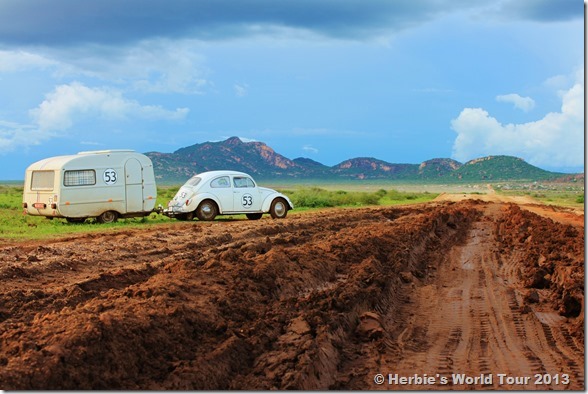
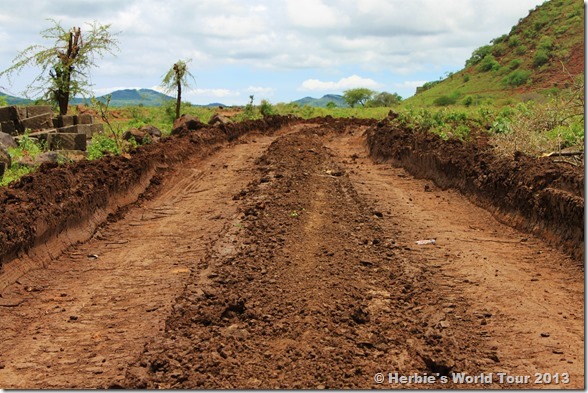
A lot of paradox things were said about this so-called “highway” and many stories were told, but only some of them are true, we believe. In fact, the Trans-East-African Highway is one of the most dangerous “streets” on the Eastern side of Africa, because of bandits and other suspicious human beings.
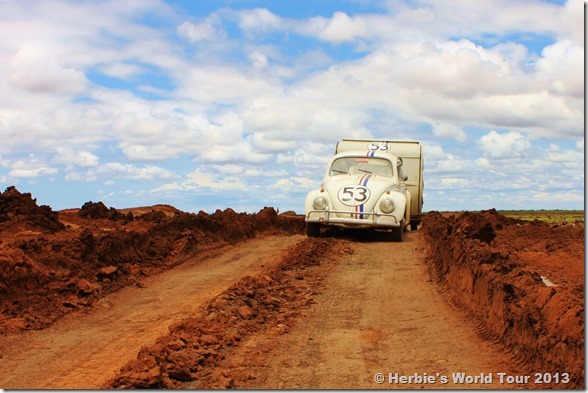
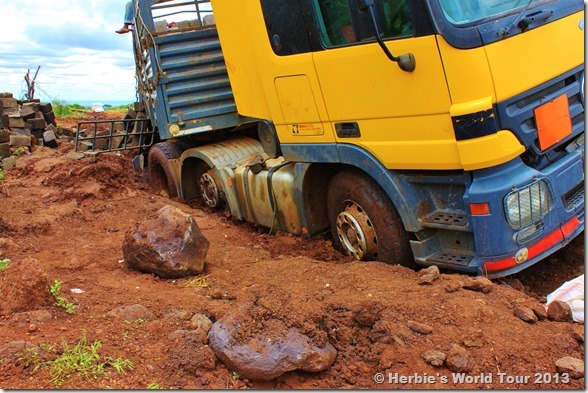
Furthermore it is for sure the toughest road along the main route across East Africa. But it should be manageable for all kinds of cars as long as you drive there during the dry season. Unluckily we hit the rainy season, which is normally only two months of the year – somewhere between March and May.
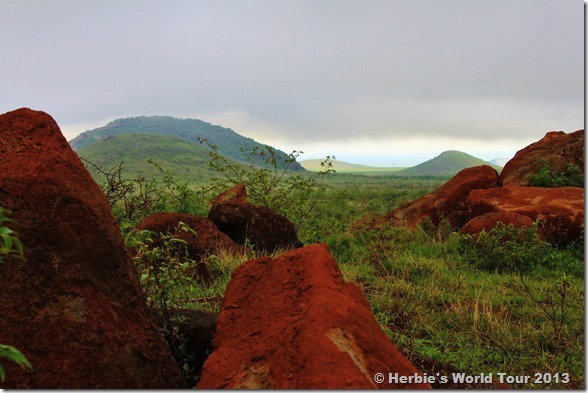
We had to literally shovel our way through, although we were already using snow chains. At this point we want to say thanks to Domi’s dad for the shovel and Friedrich, our friend and “Beetle Doctor” back home, for the snow chains! Also countless rocks as well as bushes had to be removed in order to pass.

Especially the road north of Marsabit offered one challenge after the other. It took us 24 hours of “driving” (or rather “digging”) to manage this stretch. We drove all through the night, because we were afraid that it could rain even more, as we already felt like we were in a “muddy battlefield”, not knowing if we can make it or not.

We tried to hurry, as rain would have meant to wait days until the track would dry again. Of course it was never dry at all, but Herbie conquered all the horrifying obstacles we faced. Sadly, against all odds and everything which was said, we were facing the problem of water, everywhere we went.

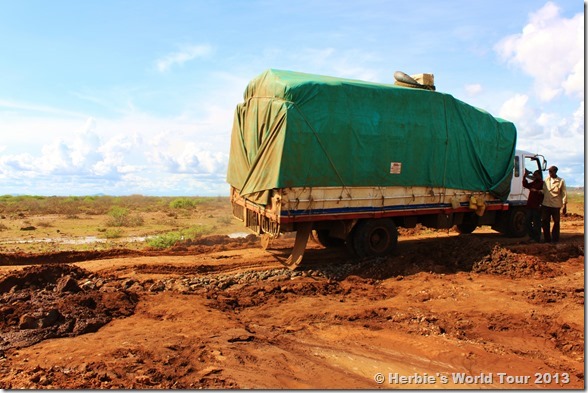
Along the way, huge trucks and even four-wheel drive vehicles (just as Land Cruisers) got stuck in the mud. One truck for example stuck for already four days, when we met the drivers who tried to unload it while the road was starting to dry out again. Almost every lorry we passed, had to be towed out of the mud.
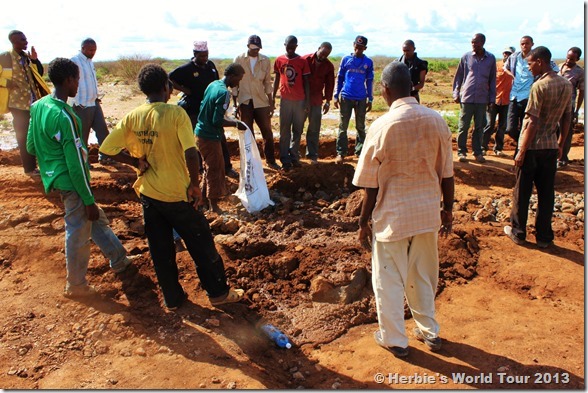
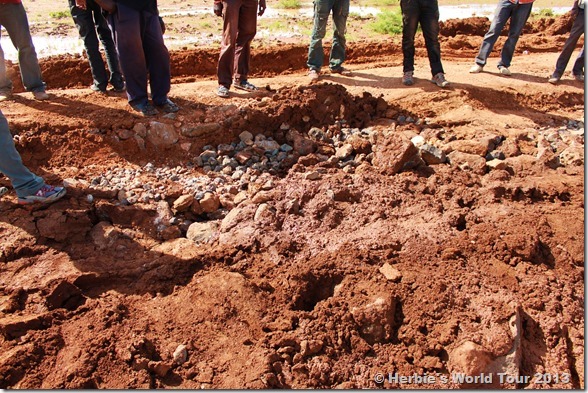
In front of every impassable looking obstacle, we had to step out of the car, searching for a little path to pass and prepare it the way Herbie could make it while pulling an anchor, our camper, through it. Unfortunately we only got pictures of those challenges while driving by day, as the more difficult ones were facing us in the night.
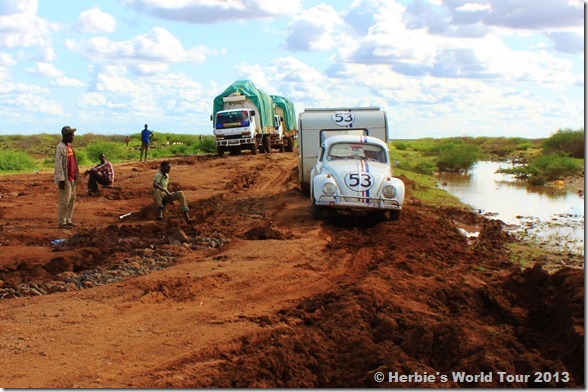
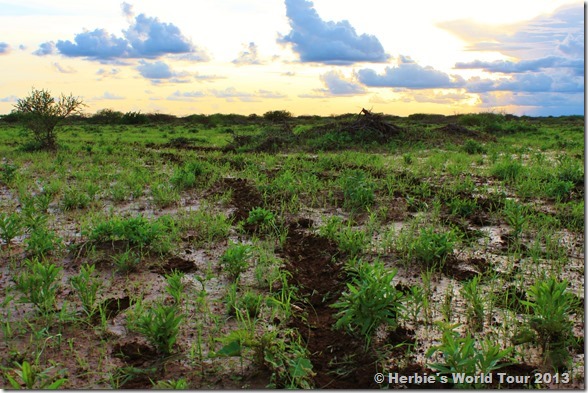
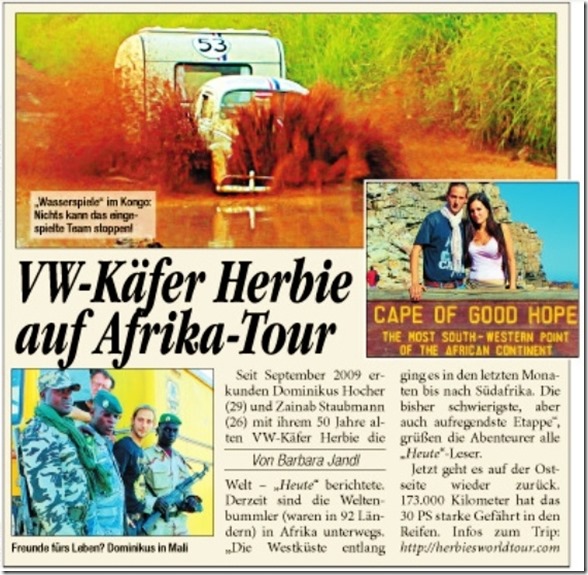
One car made it without any help of towing: Herbie! But only one tiny mistake could have led us to get stuck. What a triumph that this little car without “4×4” made it through this horrible road – and all that with a trailer in tow. Kenya joins Congo and Cameroon regarding our toughest African road experiences.
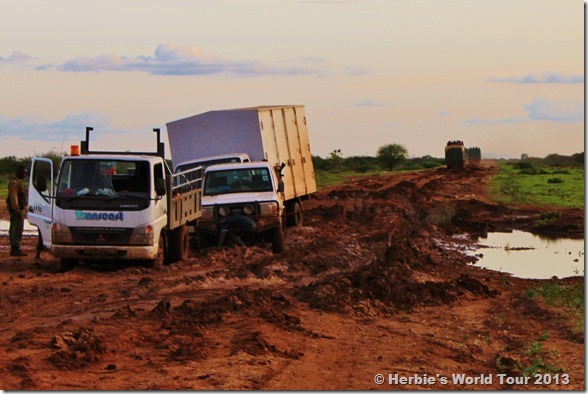
We met no single “overlander” (means a tourist traveling by car across Africa) on our way towards Moyale. But we met cyclists from Great Britain, South Africa, Ireland, China and Japan. Most of them were heading south while the Love Bug was heading back home towards Europe.

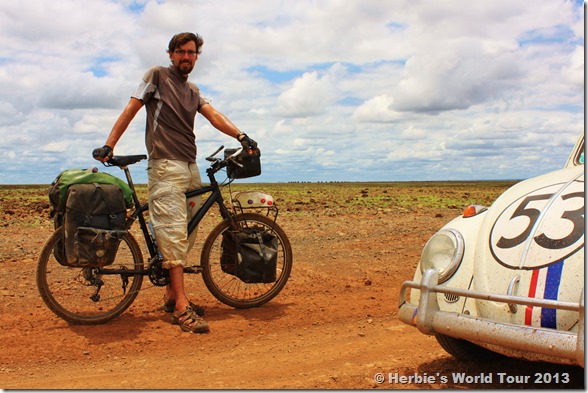
Before we were hitting the “unpaved” section of the Trans-East-African Highway, we passed the equator again, after we left Kenya’s capital, Nairobi, where we met a guy named Chris from the UK “overlanding” by a BMW car and Anton from South Africa, who travels Africa on his motorbike.
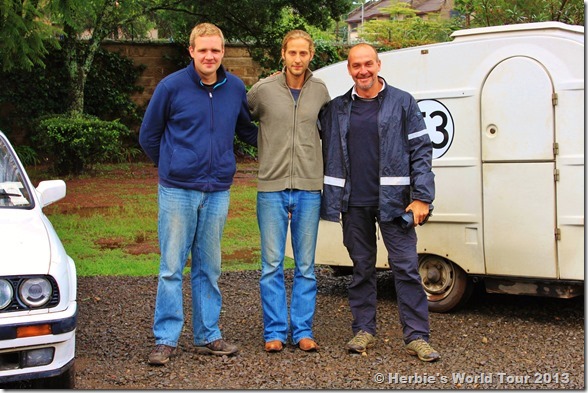
In Marsabit we spent the night at “Camp Henry”, fearing possible showers during the night, making road conditions even worse. But we were lucky, there was only a bit of rain in the morning, just before we started continuing the Trans-East-African Highway across Kenya’s vast and remote North.

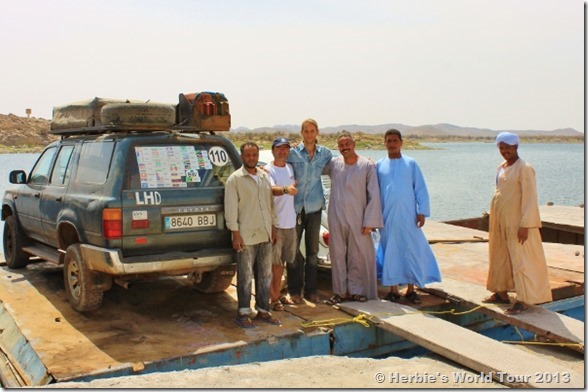
Visiting the Kitatu Family

From the Kenyan coast we headed inland towards Nairobi, after passing through Mombasa via the Likoni ferry. Just a couple miles off the main highway we got to Kajire Village, where we visited the family of our dear friend Micah Mbogho Kitatu aka “Mike”.

We spent the entire Saturday afternoon and evening as well as Sunday morning sitting together with Mike, his lovely wife Loyce as well as their kids, Brenda, Jane and Benjamin (from left to right), chatting and looking through photo albums.

Domi got to know “Mike” on a vacation at Kenya’s Diani Beach in 2002. Before Herbie’s World Tour, in winter 2008, Domi invited him to Austria. Together with our families we celebrated Christmas and New Year’s Eve with our friend from Africa.

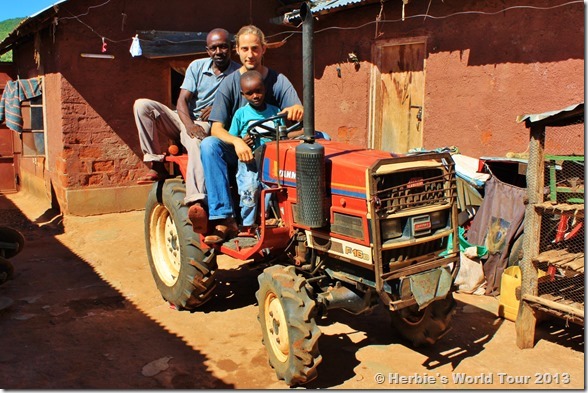
Since Domi got to know “Mike”, he has always been trying to support him. Thanks to Domi’s family, Micah owns now a little tractor, which helps him to make a living for the entire family. We’re still looking forward to welcoming Micah in Austria again!

Below you can see some pictures of Micah’s three weeks stay in Austria in 2008/09. There he also got to know snow for his very first time, even though he saw it already on the Kilimanjaro from a very far distance at his house in Kajire Village.

Yesterday we arrived in Nairobi, where we stayed at “Jungle Junction” (or “J-J’s”) for the night – a famous place for backpacker’s and overlander’s. Today we’ll head further up north, passing Mount Kenya and hitting the so-called “Trans-East-African Highway”, known to be the most dangerous and challenging stretch of “road” in East Africa and only connecting route to Ethiopia with hundreds of unpaved miles.

Kenya’s Indian Ocean

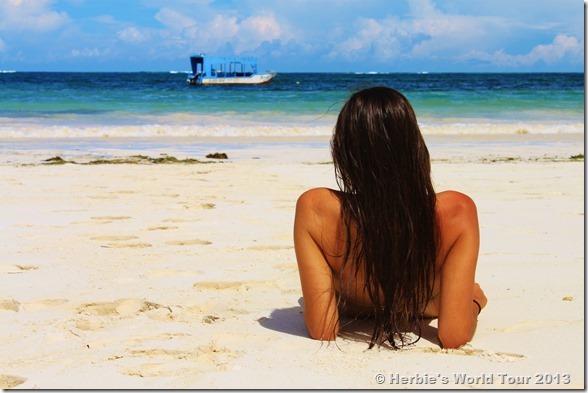
Since we arrived at Kenya’s coast, we’ve been enjoying the warm Indian Ocean at Diani Beach, close to a town called Ukunda in the Southeast of the country. In 2001, Domi already spent a summer vacation here for three weeks.

Tomorrow we’ll pass Mombasa and drive to Kajire Village to visit our good old friend, Micah Mbogho Kitatu. After that we’re going to head further inland to Nairobi.

Abel from Tanzania

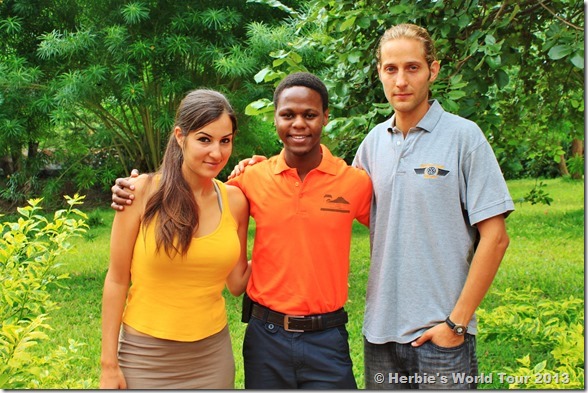
A couple days ago we stopped by in Kitonga, Tanzania. We asked at the “Starcom Kitonga Comfort Hotel” if it is possible to park there for the night. They answer was “yes” and its director, Abel H. Vegula, even invited us for coffee and internet.

We spent with him the whole evening chatting about all different kinds of things. It was a real pleasure to get to know Abel. Next year he’ll hopefully come to Europe – to Switzerland for his studies and to Austria to follow our invitation.

The Mikumi National Park

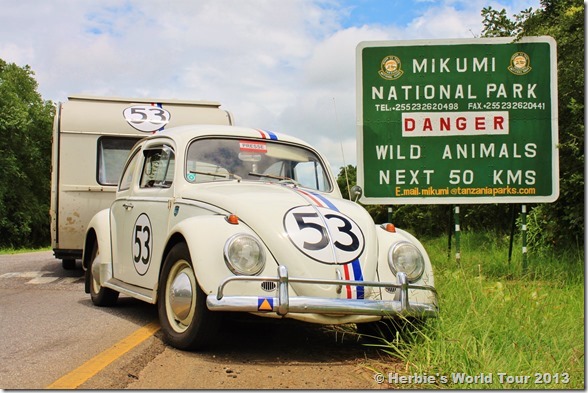
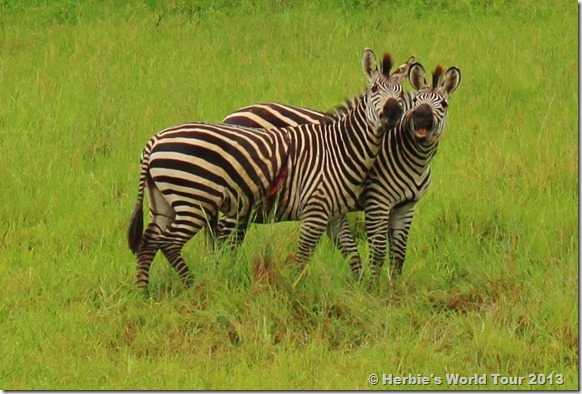
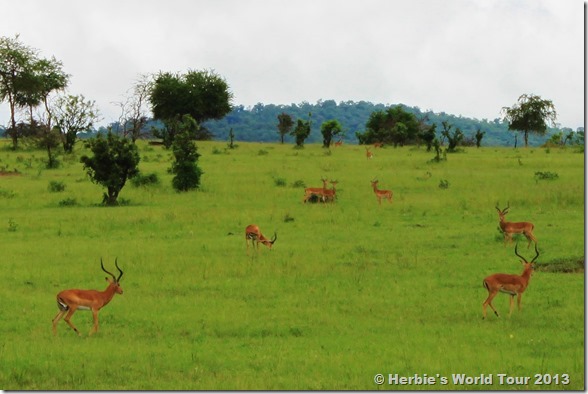
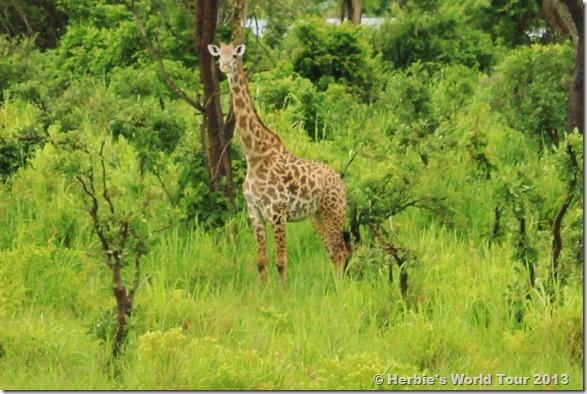
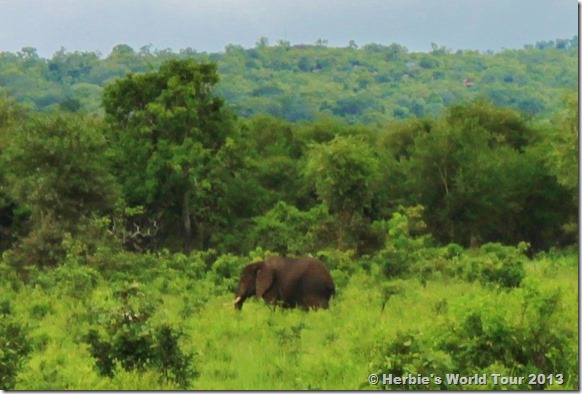
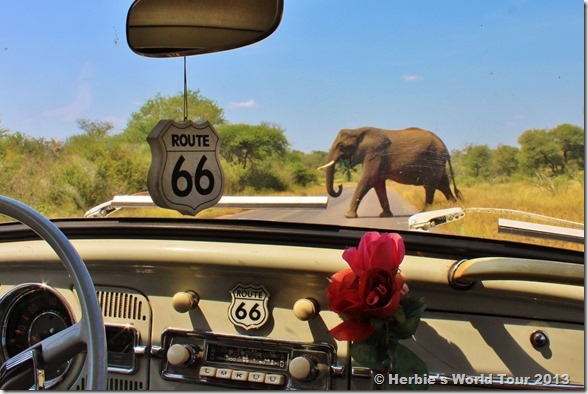
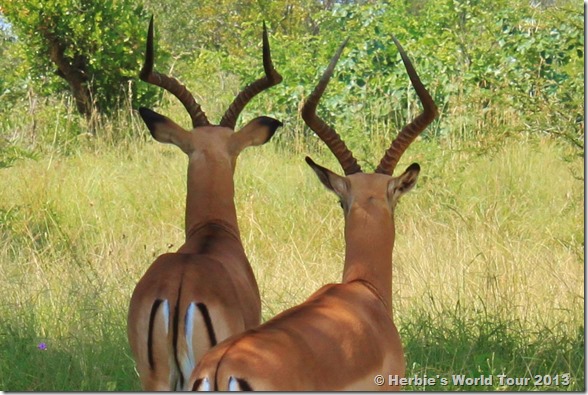
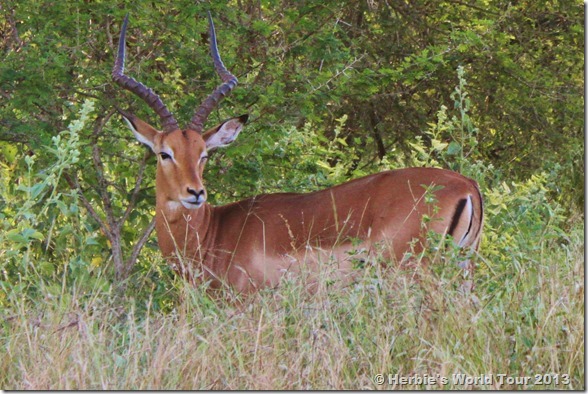
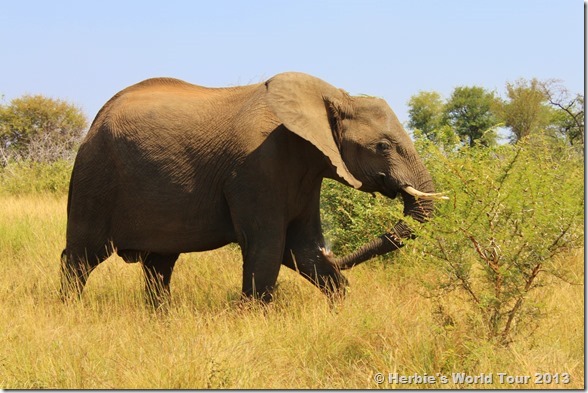
On our way heading through Tanzania, we got the chance to visit the Mikumi National Park. Although we had very bad weather with heavy showers while traveling this country, we were satisfied to spot again so many animals.

Austrians take on the World!

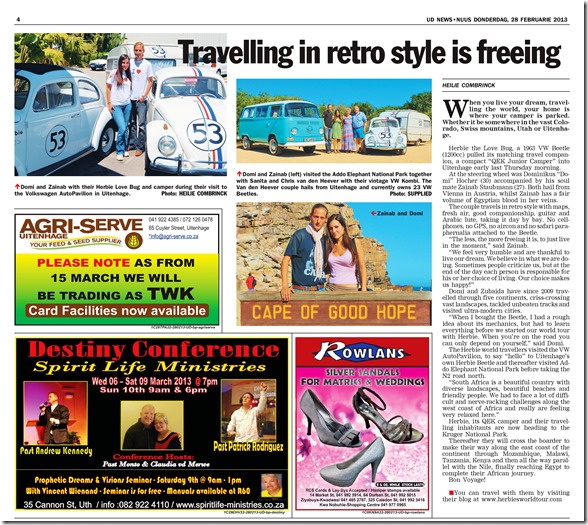
Last week a South African newspaper called “Rekord East” published a story on our trip. The article was written by Ané Roux, who we met while staying in Pretoria.


Correction on this: India was not the most impressive country we’ve visited, but it definitely had one of the most horrible traffic we’ve ever faced. And Herbie’s World Tour started out in September 2009 – so we are on the road since more than three years.

Entering Tanzania

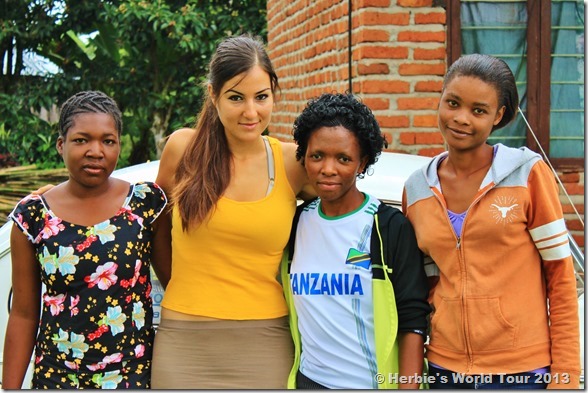
After we left Malawi and its homonymous lake, we entered the United Republic of Tanzania. There we stayed at a campsite in Tukuyu, managed by a local charity organization that provides free education to young people.

Back on the road we spotted two Volkswagen Beetles, sitting next to the street. Today we reached Kitonga and tomorrow we’ll be heading further east towards the coast in order to eventually cross the border to Kenya besides the Indian Ocean.

The Lake Malawi

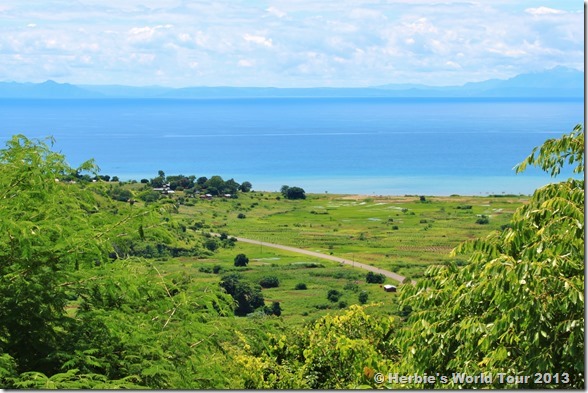
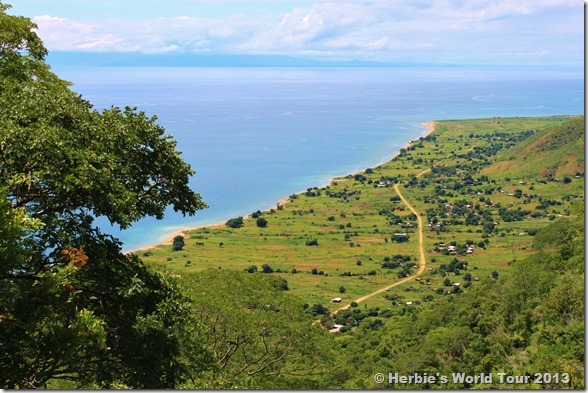
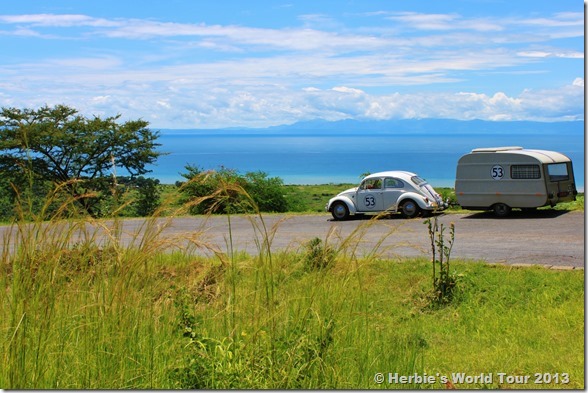
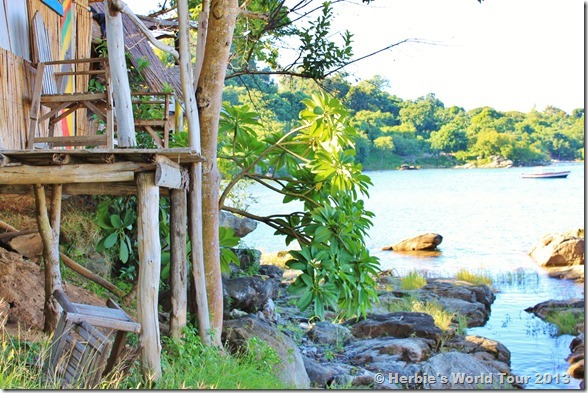
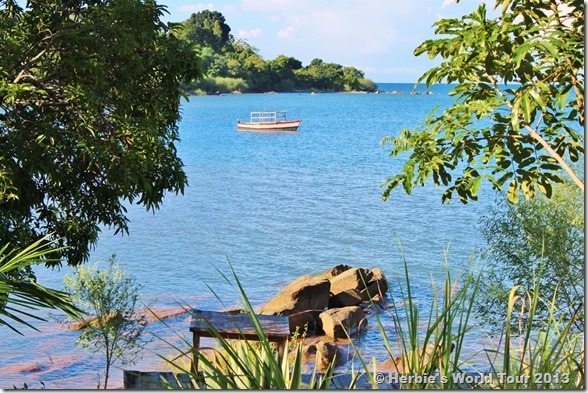
Herbie is almost driving alone on Malawi’s lakeside roads – maybe as gas prices are pretty outrageous compared to what people are able to earn for their living. Today we stopped by Nkhata Bay, staying for a little while at “Big Blue Star Backpackers”.

The Republic of Mozambique

Another country where we had to freshen our poor Portuguese, that we learned while staying in Angola, was Mozambique. We entered that beautiful country coming from the Kruger National Park passing Maputo, its capital, and heading north to Malawi.

Mozambique offers gorgeous beaches, friendly people as well as a clean environment. As long as you stay on the main route, the street conditions are pretty okay, except those countless potholes on some highway stretches, especially towards Malawi.

The Kruger National Park

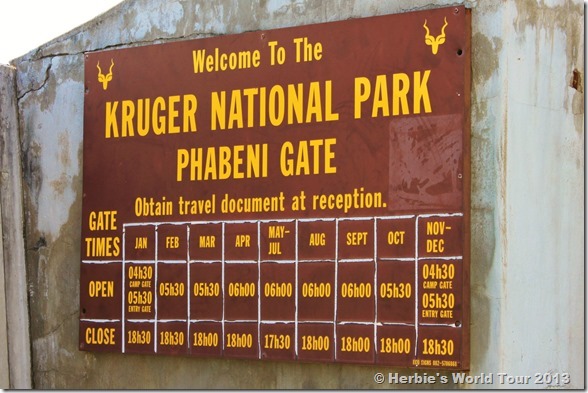
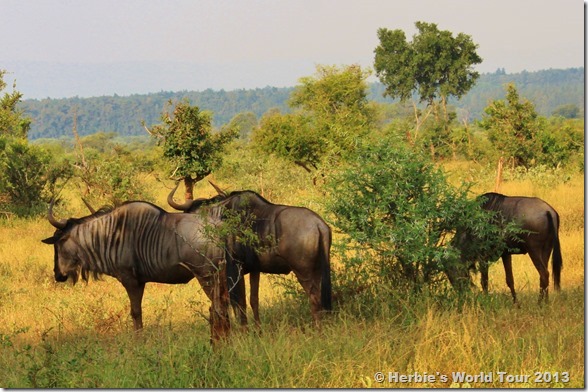
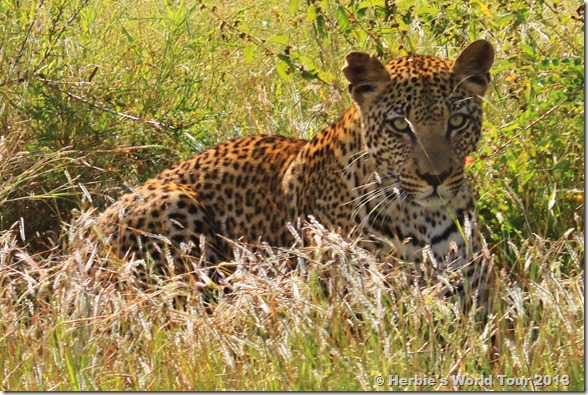
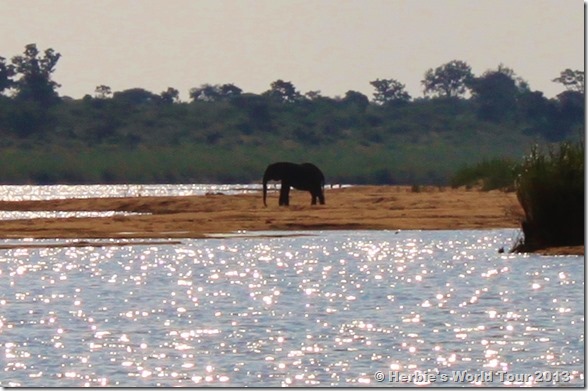
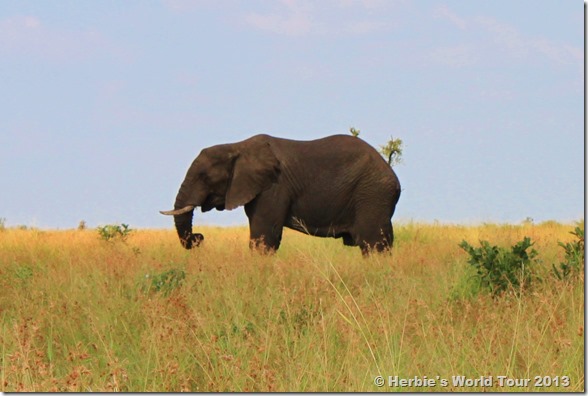
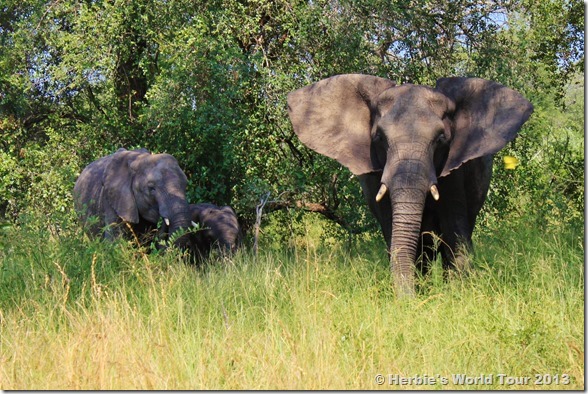
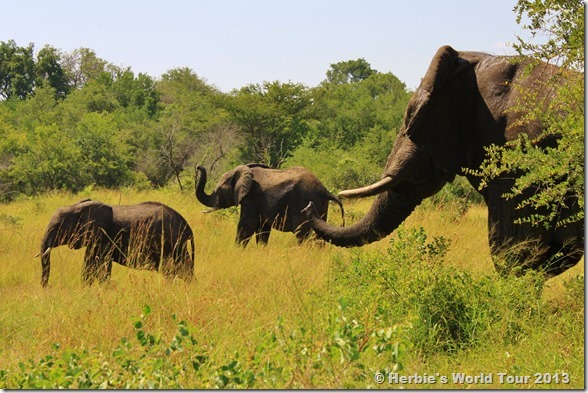
Before we crossed the border to Mozambique, we visited the Kruger National Park in South Africa. After spending an entire day driving through the park and spotting all kinds of animals, we stayed for the night at the campsite of “Crocodile Bridge”.

South Africa was a welcome break from touring the rest of this continent. We really enjoyed traveling through here. And the Kruger National Park was just another piece of nature we love so much. We were very excited to discover all these exotic animals.

Heading Back North!

Today we left Pretoria for good, after spending precious time there, and headed to Sabie, a town quite close to the Kruger National Park, we want to visit tomorrow. After that we’ll cross the border to Mozambique, traveling north again.

For the next several weeks we’ll be touring across Africa all the way towards Egypt, from where we want to take a ferry to Turkey in order to drive back to Europe as well as Austria, which we call home. Follow Herbie tripping back north!

Saint Patrick’s Day at Kyalami

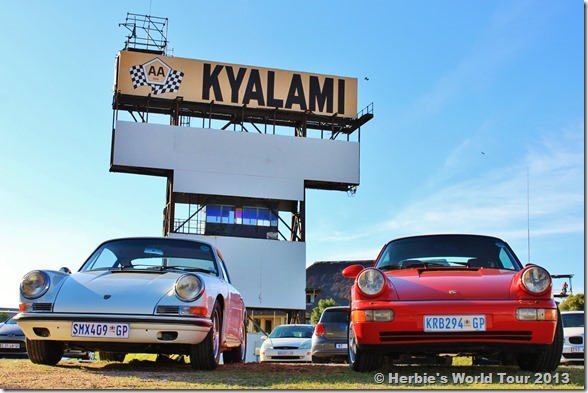
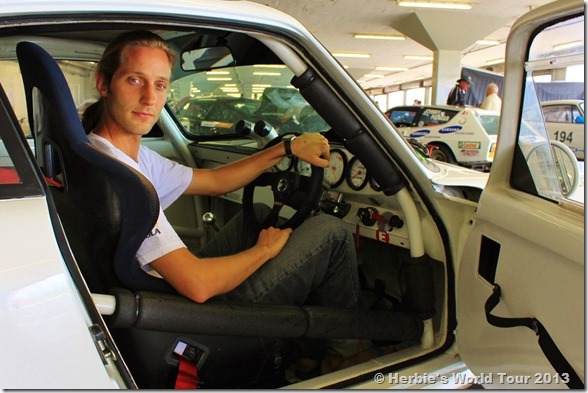
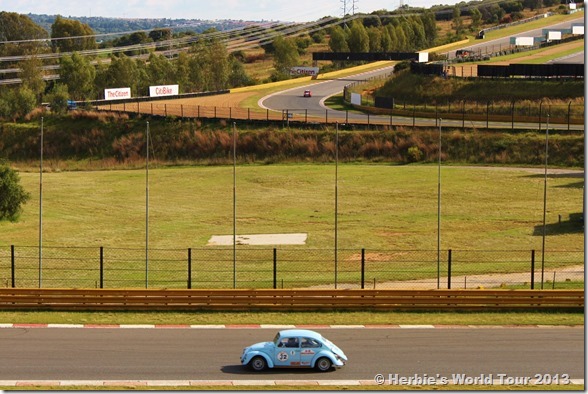
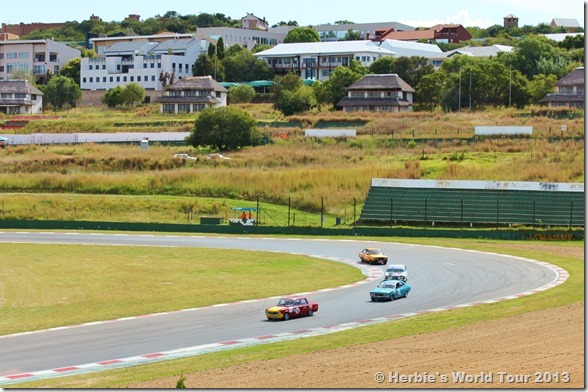
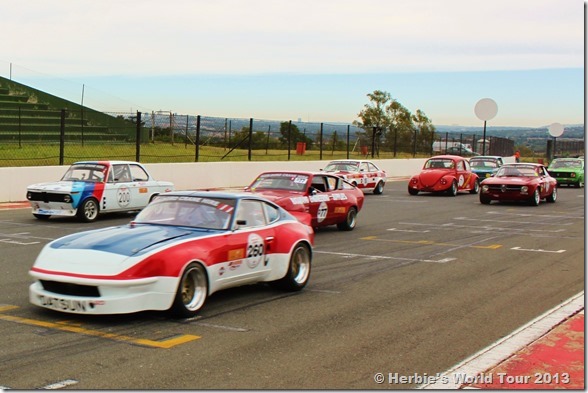
Domi spent Saint Patrick’s Day with our friend Wernher and his father Ludwig Hartzenberg at the former Formula One track of Kyalami, close by Johannesburg, watching a classic car race. They got there by driving two of their Porsches.

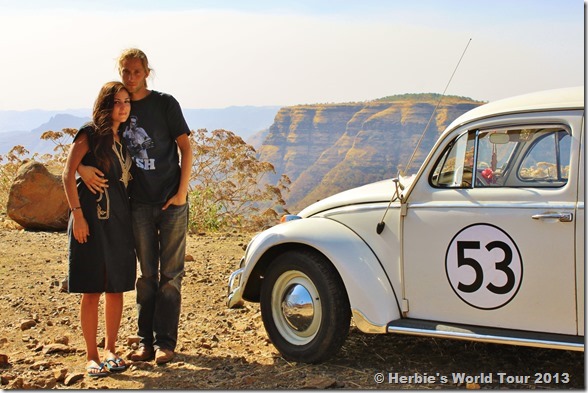
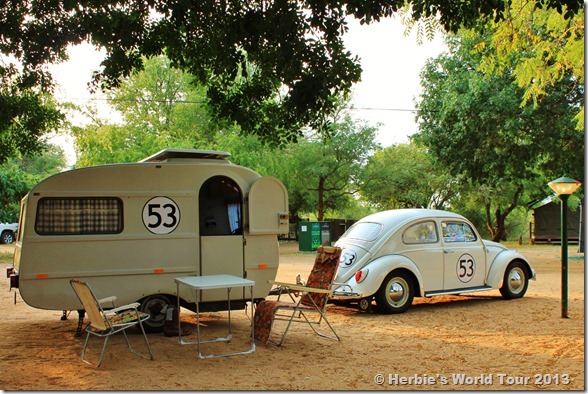
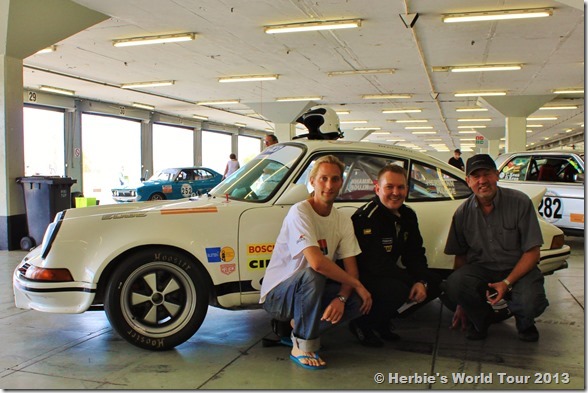
At Kyalami you can even walk into the pit stops, meeting the race cars as well as its drivers, just as Hermann Kluge with his Porsche (see below). Honoring the number “53”, also two Volkswagen Beetles were taking their chance on the track.

Herbie’s Drive-In Addiction

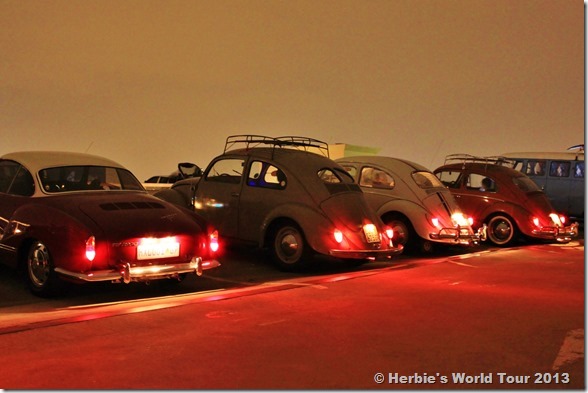
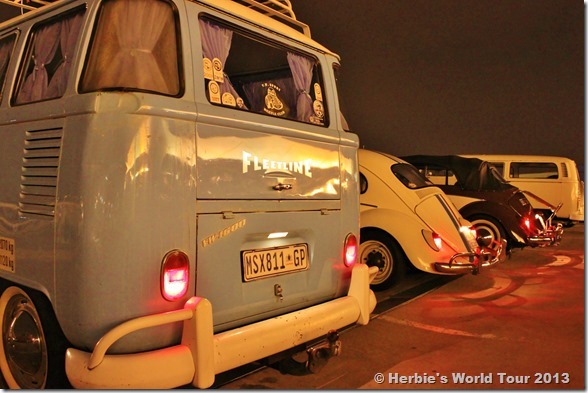
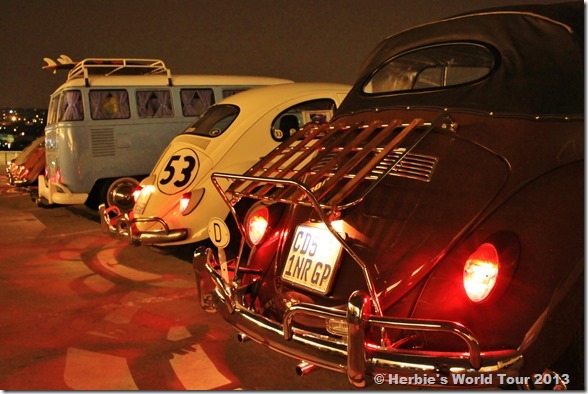
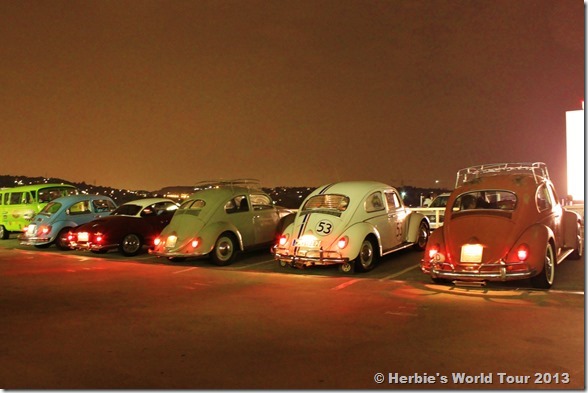
The other day we gathered at Menlyn’s drive-in again, watching a movie, having dinner at one of those picnic tables, where others even had a so-called “braai” (barbecue). We also enjoyed that incredible view over the city and Herbie felt pretty awesome, meeting all the air-cooled friends from Pretoria’s Jacaranda Beetle Club.

Detour via Switzerland

As the Ethiopian embassy in Pretoria was not willing to issue visas to Austrians, we had to send our passports all the way to Geneva, Switzerland, where we finally got our visas from the Ethiopian embassy there. It just took six days all in all!

Last week we could get the visas for Malawi at its consulate in Johannesburg and for Sudan in Pretoria. Now, as we got also the Ethiopian one done, we are eventually ready to continue Herbie’s World Tour heading further north.
At this point we want to thank the Ethiopian embassy and its team in Geneva, Switzerland, to assist us by issuing our visas without any red tape! And we want to thank the Hartzenberg family for their kind South African hospitality!

On Monday we’ll take off again! Our next destination is the Kruger National Park, before we’ll cross the border to Mozambique in order to travel north, driving across the African continent on its eastern side – about 10,000 kilometers all the way to Egypt.
Meeting Motorsport Legends

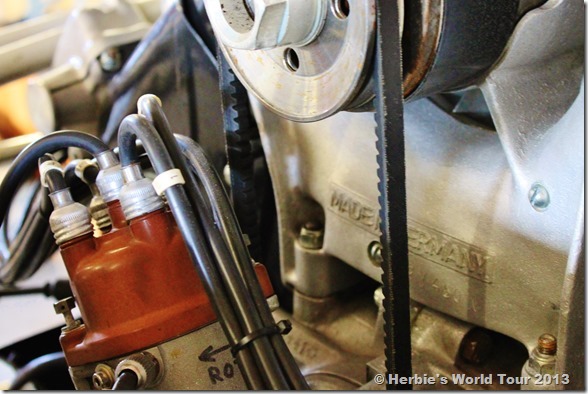
Thanks to our Pretorian friend Wernher Hartzenberg, Domi got the chance to get to know real motorsport legends as well as very rare Porsches and engines.
From left to right: Our host Wernher Hartzenberg, collector Clive Winterstein, engine genius Andrew Thompson as well as former Formula One team chief mechanic Alastair and his father and South African motorsports mechanic legend Al Gibson.

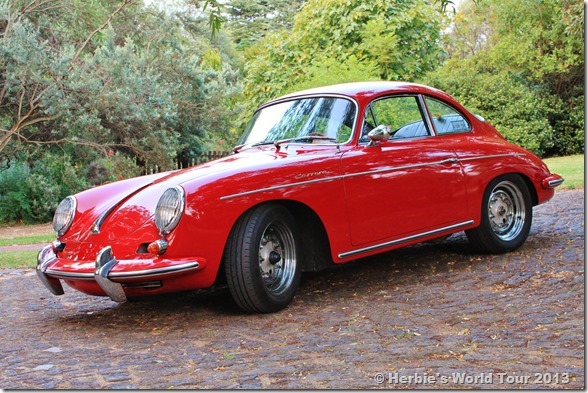
A pretty valuable Porsche 356 A Carrera from 1963 powered by an air-cooled four-cam engine, owned by Clive Winterstein, a famous collector from Johannesburg.

Many moons ago, Sir Al Gibson used to work on these cars, while he was in motorsports. Therefore, Clive Winterstein was so kind to take the 92 years old man for a ride.

Further down you can see a Porsche Elva from 1965, on which Mr. Al Gibson worked back in the days, when he was working for the South African motorsports.

Al’s son, Alastair Gibson, was team chief mechanic of the Austrian Formula One driver, Gerhard Berger. Domi really enjoyed to listen to Alastair’s stories about that.

Nowadays, Alastair Gibson is an internationally distinguished artist and forerunner in carbon fiber sculpture “made of” Formula One. Find out more at “Carbon Art 45”!

Andrew Thompson and  his idol, Al Gibson, are true experts regarding motorsport cars. Both have been working on these cars, like the Porsche Elva, ever since.

Those Cars On The Plot

Today we went to a car show called “Cars On The Plot” in Montana, Pretoria.

This perfectly arranged event was organized by the Datsun Club of Pretoria. Domi went there together with our friend and host Wernher Hartzenberg (left), his father Ludwig (right) as well as the “air-cooled legend”, Werner Alker.

Domi also met Michele and Hennie Coetzee, who are very devoted followers of Herbie’s World Tour. They even gave us these amazing presents including a lovely personal letter. Many thanks, Michele and Hennie, for all of that!

The Roof Top Drive-In

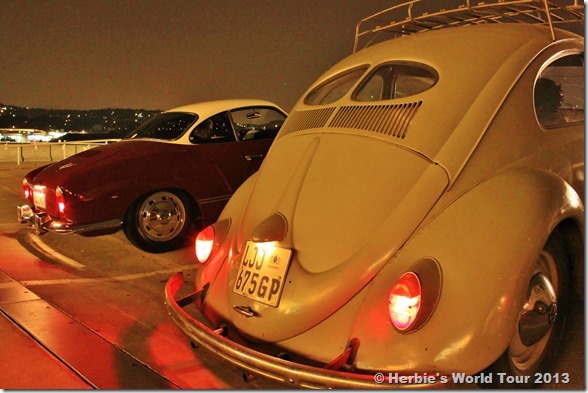
Yesterday, our South African host Wernher Hartzenberg and his girlfriend Chantelle invited us to the drive-in theater on the top of this huge Menlyn Park Mall in Pretoria.

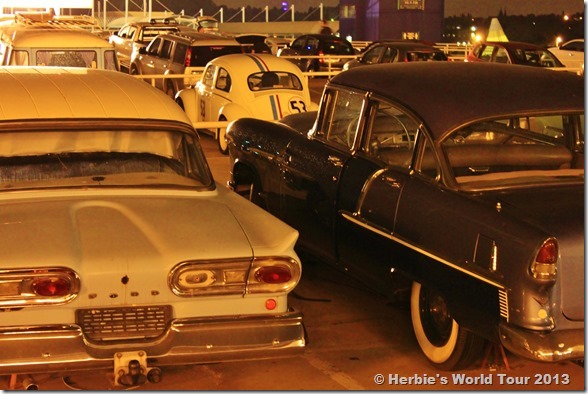
Overlooking the city there we were: Wernher’s friend, Tyrone Morris and his wife with their two kids in a Volkswagen Kombi from 1969, Wernher and Chantelle in a VW Cabriolet and of course Herbie, the Love Bug, who came all the way from Austria.

We definitely spent a fantastic evening, sitting in our beloved Herbie, watching one of those romantic movies and  listening to that through our vintage Blaupunkt radio.

Hugo Chávez Passed Away

Last year we visited Venezuela, the country of its so-called president and “el comandante” Hugo Chávez, who passed away yesterday, after a long fight against cancer.

We have real good memories traveling through Venezuela, where we (for example) never had to worry about gas prices while filling up Herbie at the pump, because they wouldn’t charge us the three cents per gallon.

Unfortunately we weren’t able to meet Hugo Chávez, although we met Evo Morales, the president of Bolivia and probably one of his closest allied friends within South America. We had the chance personally “meeting Mr. President” of Bolivia.

Simply Werner!

As posted here before, we got to know Werner Alker, the air-cooled Volkswagen genius of South Africa, we’d like to call him. Anyway he invited Domi to his legendary place.

In 1964, Werner came to South Africa, working for the Volkswagen company back then. He has a true passion about the uniqueness of air-cooled VWs, even though he’s always been trying to improve things, Volkswagen obviously made wrong.

Werner Alker is a very, very special character, although he calls himself “simply Werner”. We also met Werner’s wife, Louise. Both are sharing their love for these cars.

The Gas Boys

We were already almost running out of gas, when we entered South Africa. Therefore we tried to get our bottle refilled, when we stayed with “Arnize” in Mossel Bay, Western Cape. But as our stove including its bottle is related to the European system, it has a completely different fitting than the Southern African ones.

Nobody could help us back then, though the shops had all different kinds of fittings. But Arno and Elize were so kind to borrow us their little gas bottle stove.

Domi visited the “VW genius”, Werner Alker, the other day. A friend of him named Bernd was there too and he came up with the perfect tool – a suitable conversion fitting.

And it worked out! Domi and our host Wernher Hartzenberg went to “the Gas Boys” (a local gas refilling station) together, where they finally got our European bottle refilled.