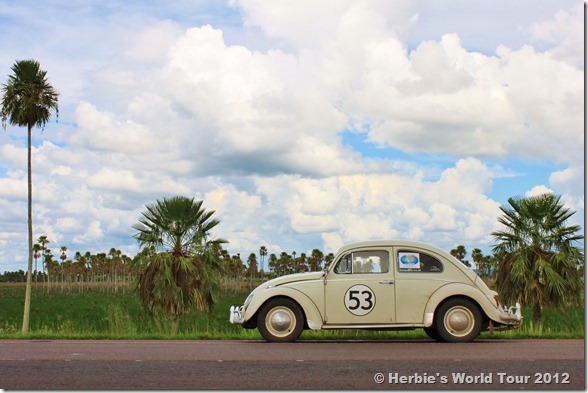
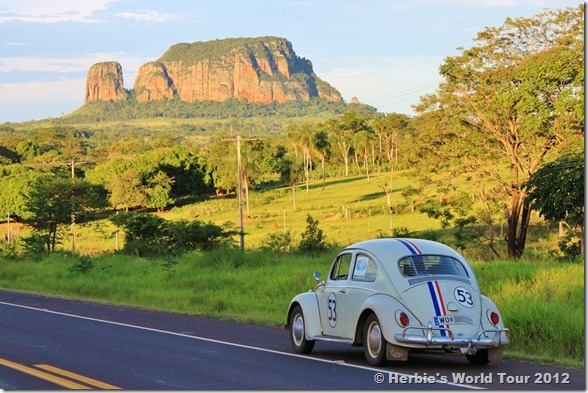
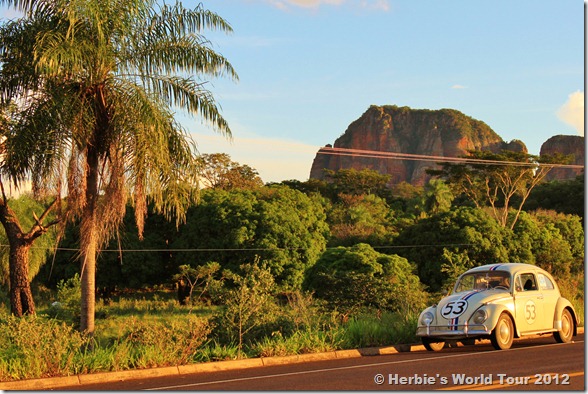
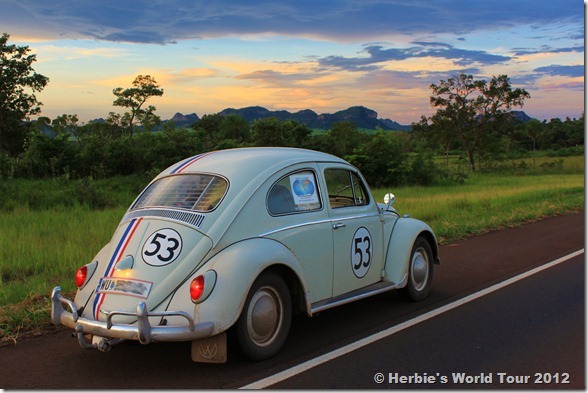
Long Way Back Home

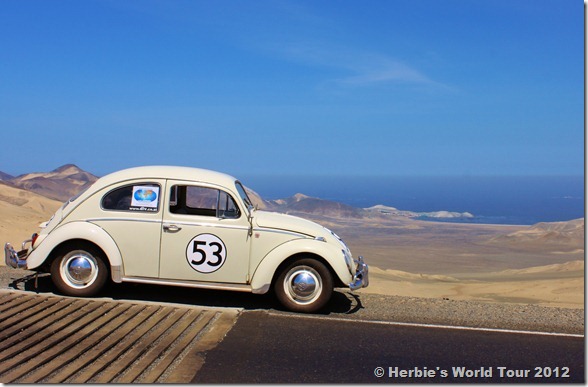
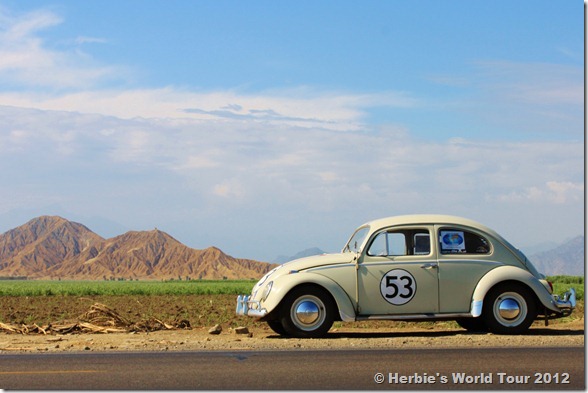
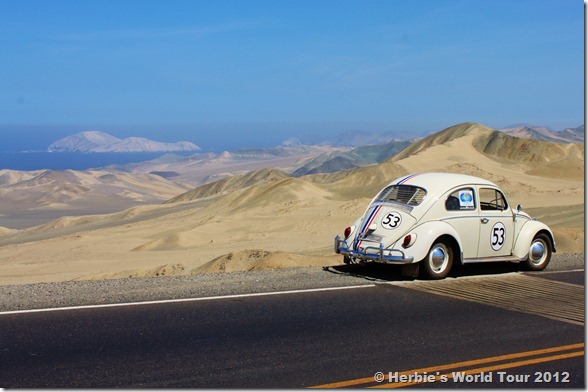
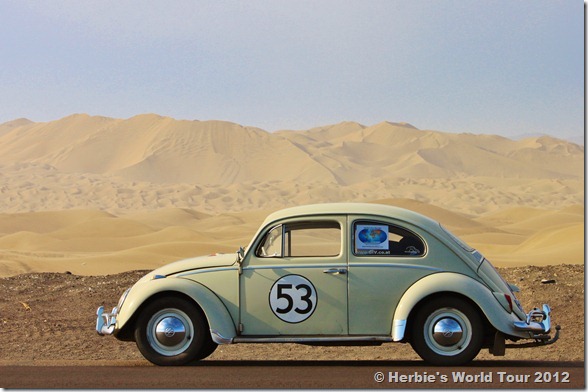
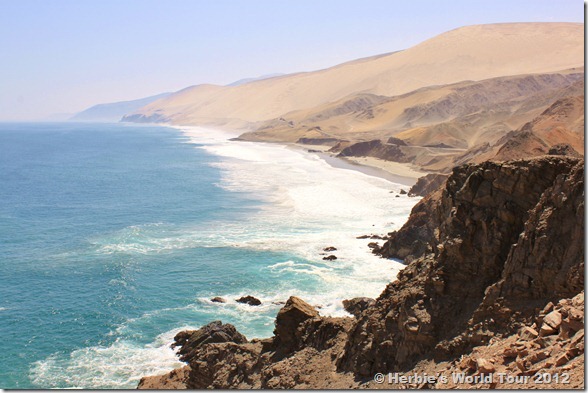
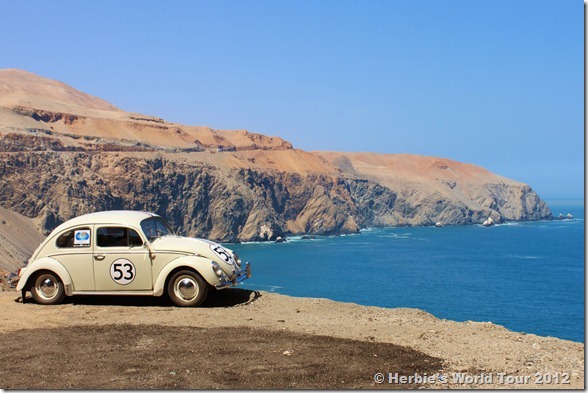
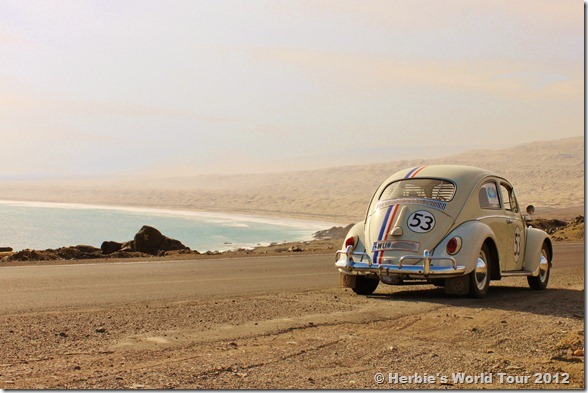
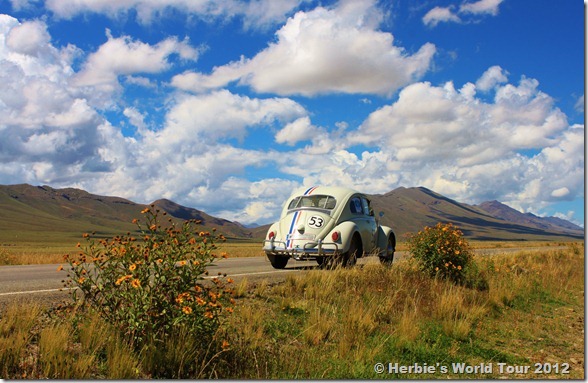
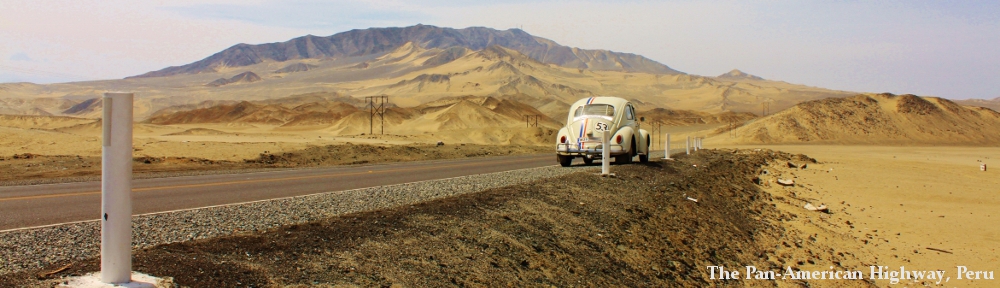
Herbie continued riding the longest road on earth, the Pan-American Highway, heading further north on Peru’s Highway No. 1. We passed cities like Chimbote, Trujillo and Chiclayo. Lambayeque is the name of the town where we stopped for the night.

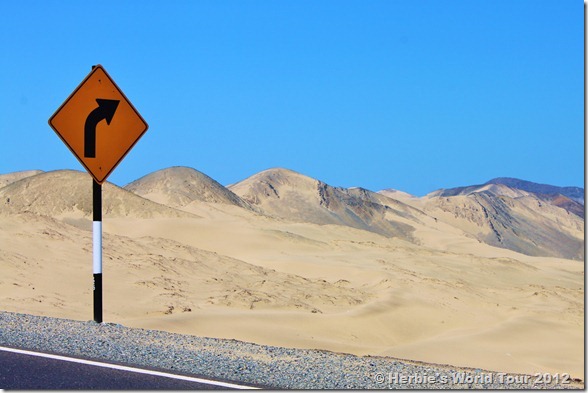
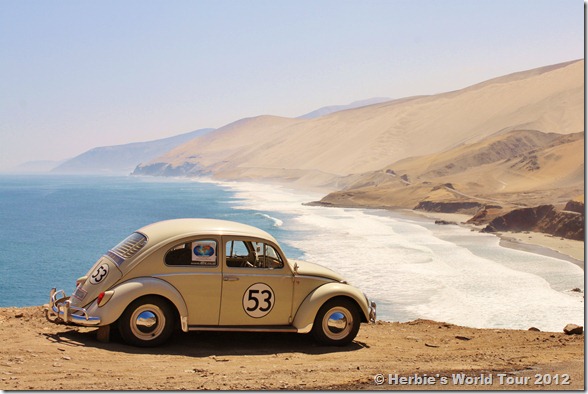
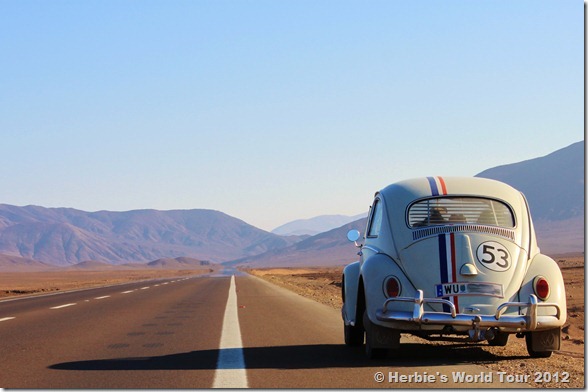
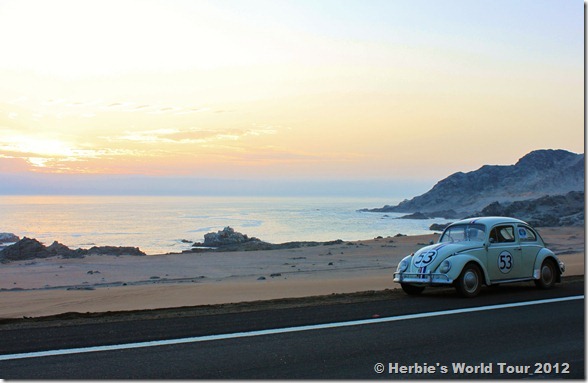
The “Pan-Am” along Peru’s coast is full of sand dunes and amazing ocean views.

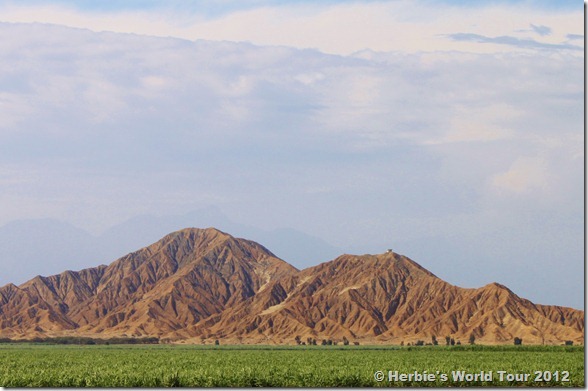
Whenever you hit a smaller town it is like a kind of oasis with woods and agriculture.

In no other South American country we had so many “police check points”.

Tomorrow we’ll go further north getting very close to the border of Ecuador.

Hands Upon The Wheel

Our final destination after South America will be the Mojave Desert in the Southwest of the United States. We are not there yet, even though the landscape of Peru’s coast looks quite similar to the area around Herbie’s camp in Ridgecrest, Kern County, CA.

Today we were following the “Pan-Am” from Ica to Huarmey. On our way up north we were going through the heart of Lima again, the capital of Peru right on the coast.

We stopped for lunch under a date palm tree, having our favorite, of course “home made”, salad. Unfortunately it isn’t the time for harvesting dates, so we had no dessert.

Tomorrow we’ll drive further up on the road right besides the Pacific ocean, passing Chimbote and Trujillo towards Ecuador, which we enjoyed very much last time.

The Peruvian Dune Buggy

After catching up with new post on Herbie’s World Tour, checking the motor oil level and tire pressure, we hit the Pan-American Highway again. We left Camaná, heading north and passed Nazca and its desert and stopped for the night in Ica.

Peru’s coastal desert dunes and the Pacific ocean welcomed us once again.

In the afternoon we reached the Nazca Desert with its ancient Lines.

Tomorrow we’ll continue traveling north along the so-called “Panamericana”.

We’re planning to put Herbie on a vessel going back to North America in May.

After Peru we’ll still journey to Ecuador, Colombia and maybe Venezuela.

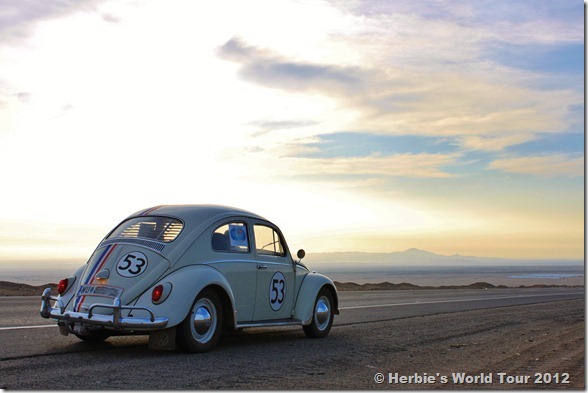
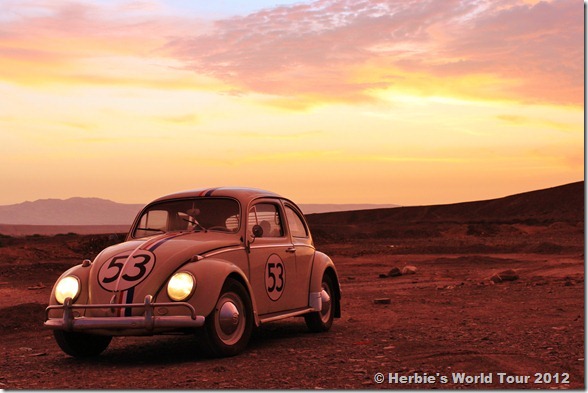
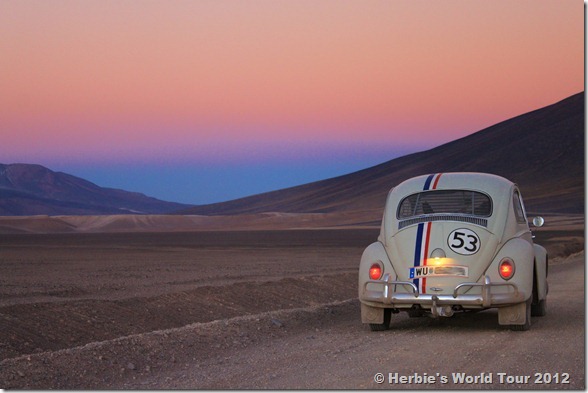
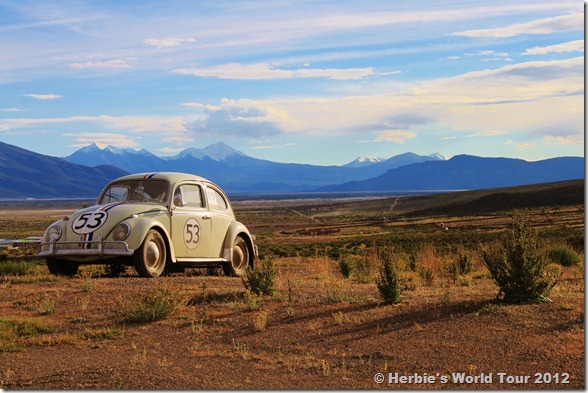
Herbie took a break in the Nazca Desert right at a very magical sundown.

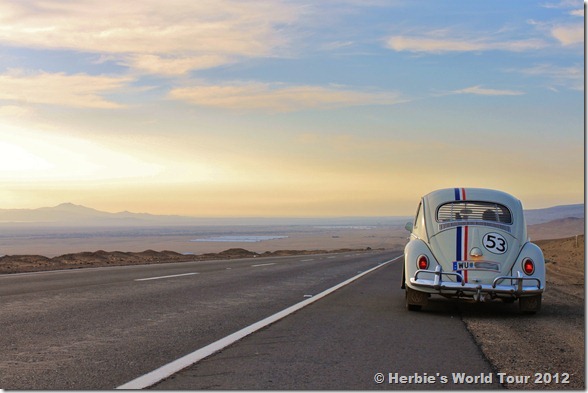
Herbie’s Vanilla Sky

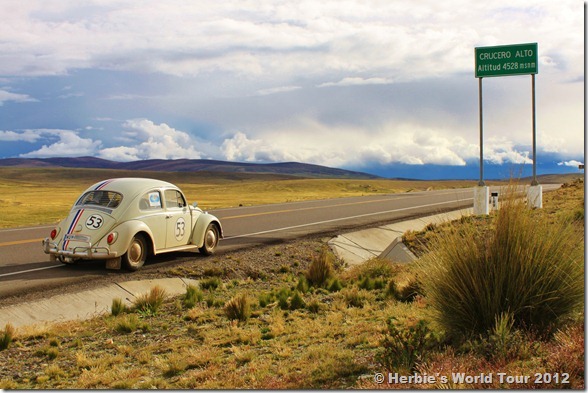
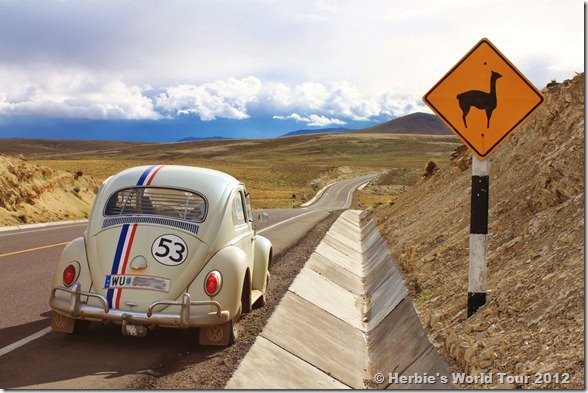
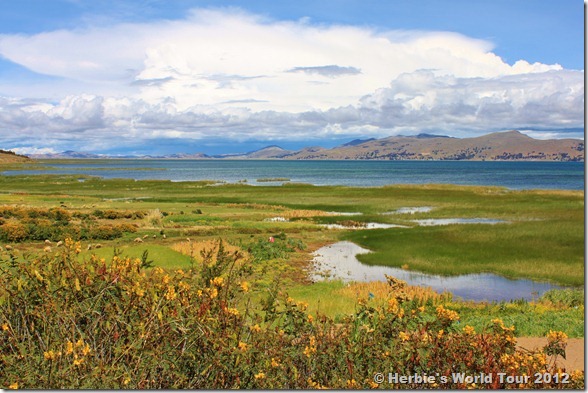
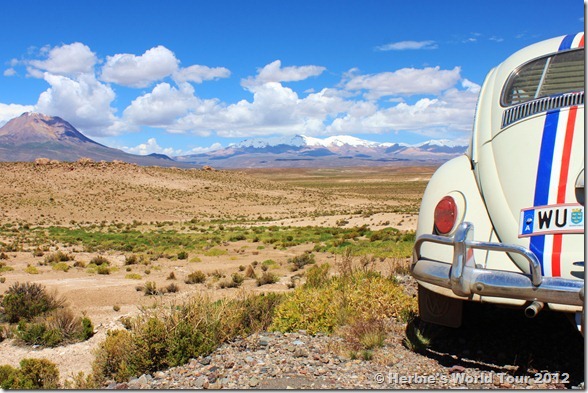
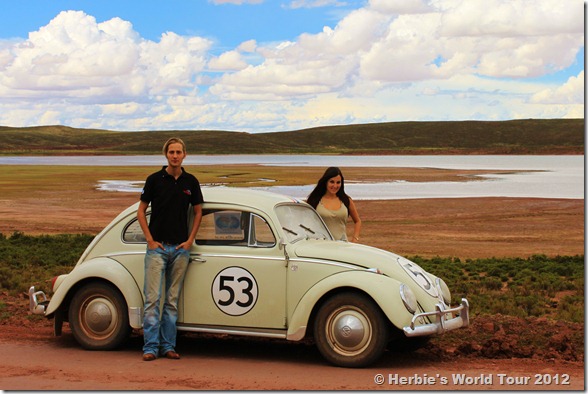
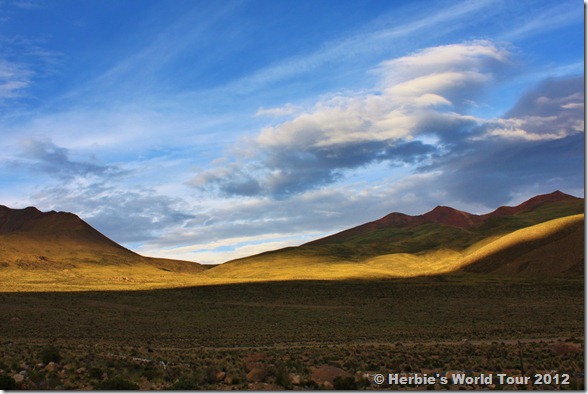
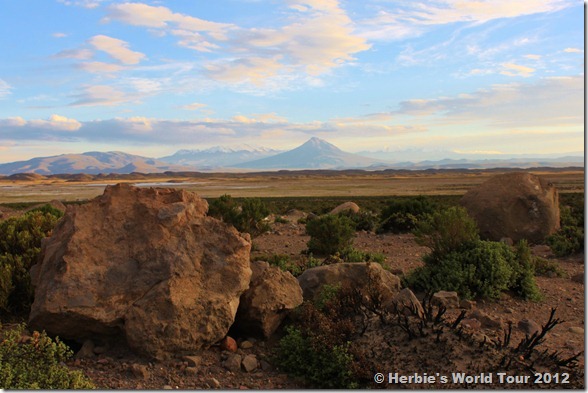
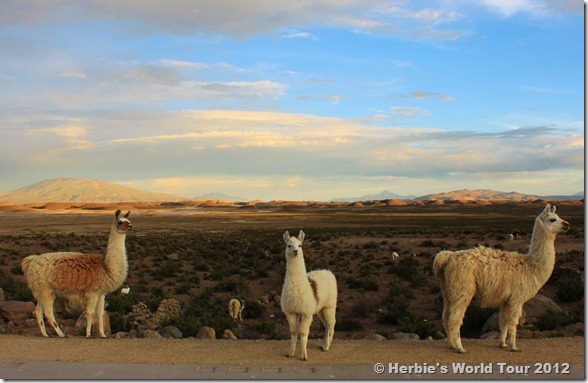
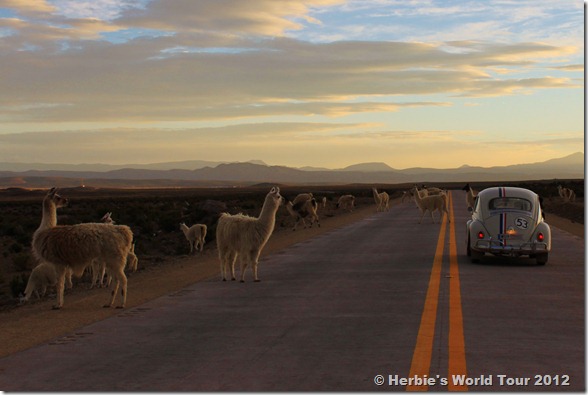
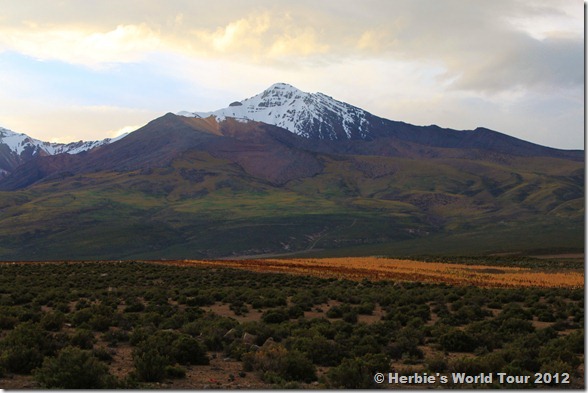
Go west, Herbie! We traveled all the way across the Andes with altitudes over 14,850 feet (or 4,500 meters)  to the west coast of Peru again, passing Puno at Lake Titicaca, Juliaca and Arequipa, ending up driving in Camaná at the Pacific ocean.

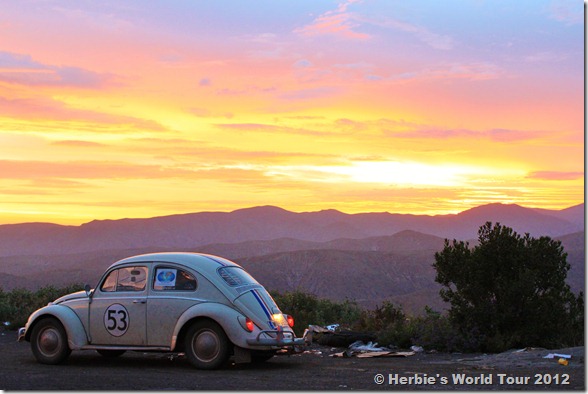
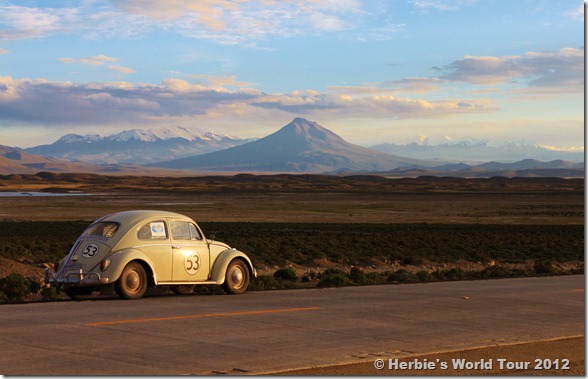
In Puno we met Juan Carlos, a Volkswagen Bug driver, who helped Domi fixing a little gas issue back in the carburetor. While going downhill towards the sea we had one of our most beautiful sunsets with a vanilla sky.

Crossing Bolivia Again

After riding Herbie on unpaved roads across the Bolivian jungle while it was dark during the night and police men asked us for money, we finally reached Santa Cruz de la Sierra and moved on to Cochabamba and La Paz towards Peru and Lake Titicaca.

Back to the “Routes”

We were actually planning to go all the way back to Colombia by heading across Brazil on Highway No. 319 reaching Venezuela. However we had to change our plan.

The Brazilian Highway No. 319 is well-known for one of the worst “roads” in the country. And as we have the rain season right now, this highway is totally impassable.

There is no other way getting back north across the continent, so we had to find a way going back to the Andes on the West. We decided to take a loop towards Bolivia.

We arrived at the border of Bolivia at noon. The border was closed, because the executives just work before that time. So we had to wait until the next day.

After waiting in line for more than two hours to get the exit stamp of Brazil, we were forced to show the border officials our certificate of an amarillic typhus vaccination.

The vaccination of yellow fever is obligatory for everyone who’s entering Bolivia coming from Brazil. But in the end we blessedly entered Bolivia unvaccinated.

Jackfruits in Brazil

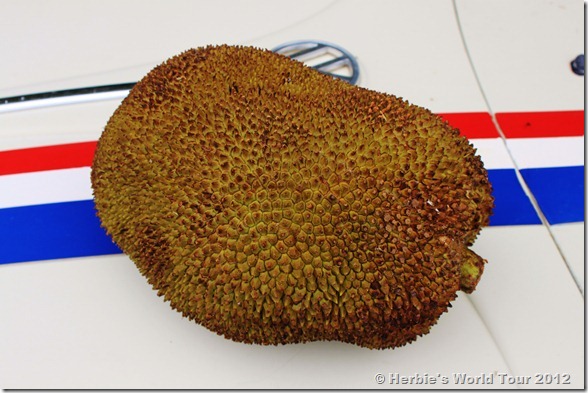
As we just eat fruits and vegetables, we were so happy to find jackfruits in Brazil. They are very rare. We had them in India and Southeast Asia as well as on the Pacific coast of Mexico, but we didn’t know that we’d found them in South America too.

The jackfruit tree is well suited in tropical lowlands like Brazil, and its fruit is the largest tree-borne fruit, reaching as much as 80 pounds (36 kilogram) in weight.

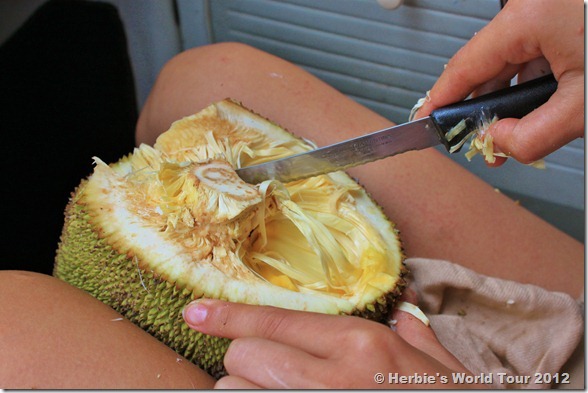
Before you are able to eat the jackfruit, you have to open it and this is a very gluey procedure. Zainab was so kind and did it. Normally we’re using plastic gloves.

The jackfruit is definitely one of our most favorite fruits on earth. Unfortunately you have to travel a long way to get them. But imported jackfruit chips are also mouth-watering.

Brazilian Cemetery

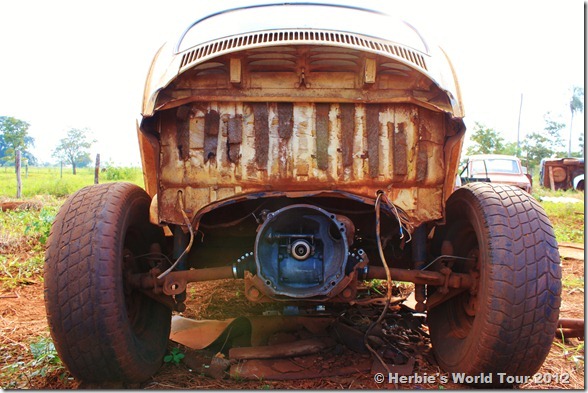
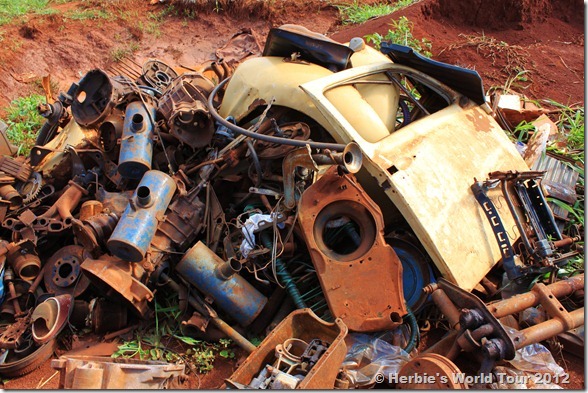
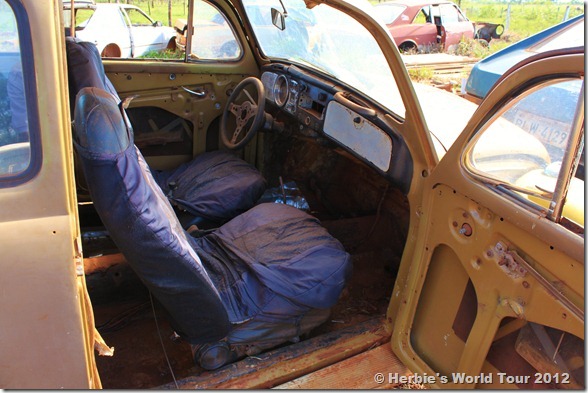
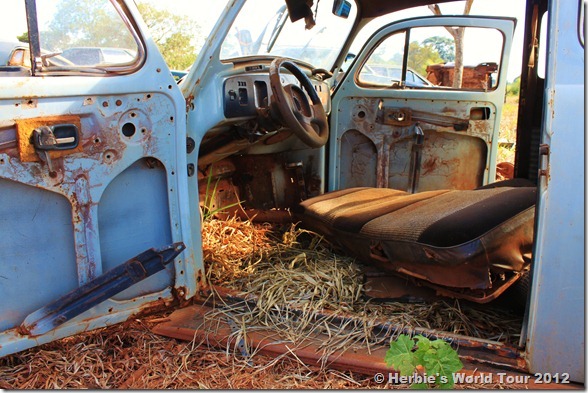
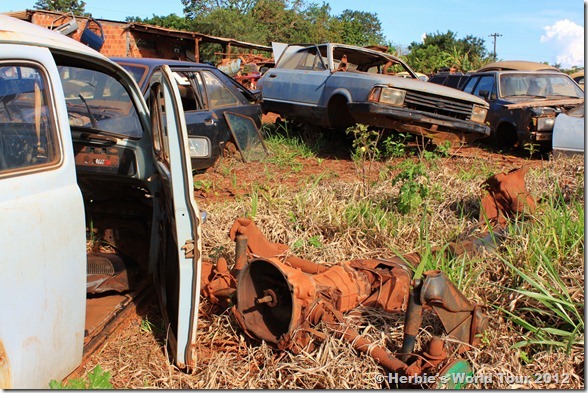
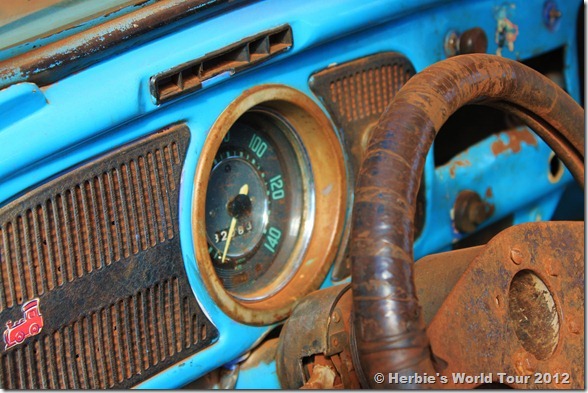
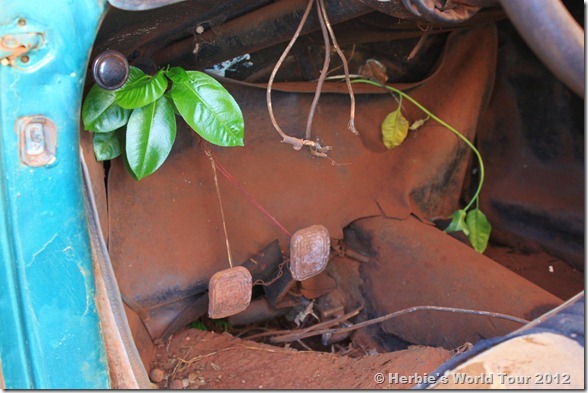
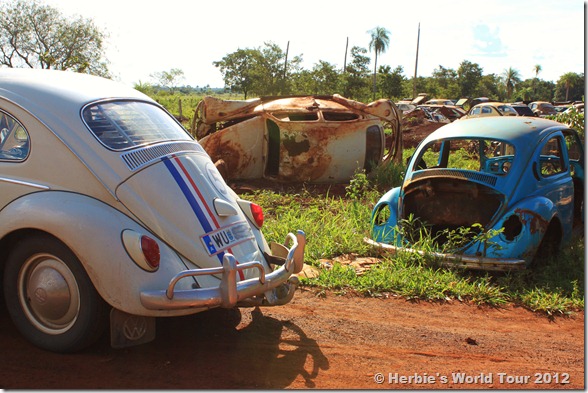
We entered Brazil coming from Paraguay. On our way through Brazil we passed a junk yard for air-cooled Volkswagens. But it was more like a burial site for “Fuscas” – that’s how they call Beetles in this country. Rest in peace!

The Idyllic Paraguay

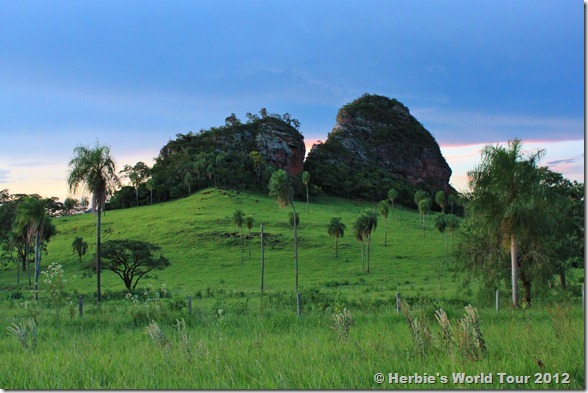
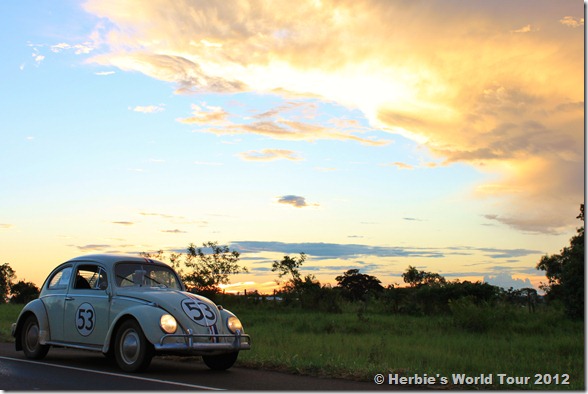
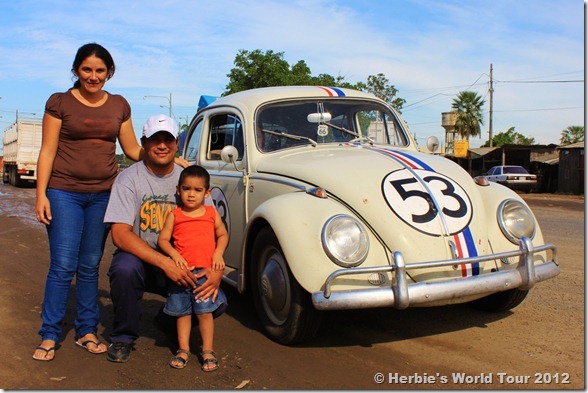
The soil is red and the people are very nice – we traveled through Paraguay on Highway No. 3 towards Brazil, after meeting Jorge, his wife Natalia and their friend Osvaldo, in Asunción. Paraguay was an unexpected beautiful surprise!

The Heart of South America

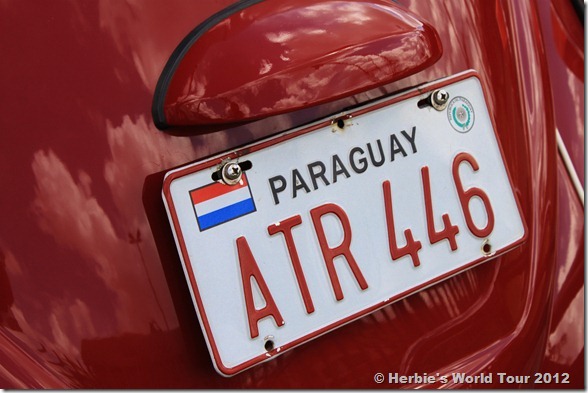
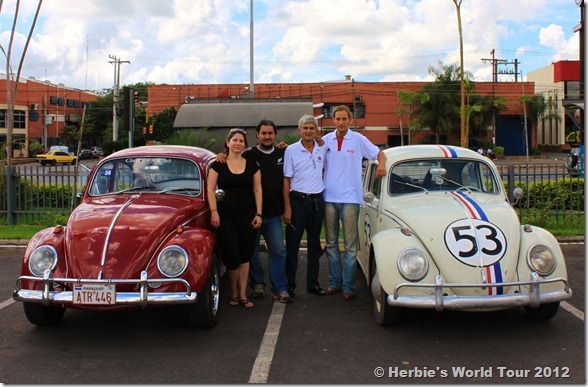
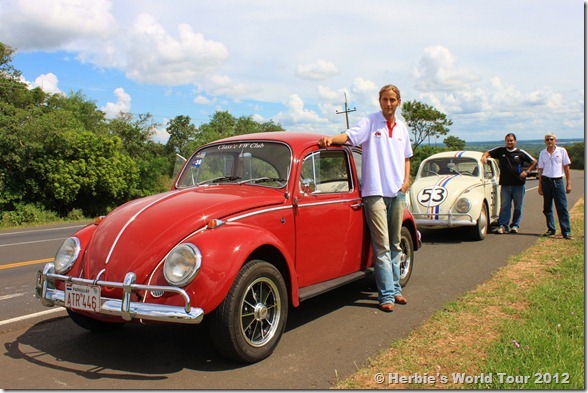
Jorge Ortiz, an air-cooled Volkswagen fellow from Asunción, and his wife, Natalia Florentin, as well as his friend, Osvaldo Espínola, president of Classic VW Club Paraguay, welcomed us in Paraguay – the “Heart of South America”.

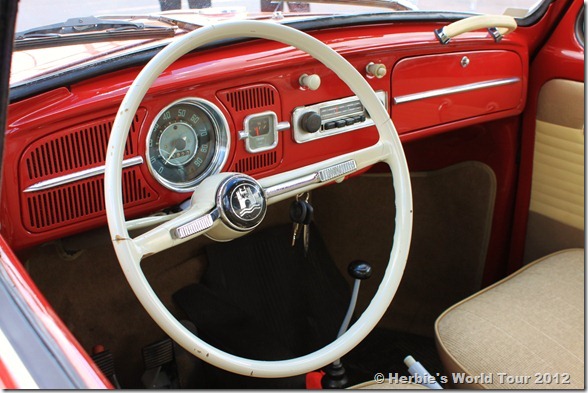
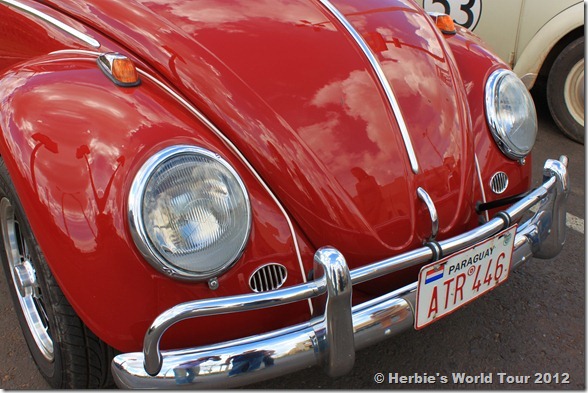
Jorge showed up with his totally new renovated red VW Beetle made in Wolfsburg. All in all it was probably the best border crossing we’ve ever had, because someone was waiting for us on the other side and introduced us warmly to his country. After some motor talk and an interview by a magazine, we hit the roads of Paraguay.

Don’t Cry For Me Argentina

Herbie made a long way riding from General Güemes on Highways No. 34, 81 and 11 to Clorinda, at the border to Paraguay. Tomorrow we’ll enter this country in the heart of South America. Although we won’t spend much time there, we’ll have a very warm welcome. Jorge Ortiz from Asunción, an air-cooled VW enthusiast and member of the Classic VW Club Paraguay, will pick us up right after the border.
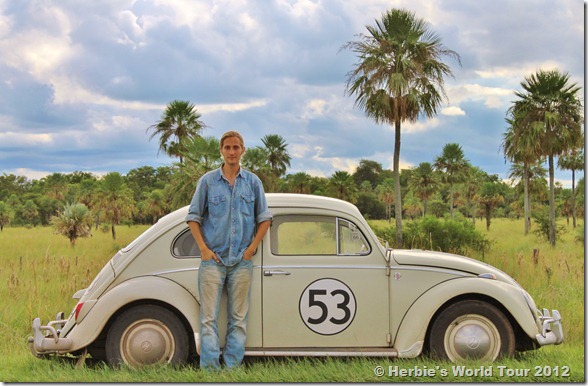
We had a pleasant time in Argentina, even though it was hard to find gas selling gas stations in the West as well as ATMs without endless lines in certain provinces.

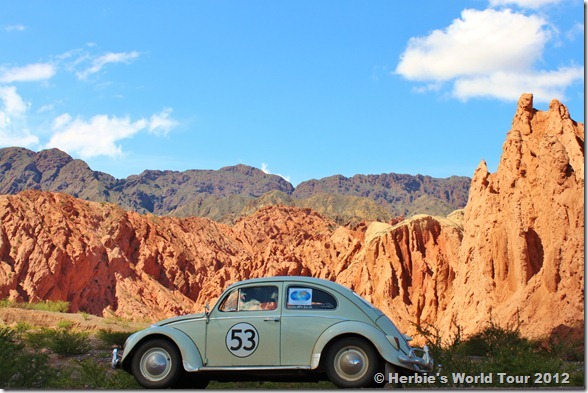
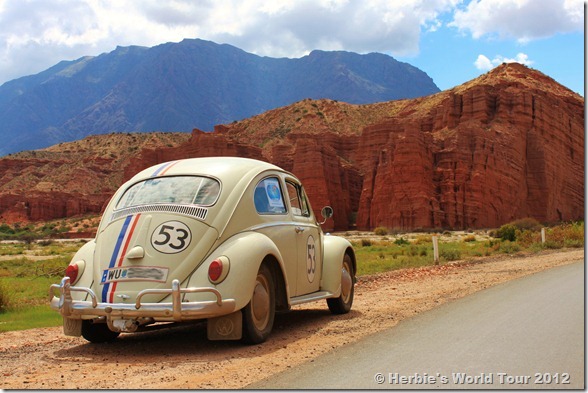
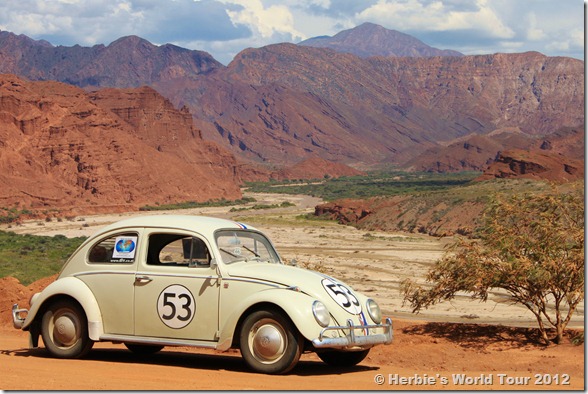
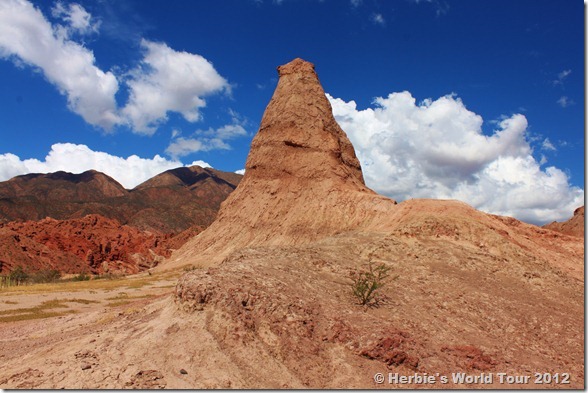
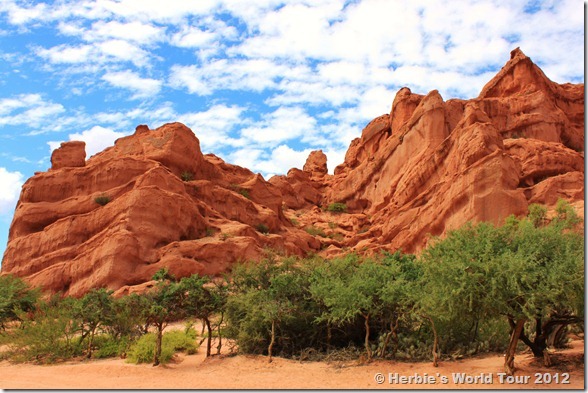
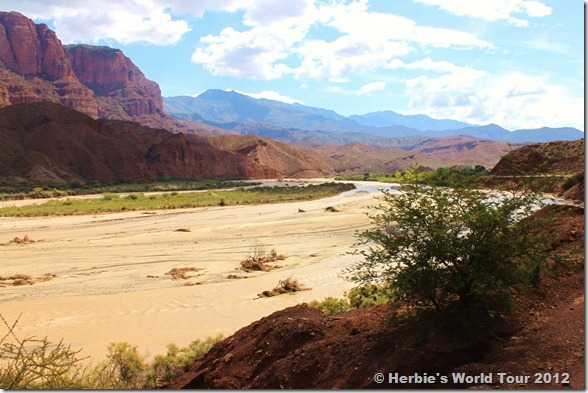
Especially the region between Salta and Cafayate was really worth a visit. It reminded us of going through parts of Utah, Arizona or Nevada we love so much.
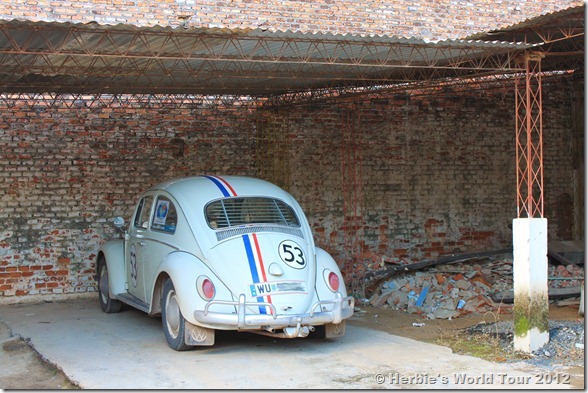
Taking the route across “Paso de San Francisco” was quite a challenge, but we are happy to have experienced the probably roughest path of the Dakar Rally.

Tomorrow we’ll enter Paraguay, heading northeast towards Brazil. It will take us thousands of miles before reaching Venezuela and eventually Colombia.
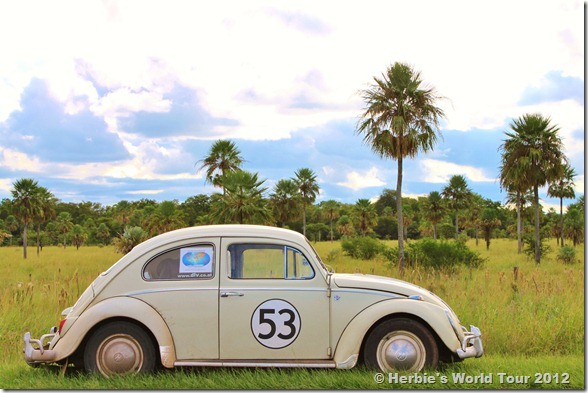
So “don’t cry for us Argentina”, we enjoyed the stay, but we’re moving on. The Amazonas is waiting for us. From now on we’re heading north in direction of Colombia.
Red Rock Argentina

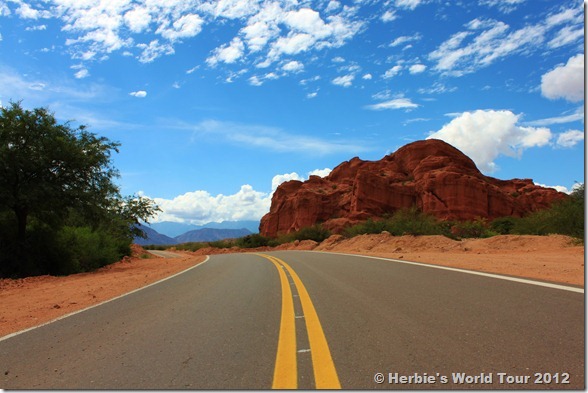
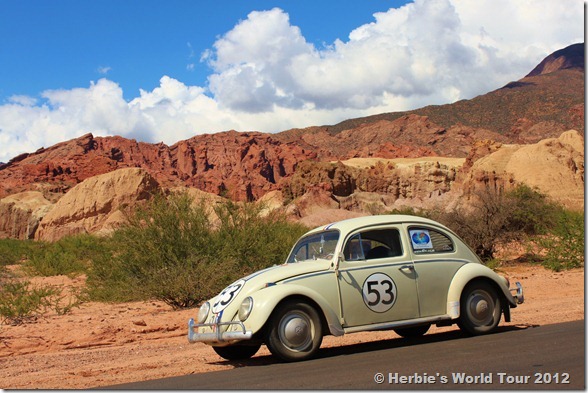
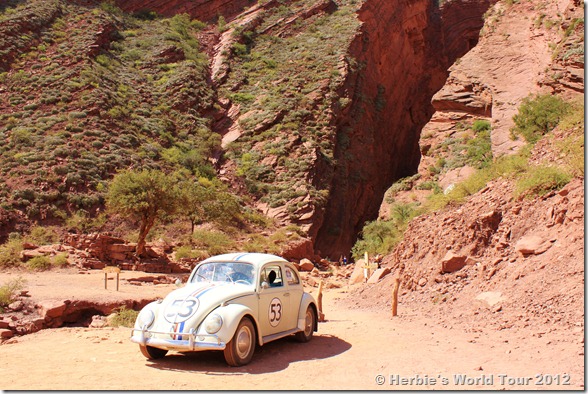
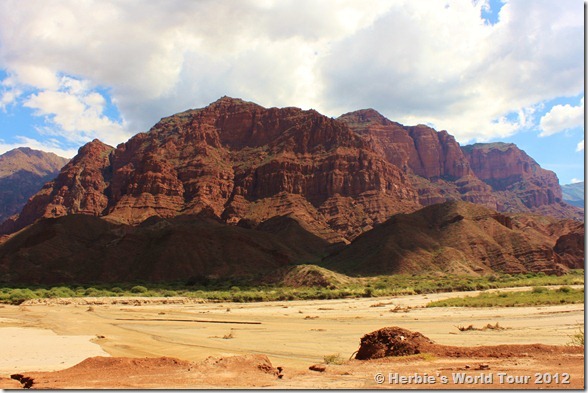
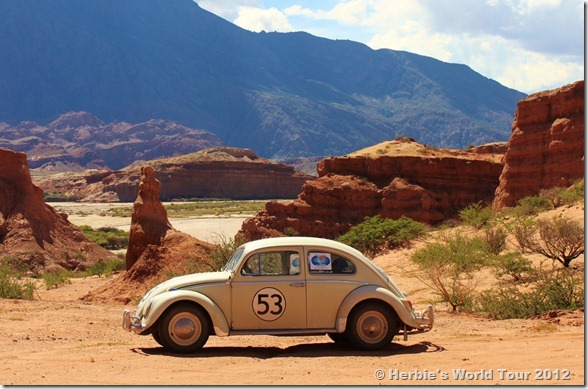
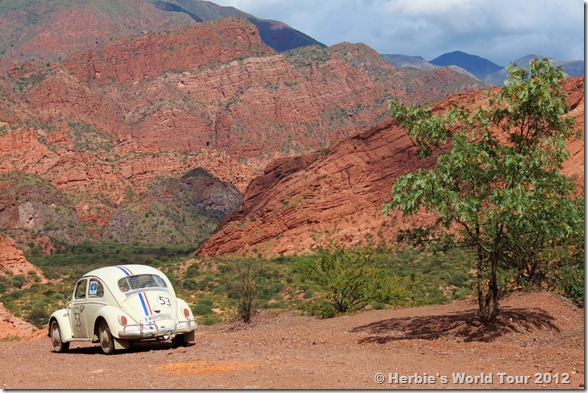
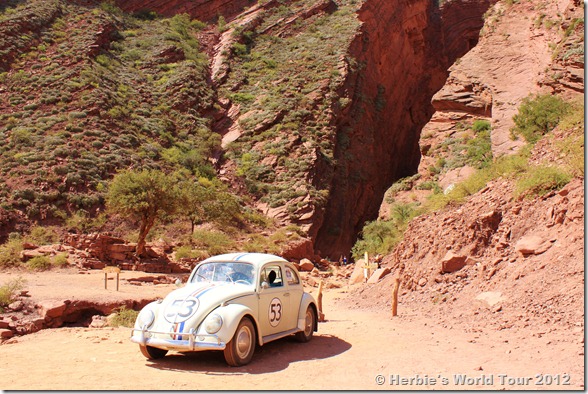
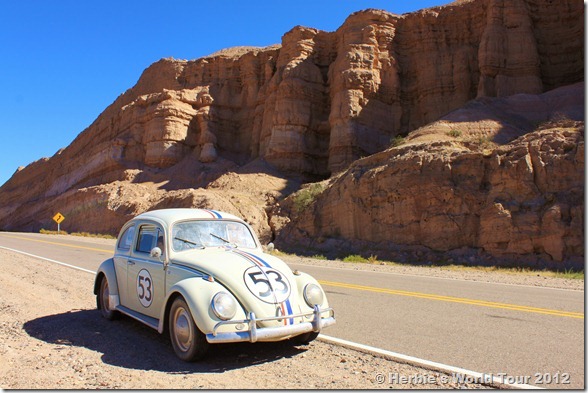
As we were heading north on Highway No. 68 from Cafayate to Salta, we passed a truly amazing area full of red rocks. This region is also well-known for its unique wine production, benefiting from the low-humidity mild weather. We stopped for the night in General Güemes, a city east of Salta. Today we’re going to travel further up northeast towards Paraguay.

The Incan Cacti

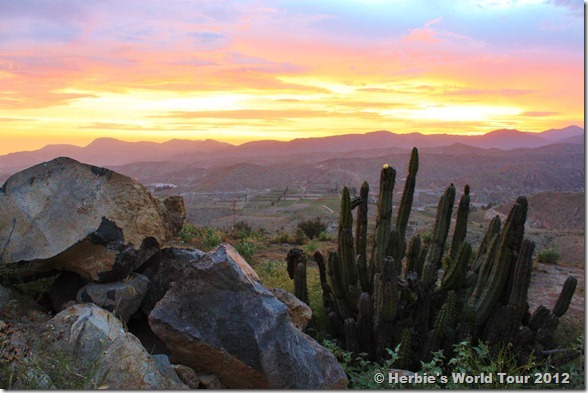
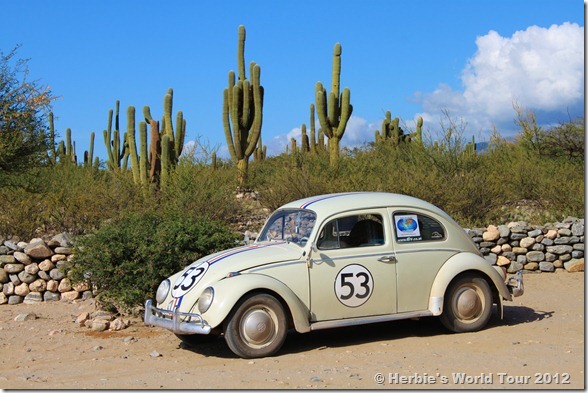
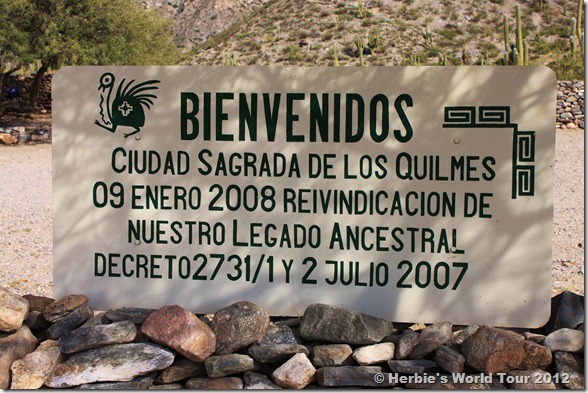
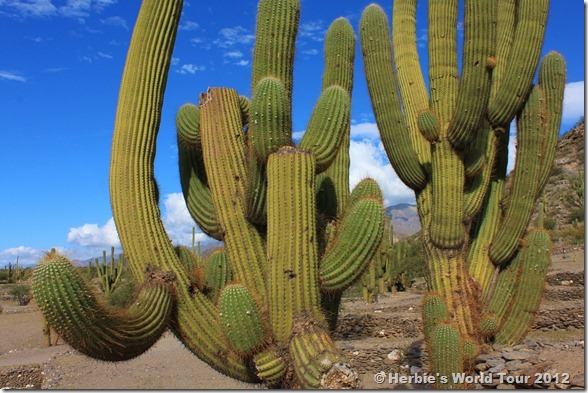
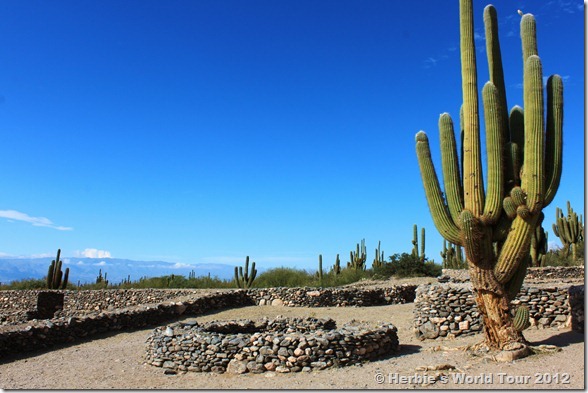
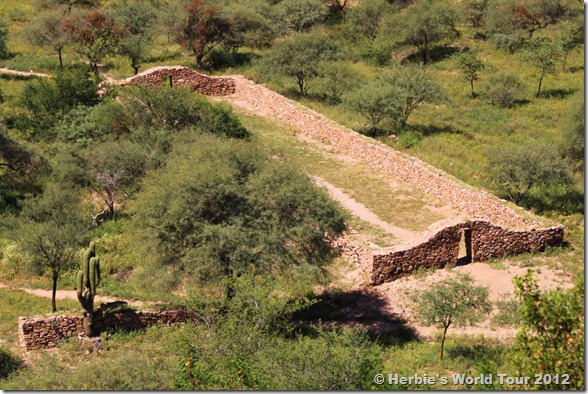
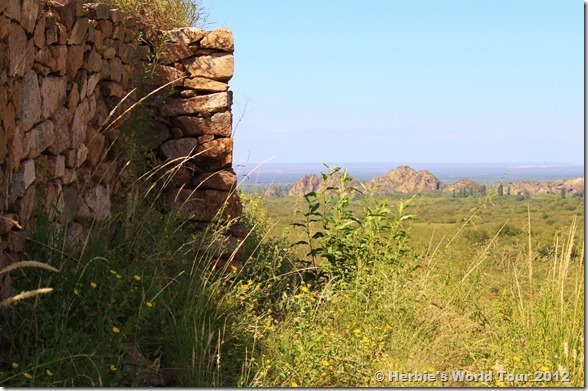
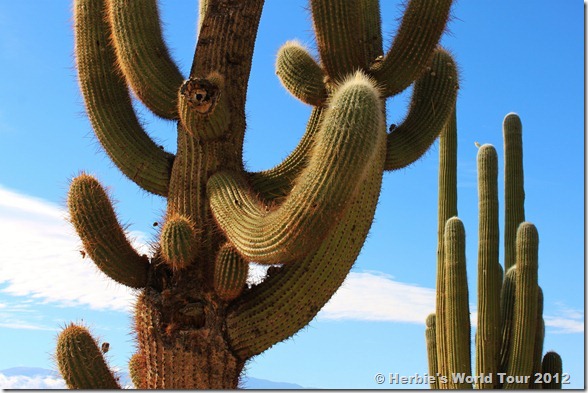
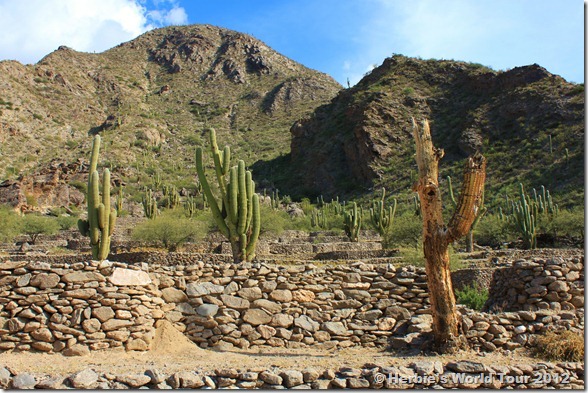
Last day we explored another ancient city on Highway No. 40 in Tucumán, the smallest province of Argentina. “Ciudad Sagrada de los Quilmes” is the given name of this more than 500 years old Incan metropolis. Around and within the ruins you can find huge cactuses, which reminded us of Southern Arizona or Northern Mexico with its countless “saguaros” (cacti).

Cruising Across Catamarca

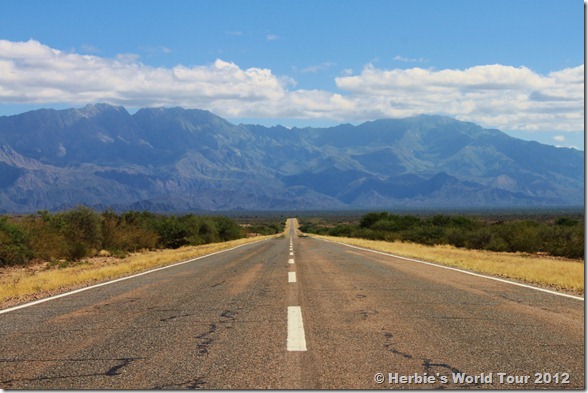
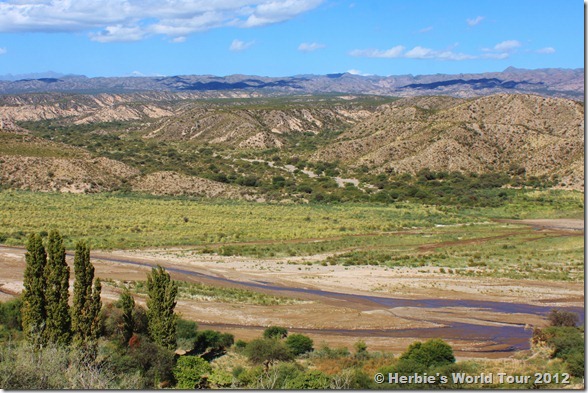
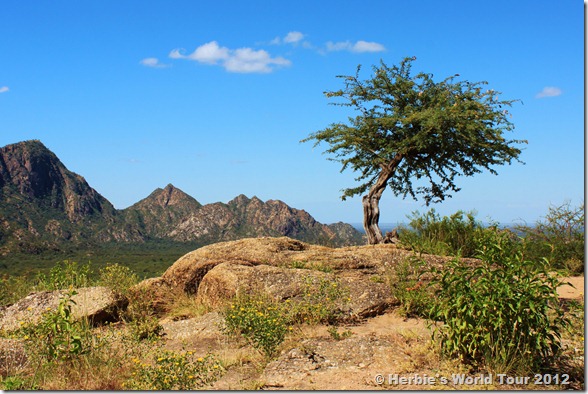
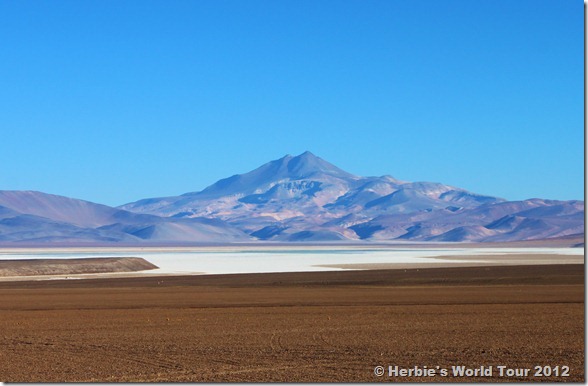
We spent the night in Fiambalá, after crossing the Argentinian border via “El Paso de San Francisco”. On the next day we cruised across Catamarca, one of Argentina’s provinces. Remote and vast landscapes accompanied us on our way southeast.

The Incas in Argentina

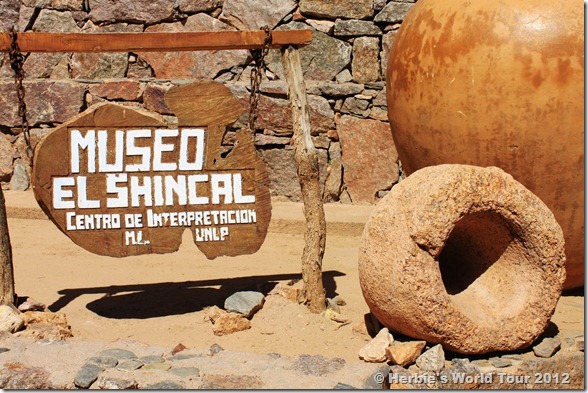
On our way east we visited one of ancient ruins by the Inca Empire. Londres de Quimivil is the actual village nearby, which is the oldest town in the Argentinian province of Catamarca and the second oldest city within the entire country. The old Incan city was named “El Shincal”. It was an administrative center from 1471 to 1536 AD.

Herbie’s Dakar Rally

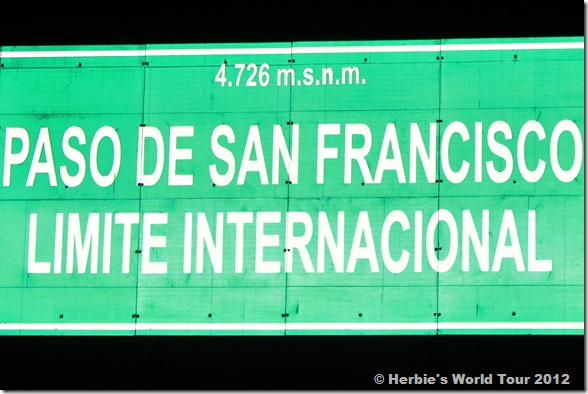
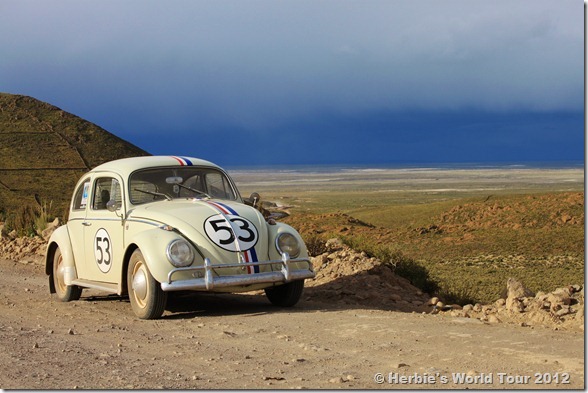
The Love Bug made it! The border between Chile and Argentina levels 15,505 feet (or 4,726 meters) and its way up there is called “El Paso de San Francisco” – the toughest section of the world famous Dakar Rally. Paved roads were hard to find and the weather was windy as well as freezing cold. Oxygen was quite rare and Zainab even got a bit of an euphoria. Here are our last impressions of Chile.

It took us hours to reach the pass, which is located between the two border posts. It was getting dark and we finally arrived at the frontier of Argentina two hours after its closure. The executives were so kind to do all the immigration formalities, even though they already had off for the day. We stopped for the night in Fiambalá.

The Atacama Desert

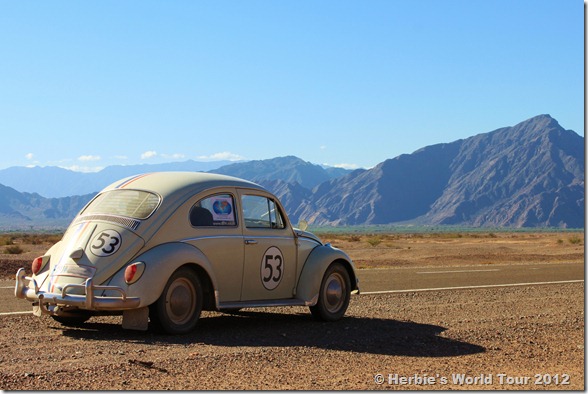
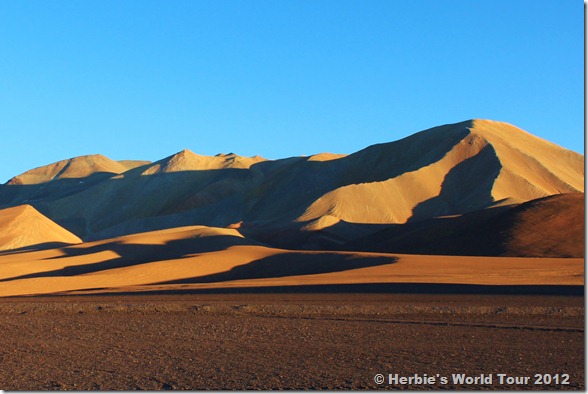
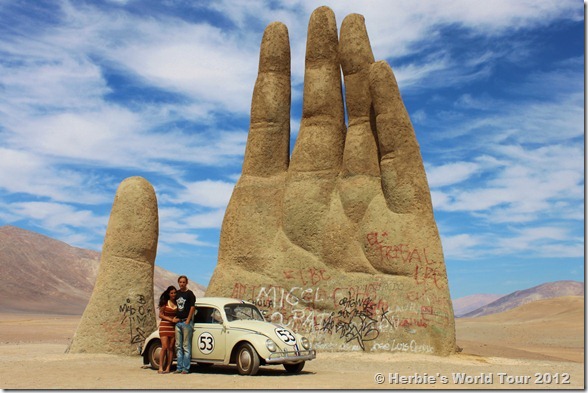
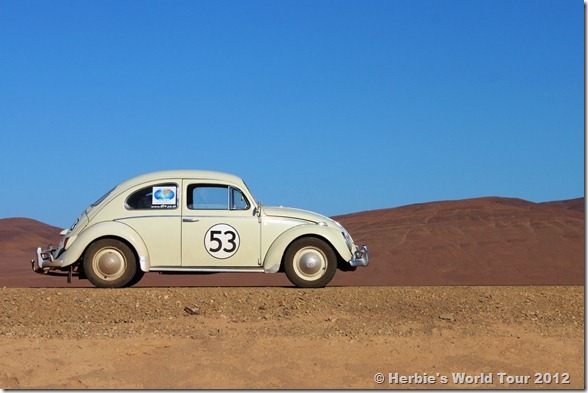
Herbie is driving through the driest area on the earth – the Atacama Desert in Chile. We’re heading further south besides the Pacific ocean. Right after we’ll leave the “Panamericana”, climbing the Andes a very last time, going to Argentina.
The Republic of Chile

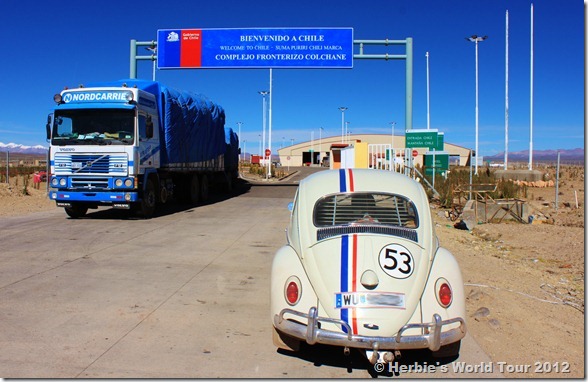
After meeting the President of Bolivia, we finally entered Chile at Colchane and headed downhill towards the Pacific. We are now following the coast line further south, before we’ll cross over to Argentina.
Meeting Mr. President

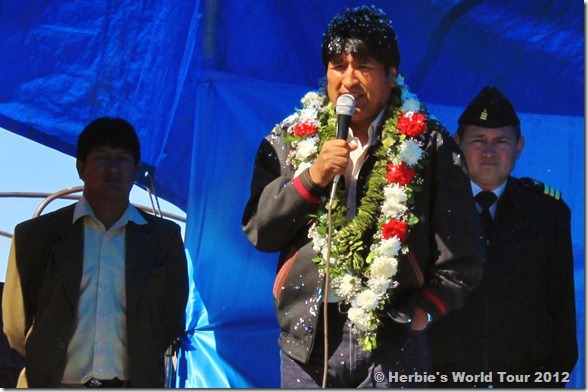
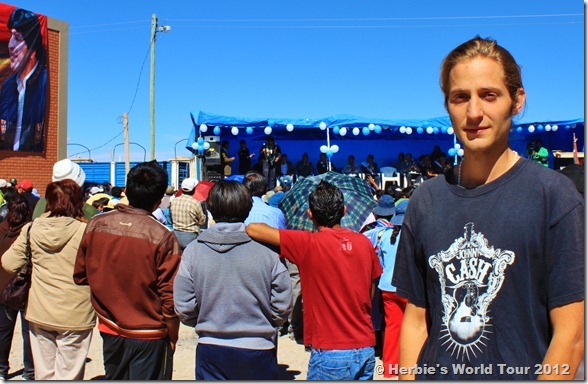
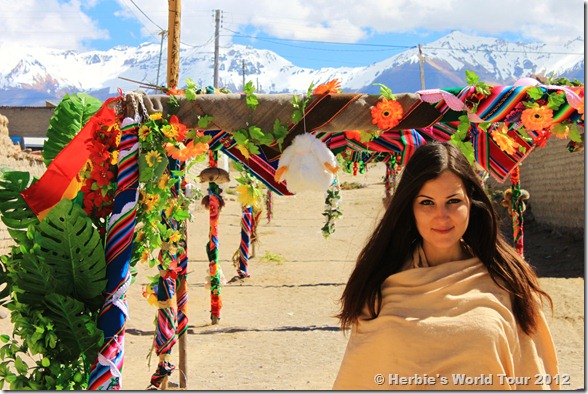
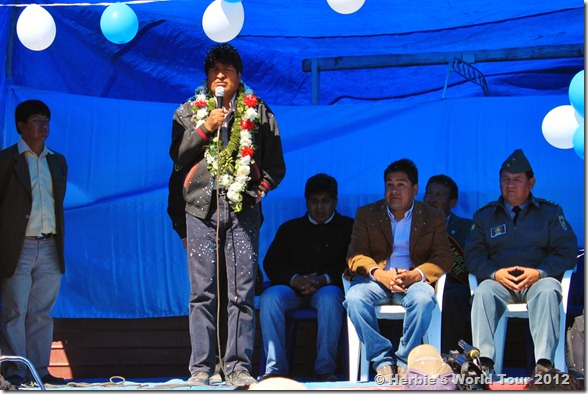
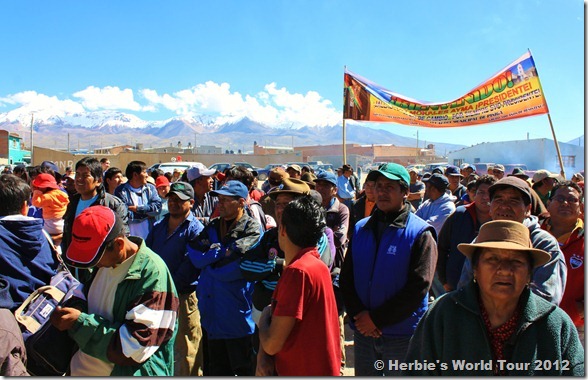
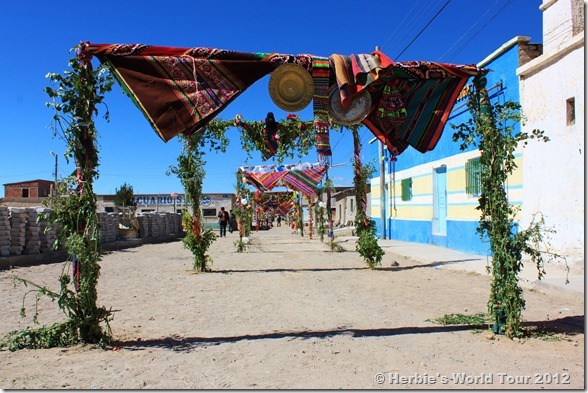
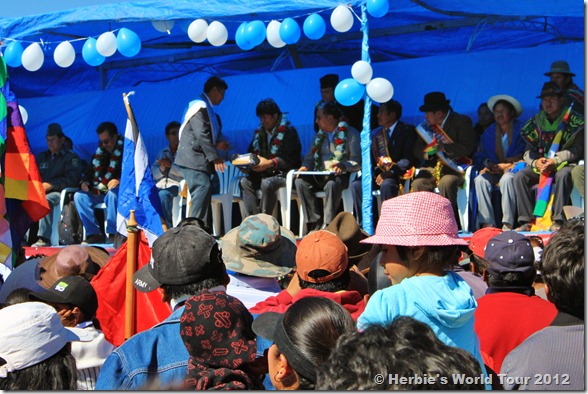
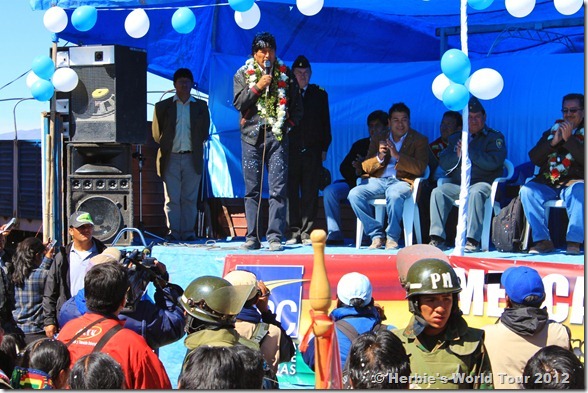
The Bolivian border at Pisiga was closed for two hours, while we wanted to cross over to Chile. The reason was an official visit of Bolivian’s President Evo Morales, who arrived by helicopter in the little border town for the grand opening of a market hall. We were very surprised to meet the President himself in the middle of nowhere in Bolivia.
Till the End of Roads

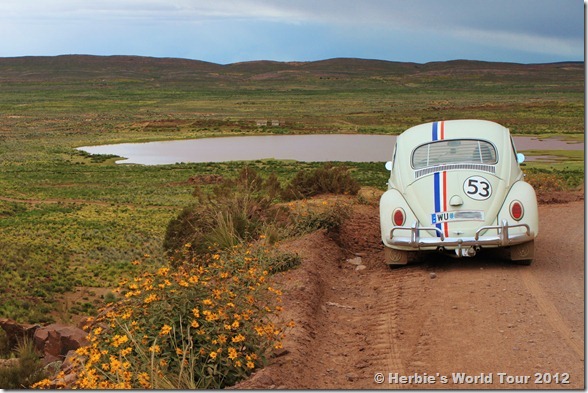
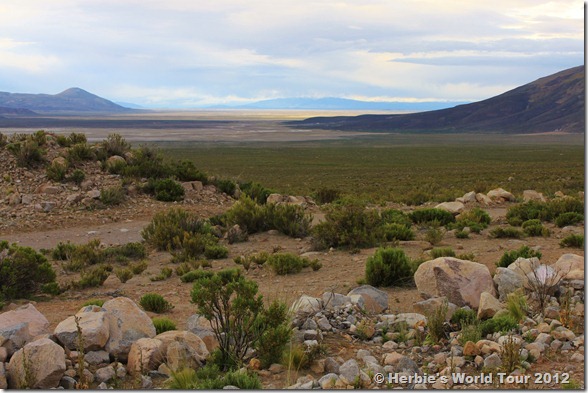
Herbie made it to the end of the road in Bolivia. According to our maps and the natives we’ve spoken to, the street towards the border should be totally paved and in perfect condition, but we got surprised! We had to drive parts of it on an unpaved path for hours until we reached the Bolivian border town Pisiga on Highway No. 12.
Leaving Oruro in Bolivia

After spending three nights in Oruro, in the South of La Paz, we’re going to leave this town for good, heading towards Chile. Tomorrow we’ll probably cross its border.

We had a good time in Oruro, taking a rest from rallying across the Peruvian Andes.

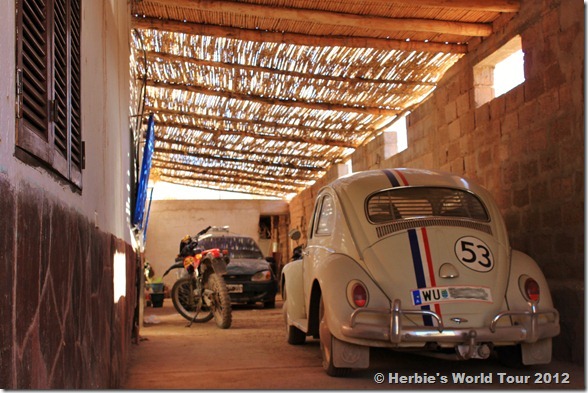
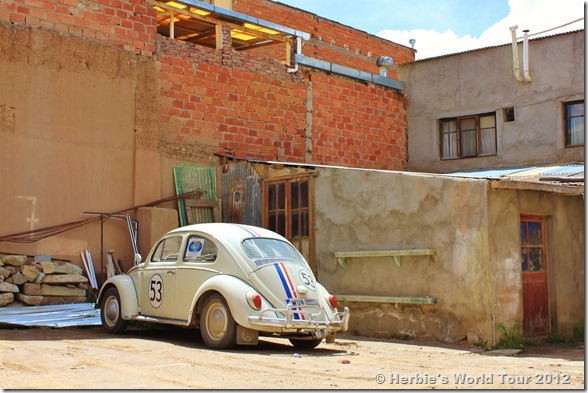
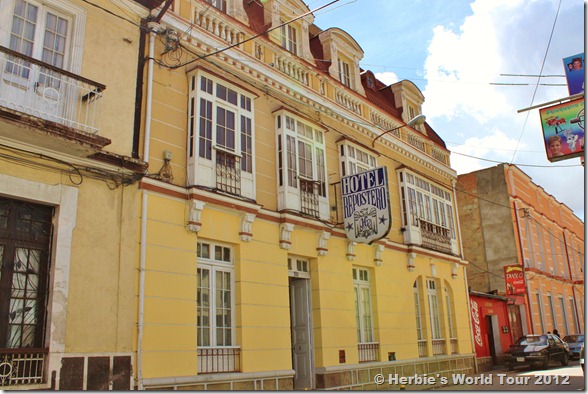
We stayed at an old hotel right in the center. And Herbie parked in the courtyard.

It was also time for a small motor service, after driving so many miles since California.

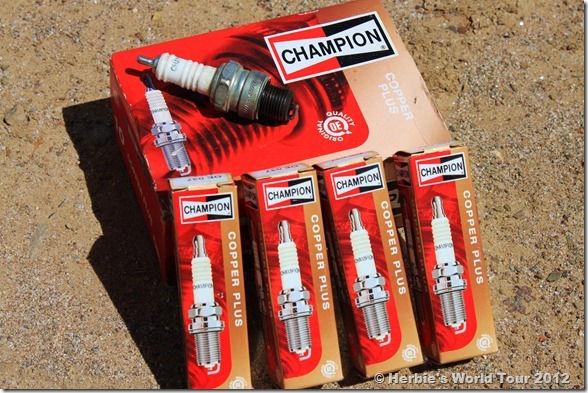
Domi changed spark plugs (Champion “Copper Plus” L86C) and tightened Herbie’s belt.

Furthermore Herbie got a new distributor rotor and cap (made in the European Union).

A Taste of Bolivia

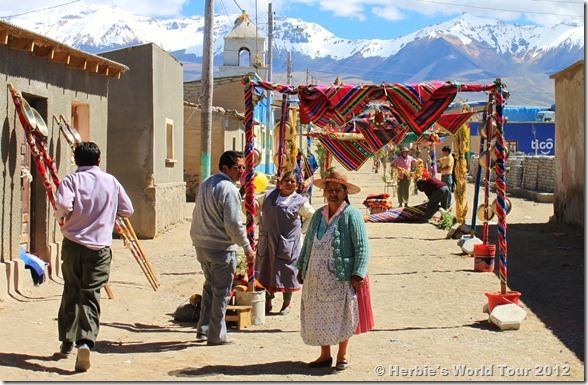
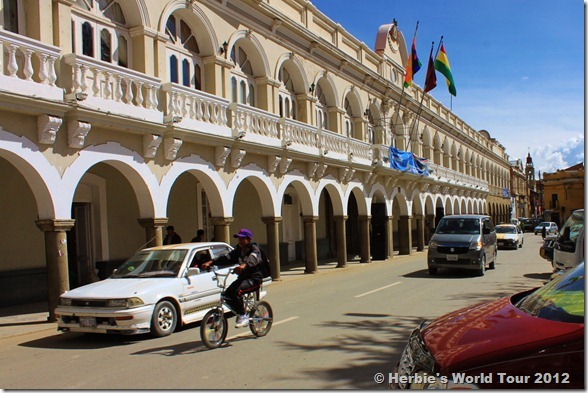
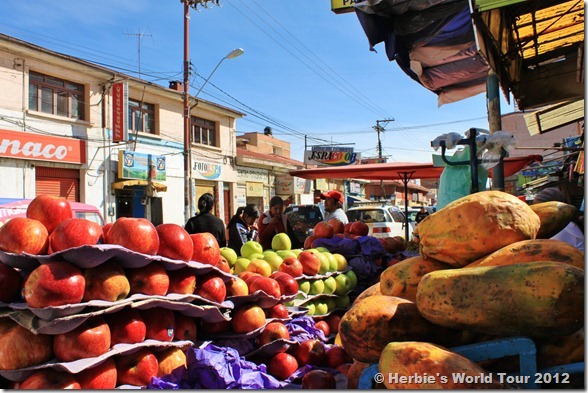
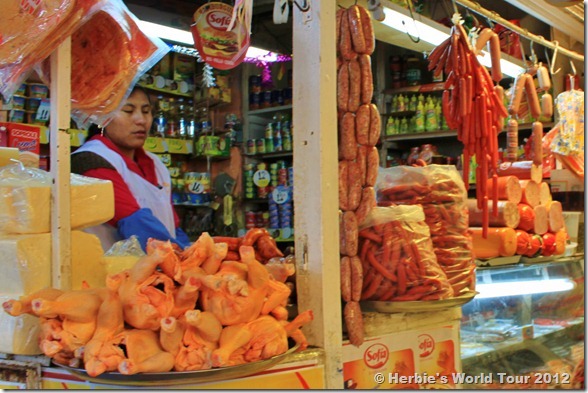
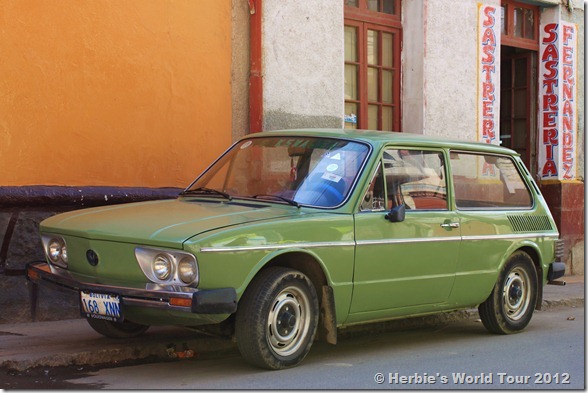
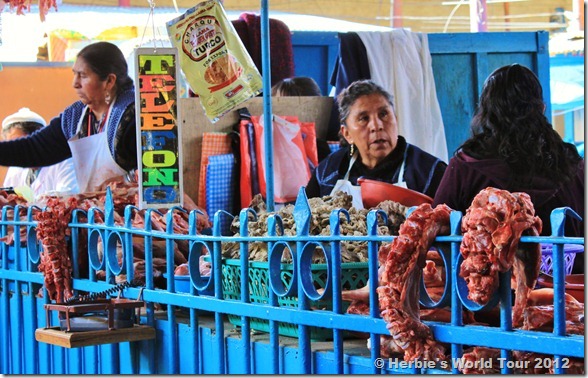
We’re taking a little rest from driving cross country in Oruro, Bolivia. Today we went a bit shopping and Domi took some pictures, so you can get a taste of it too. Tomorrow we’ll take off heading west towards the border of Chile, where we want to continue following the Pan-American Highway further south down to Santiago de Chile.

La Paz (11,975 feet)

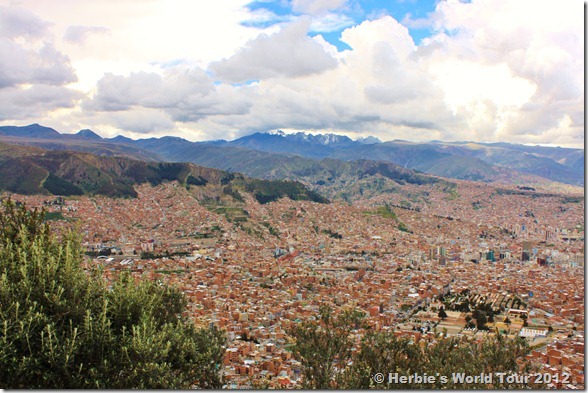
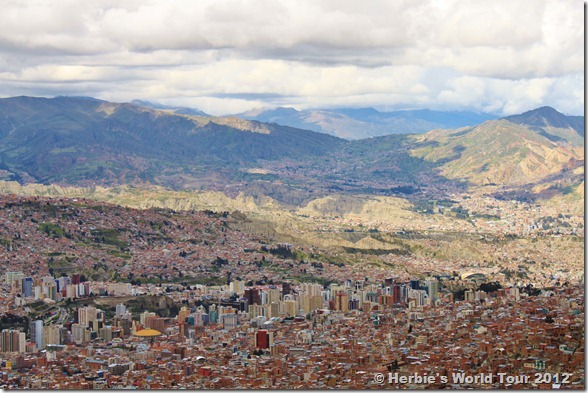
After entering Bolivia we had a short visit in La Paz – with 11,975 feet (or 3,650 meters) the highest capital in the world. “Nuestra Señora de La Paz” is the official name of the second largest city in Bolivia. We are already in Oruro, a little bit further south.

In the next days we’ll probably cross the border to Chile in order of heading south along the Pacific coast towards its capital, Santiago de Chile.

Herbie is doing well after driving in extreme high altitudes, always above 10,000 feet. Today Domi will change spark plugs, distributor cap and rotor.

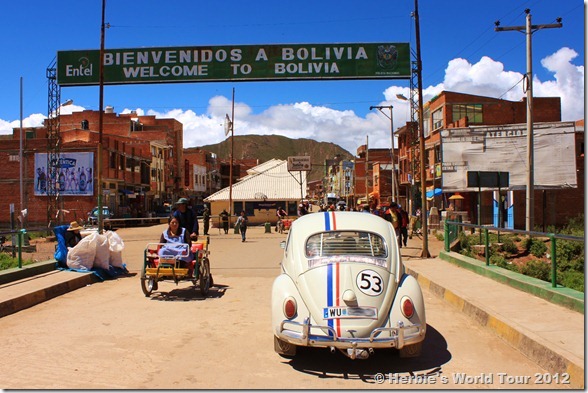
¡Bienvenidos a Bolivia!

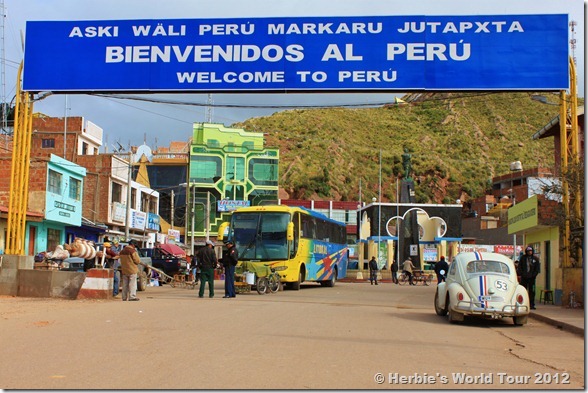
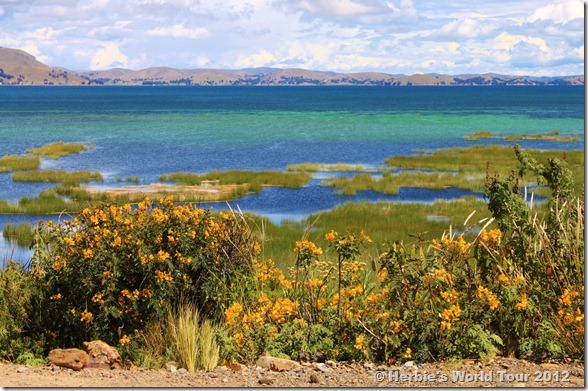
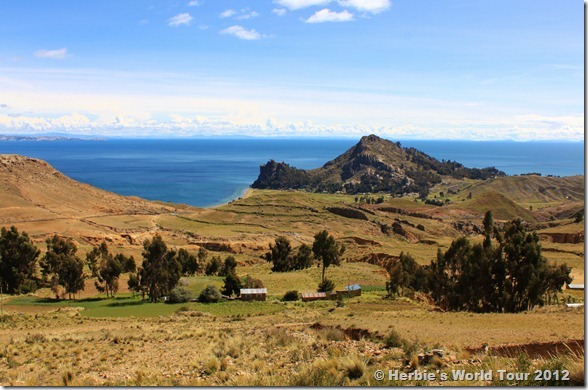
We spent our last Peruvian night in a small town named Juli and entered Bolivia right besides Lake Titicaca. Bolivia is obviously different: Here you get two different gas prices, one for the natives and one for foreigners like us. The so-called “international price” is three times higher. Meanwhile we filled up Herbie already two times. Domi had long discussions at the pump, but finally succeeded – we got treated like “Bolivianos”.

Back in Europe we read some good things about Bolivia and its president Juan Evo Morales Ayma, who is in charge since 2005. So far we were lucky regarding the gas prices but we cannot understand why tourists should be treated differently.

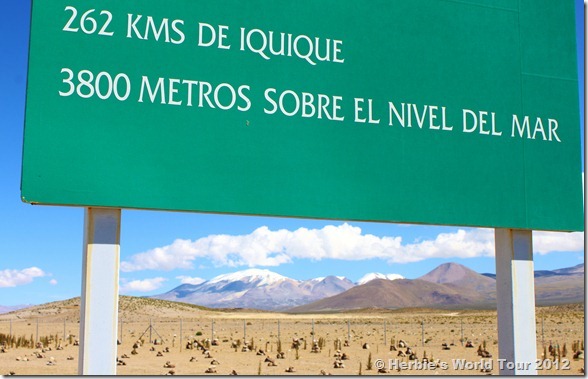
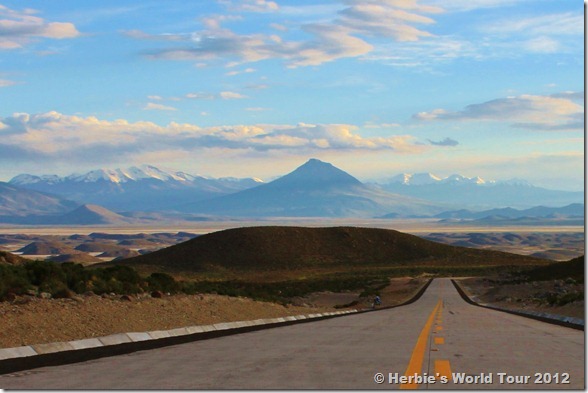
We headed south via Oruro to Santiago de Huari, because we were planning to cross the border to Chile as far as south as possible in order to see more of Bolivia. But suddenly the street changed into an unpaved one.

We got told that the road won’t change back into a paved one until the border. We had to choose if we should drive hundreds of miles without pavement or if we should go back. We decided to make a u-turn and drove back to Oruro.

Redemption Day

We are glad to inform you that our ocean carrier Wallenius Wilhelmsen Logistics made amends and paid for Herbie’s damages. Therefore we’re probably going to ship the Love Bug back from Colombia to Mexico with the same company. Many thanks to Mr. Bakker from New Jersey who took care of our case!