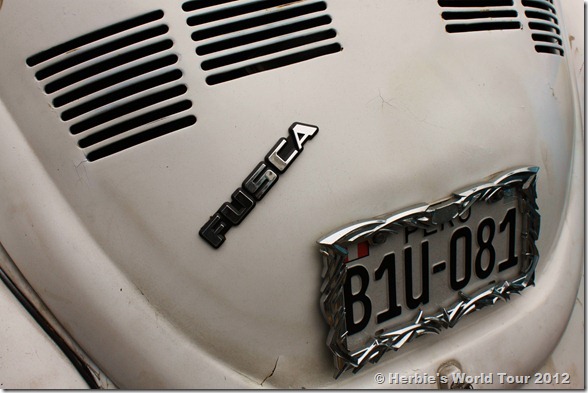
We entered Brazil coming from Paraguay. On our way through Brazil we passed a junk yard for air-cooled Volkswagens. But it was more like a burial site for “Fuscas” – that’s how they call Beetles in this country. Rest in peace!

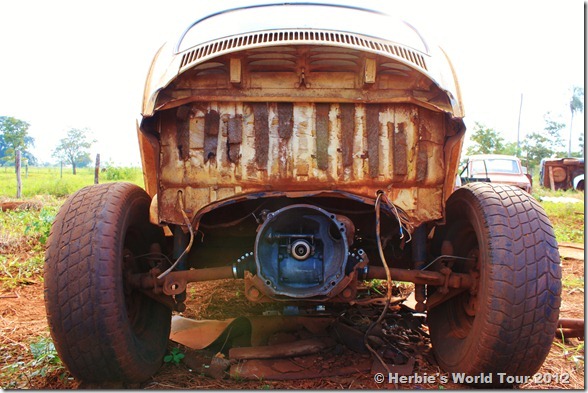
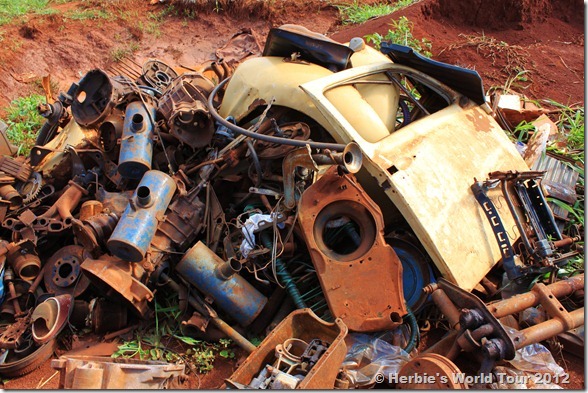
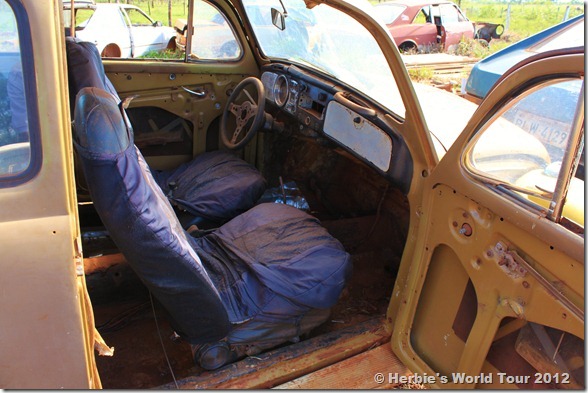
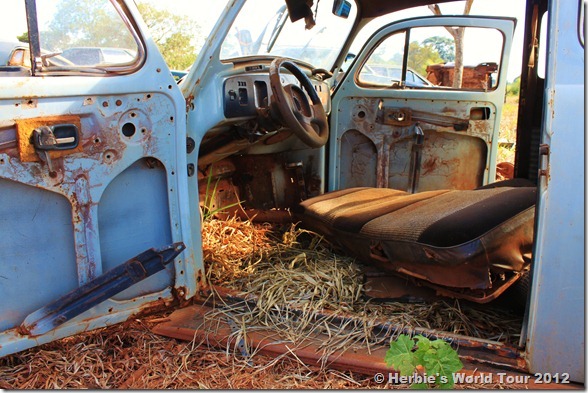
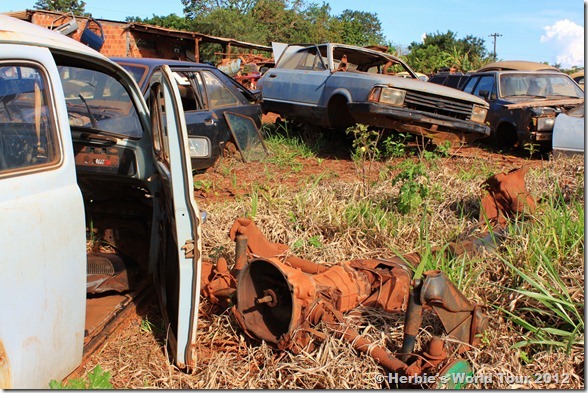


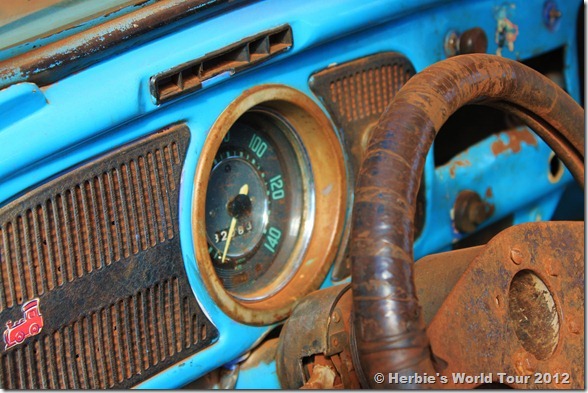
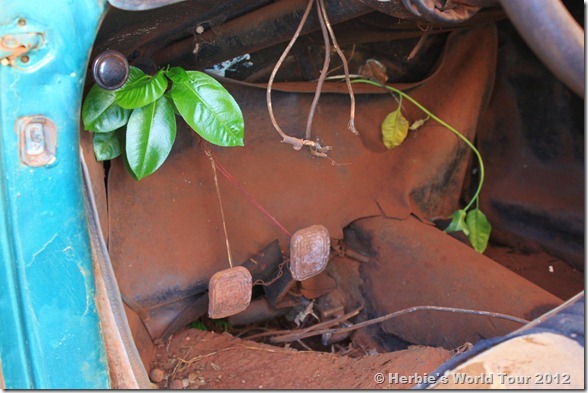


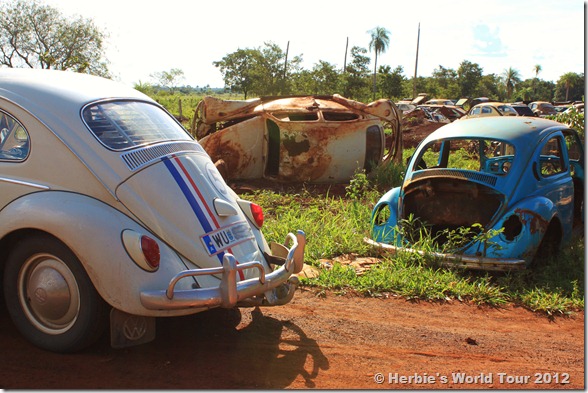

We entered Brazil coming from Paraguay. On our way through Brazil we passed a junk yard for air-cooled Volkswagens. But it was more like a burial site for “Fuscas” – that’s how they call Beetles in this country. Rest in peace!
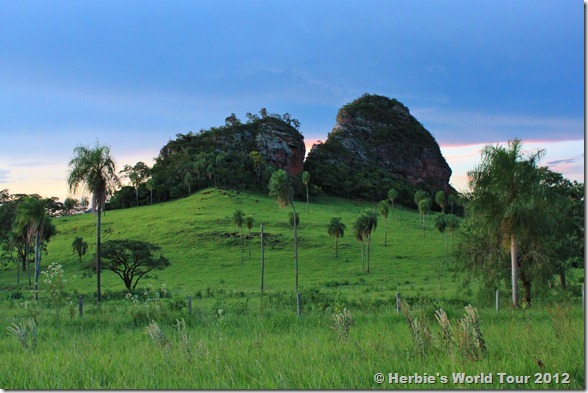
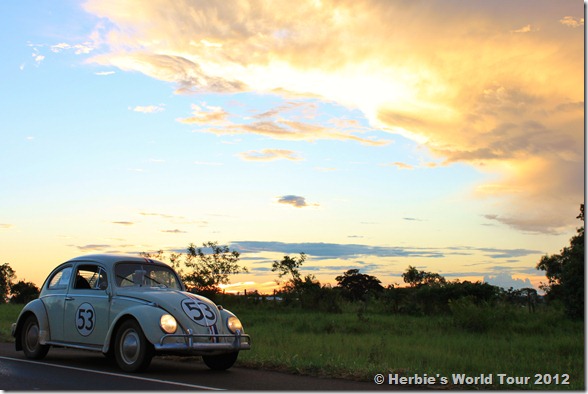
The soil is red and the people are very nice – we traveled through Paraguay on Highway No. 3 towards Brazil, after meeting Jorge, his wife Natalia and their friend Osvaldo, in Asunción. Paraguay was an unexpected beautiful surprise!

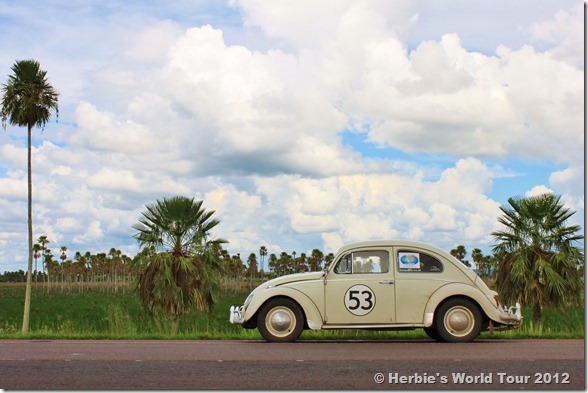
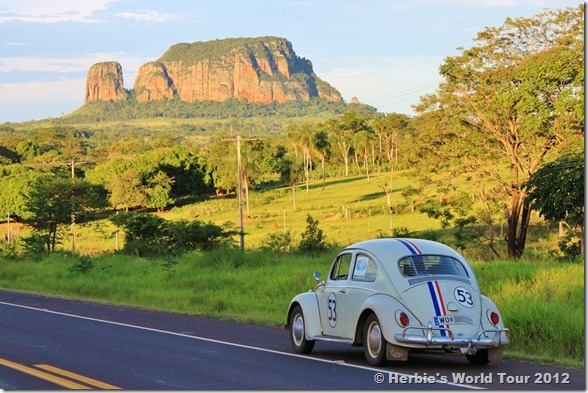

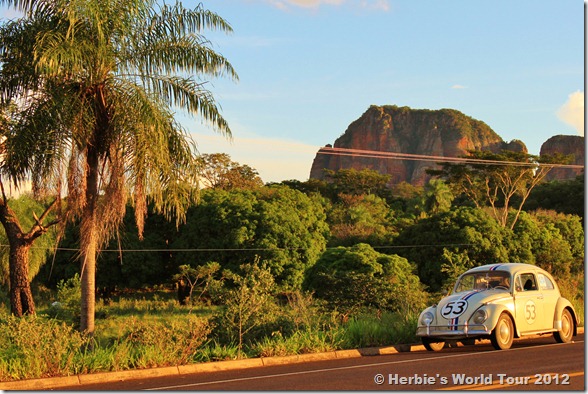
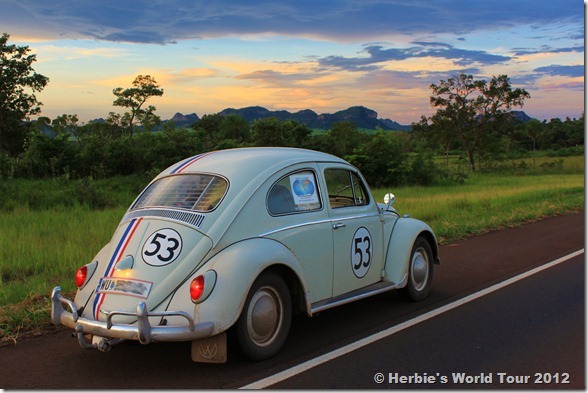
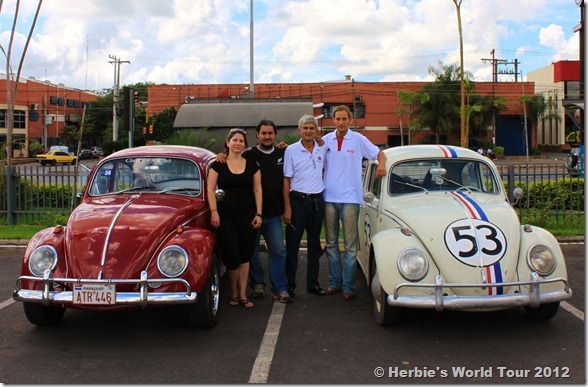
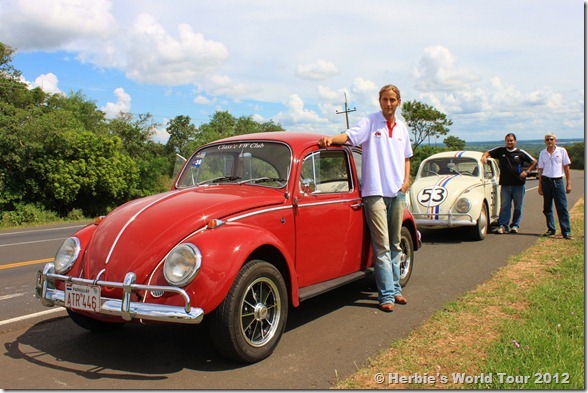
Jorge Ortiz, an air-cooled Volkswagen fellow from Asunción, and his wife, Natalia Florentin, as well as his friend, Osvaldo Espínola, president of Classic VW Club Paraguay, welcomed us in Paraguay – the “Heart of South America”.

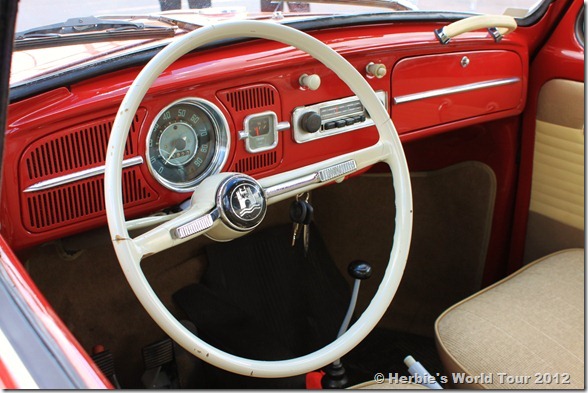
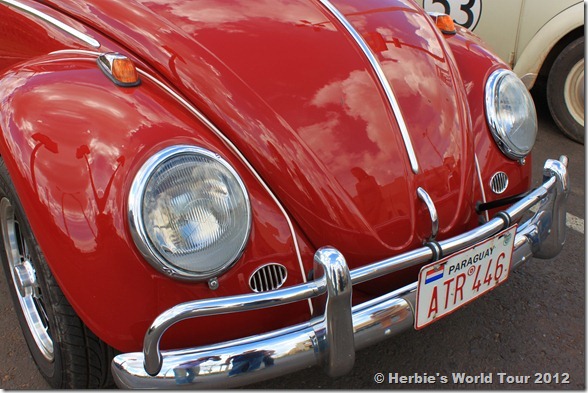
Jorge showed up with his totally new renovated red VW Beetle made in Wolfsburg. All in all it was probably the best border crossing we’ve ever had, because someone was waiting for us on the other side and introduced us warmly to his country. After some motor talk and an interview by a magazine, we hit the roads of Paraguay.


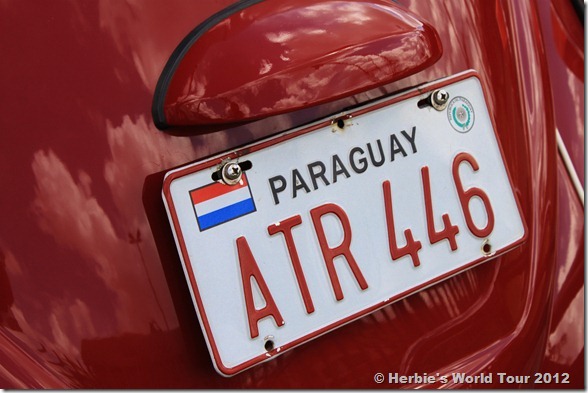


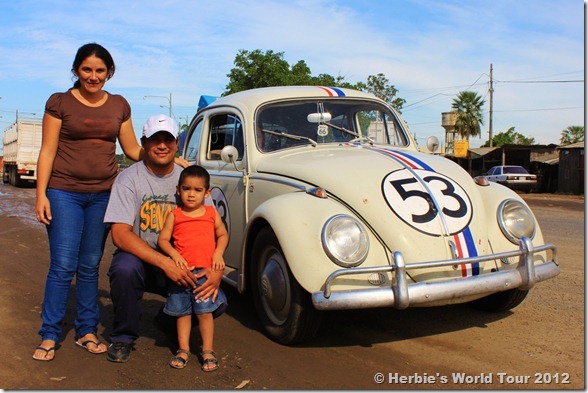
Herbie made a long way riding from General Güemes on Highways No. 34, 81 and 11 to Clorinda, at the border to Paraguay. Tomorrow we’ll enter this country in the heart of South America. Although we won’t spend much time there, we’ll have a very warm welcome. Jorge Ortiz from Asunción, an air-cooled VW enthusiast and member of the Classic VW Club Paraguay, will pick us up right after the border.
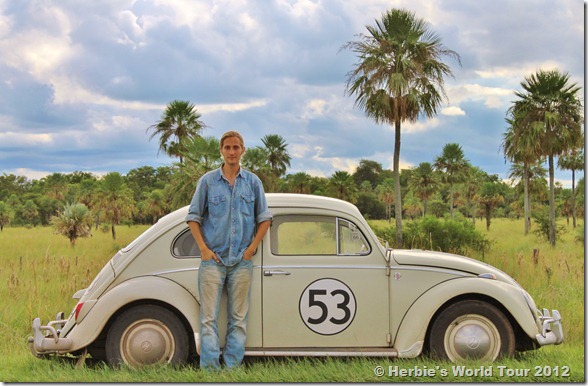
We had a pleasant time in Argentina, even though it was hard to find gas selling gas stations in the West as well as ATMs without endless lines in certain provinces.

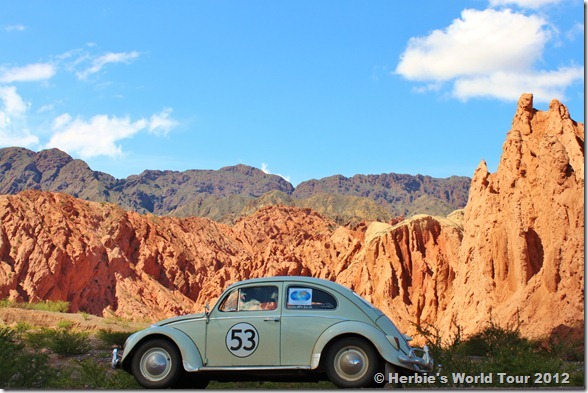
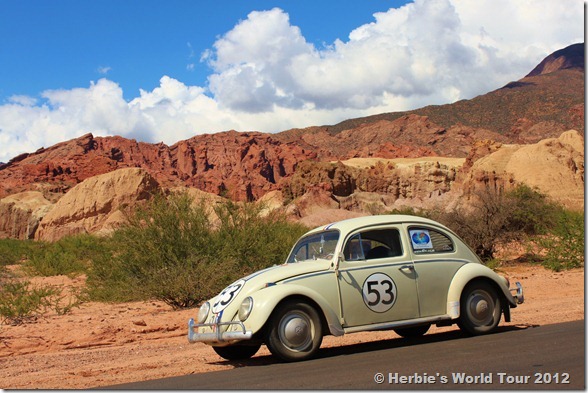
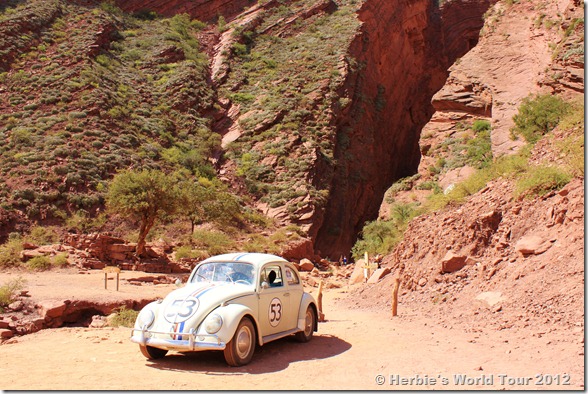
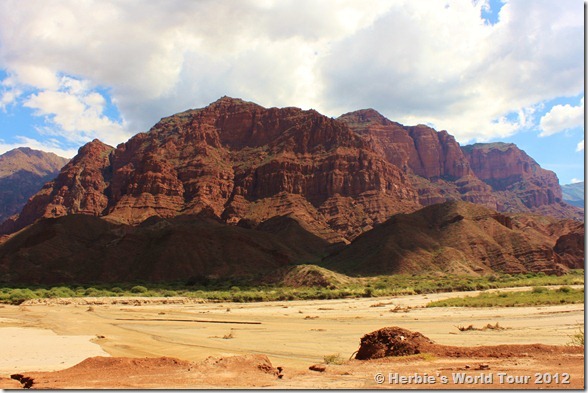
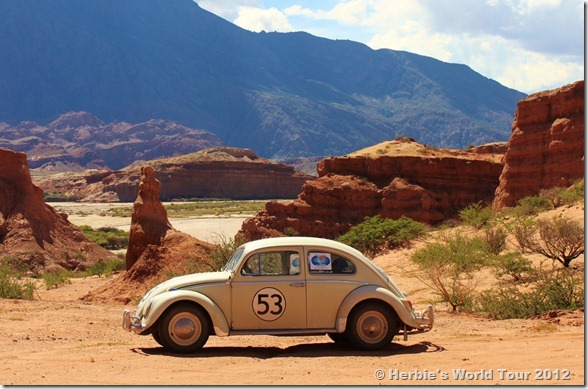
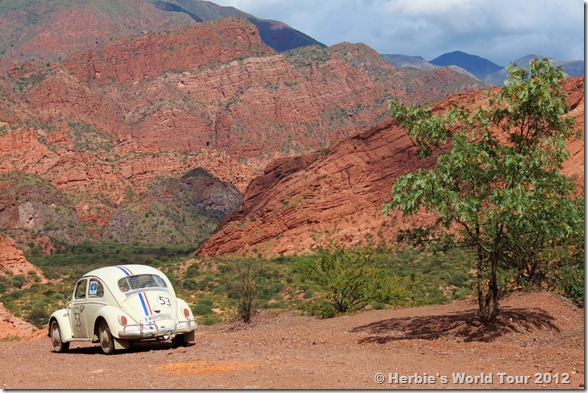
Especially the region between Salta and Cafayate was really worth a visit. It reminded us of going through parts of Utah, Arizona or Nevada we love so much.
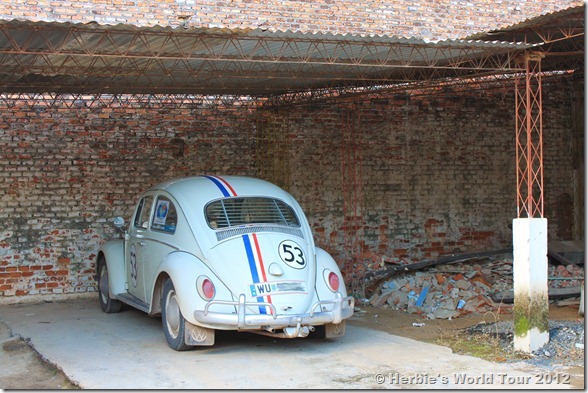
Taking the route across “Paso de San Francisco” was quite a challenge, but we are happy to have experienced the probably roughest path of the Dakar Rally.

Tomorrow we’ll enter Paraguay, heading northeast towards Brazil. It will take us thousands of miles before reaching Venezuela and eventually Colombia.
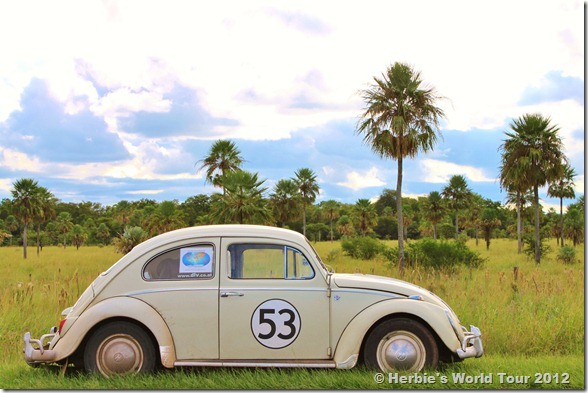
So “don’t cry for us Argentina”, we enjoyed the stay, but we’re moving on. The Amazonas is waiting for us. From now on we’re heading north in direction of Colombia.
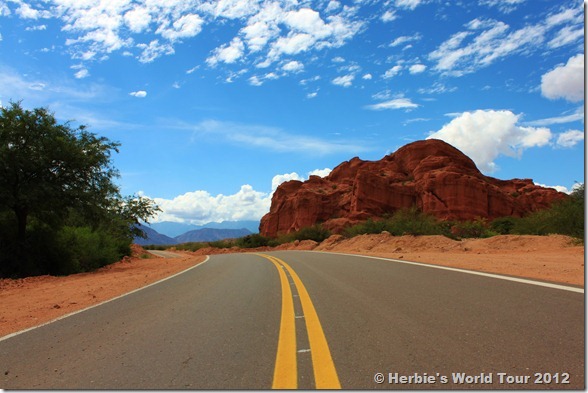
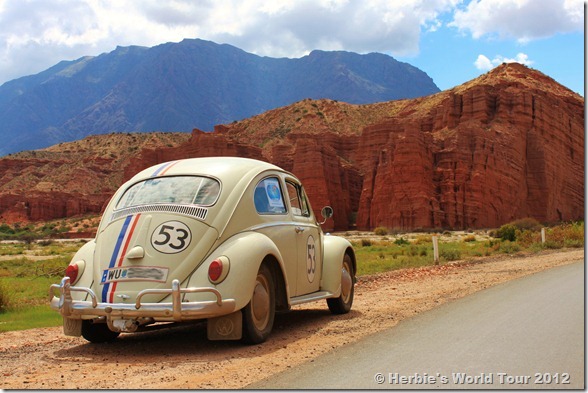
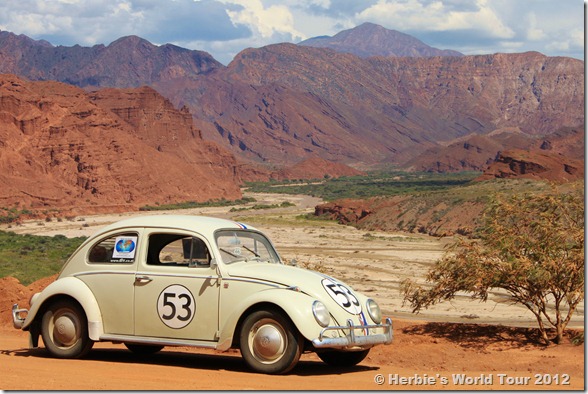
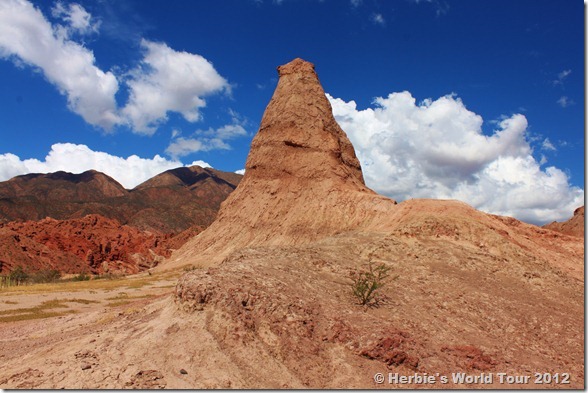
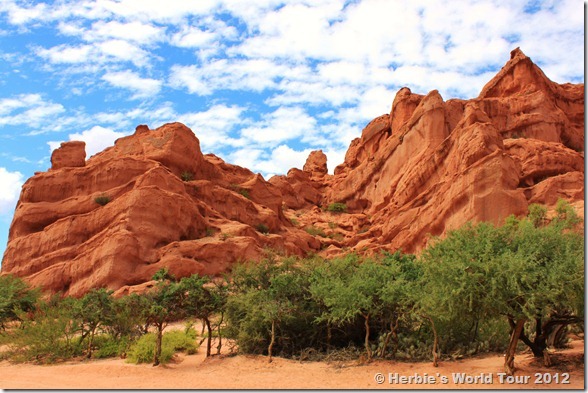
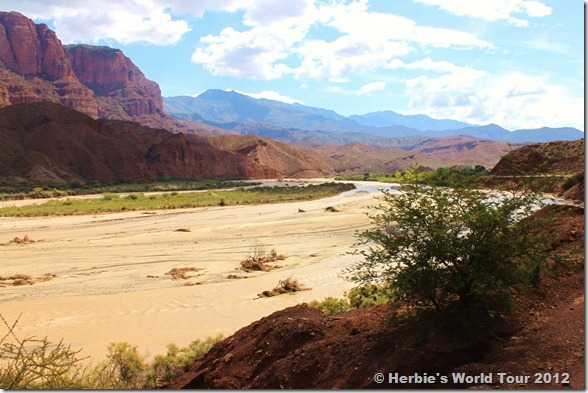
As we were heading north on Highway No. 68 from Cafayate to Salta, we passed a truly amazing area full of red rocks. This region is also well-known for its unique wine production, benefiting from the low-humidity mild weather. We stopped for the night in General Güemes, a city east of Salta. Today we’re going to travel further up northeast towards Paraguay.



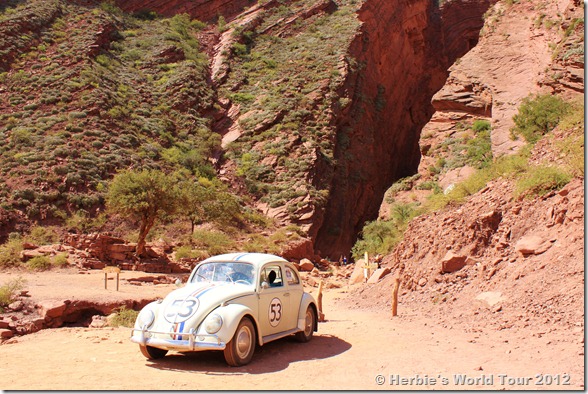
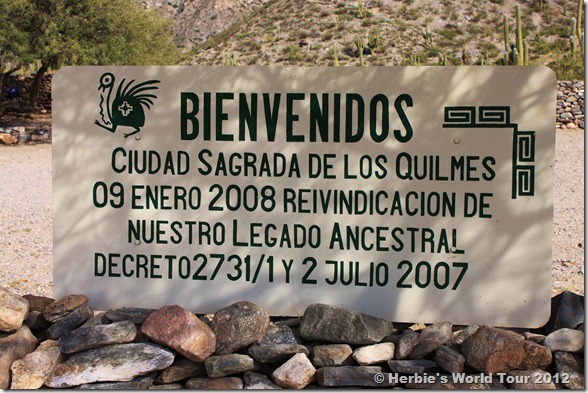
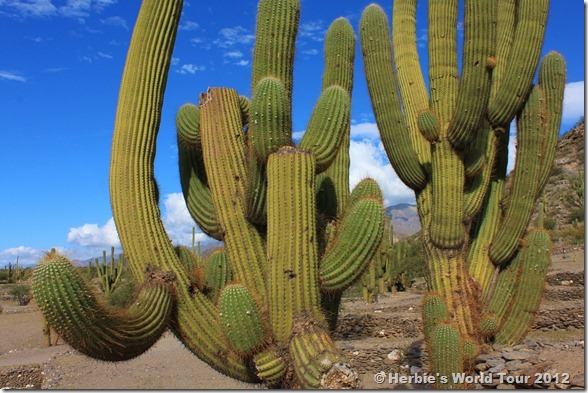
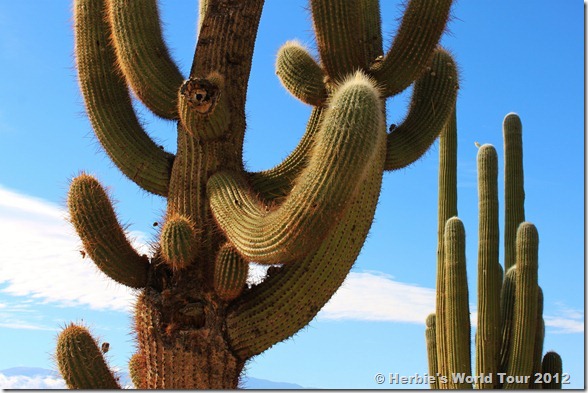
Last day we explored another ancient city on Highway No. 40 in Tucumán, the smallest province of Argentina. “Ciudad Sagrada de los Quilmes” is the given name of this more than 500 years old Incan metropolis. Around and within the ruins you can find huge cactuses, which reminded us of Southern Arizona or Northern Mexico with its countless “saguaros” (cacti).
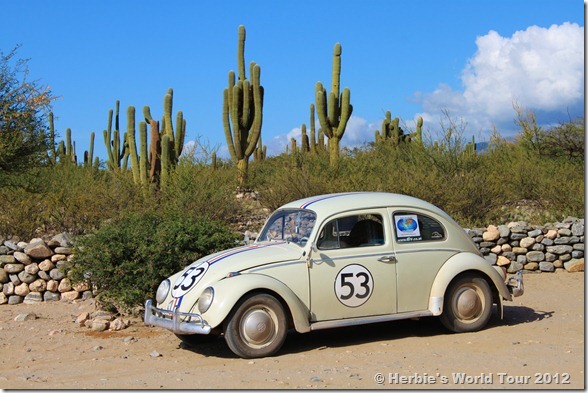



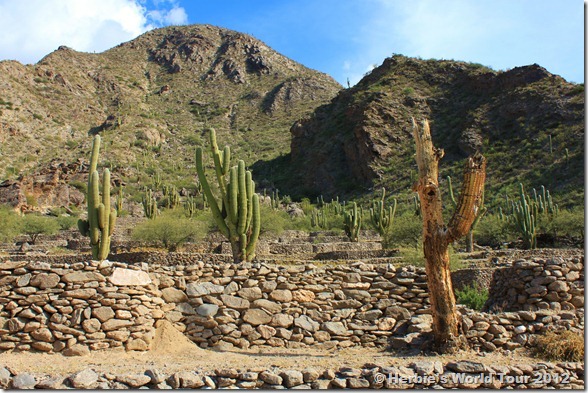

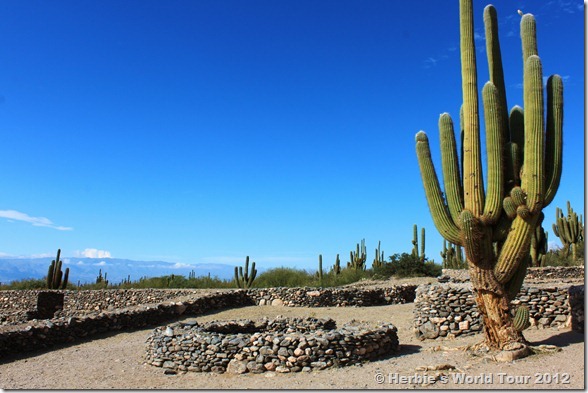
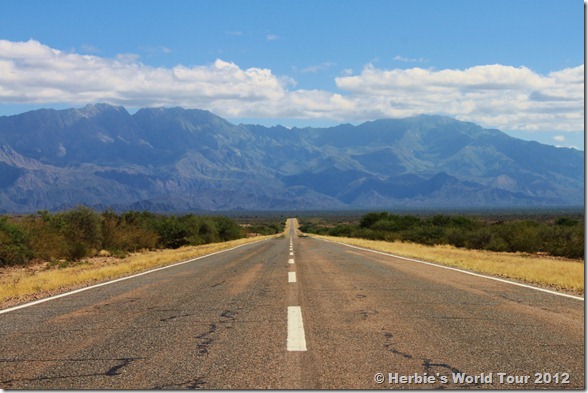
We spent the night in Fiambalá, after crossing the Argentinian border via “El Paso de San Francisco”. On the next day we cruised across Catamarca, one of Argentina’s provinces. Remote and vast landscapes accompanied us on our way southeast.
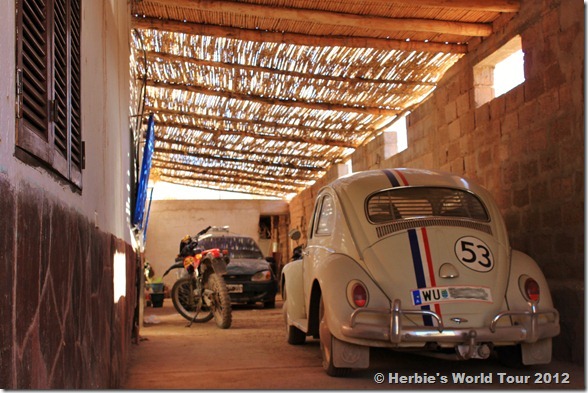

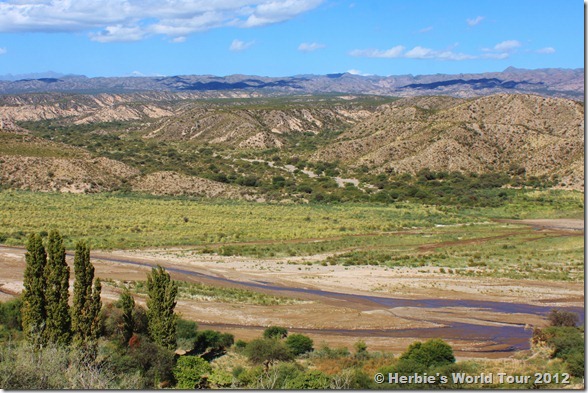
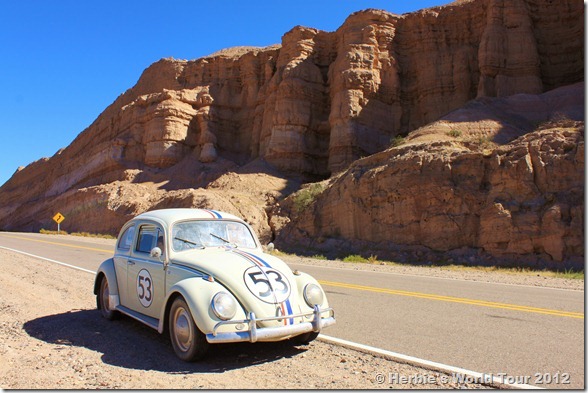

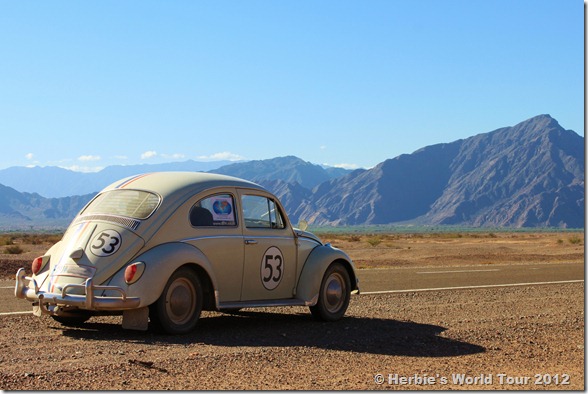


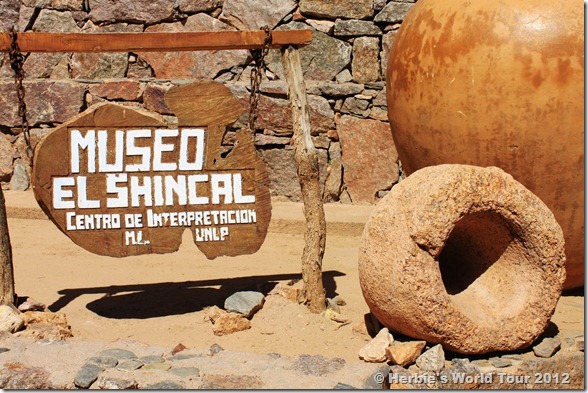
On our way east we visited one of ancient ruins by the Inca Empire. Londres de Quimivil is the actual village nearby, which is the oldest town in the Argentinian province of Catamarca and the second oldest city within the entire country. The old Incan city was named “El Shincal”. It was an administrative center from 1471 to 1536 AD.

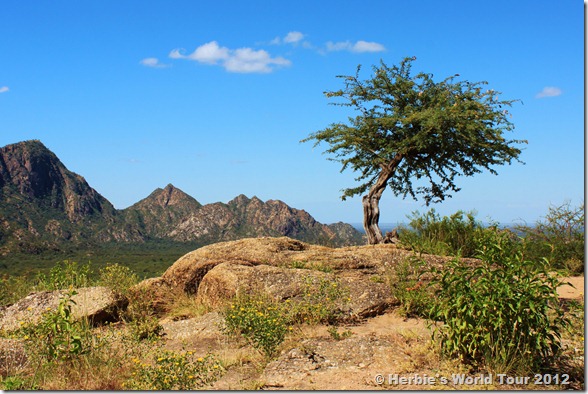
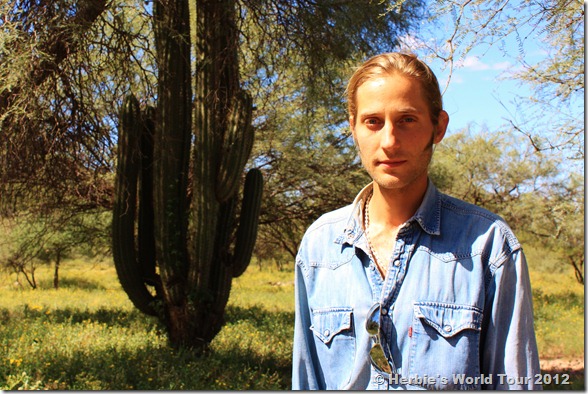
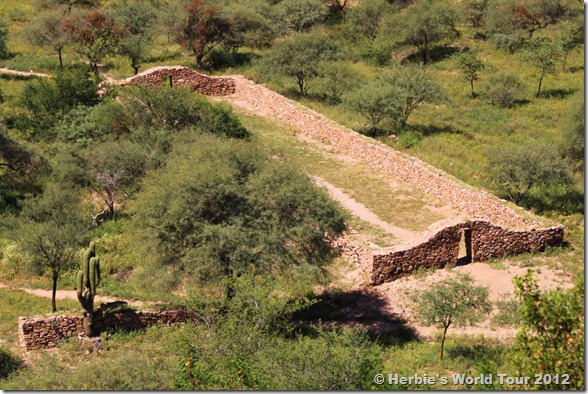
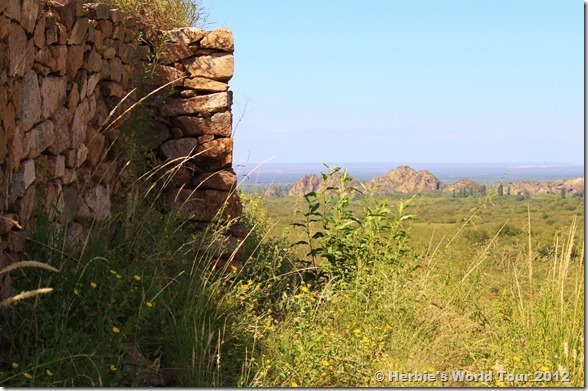


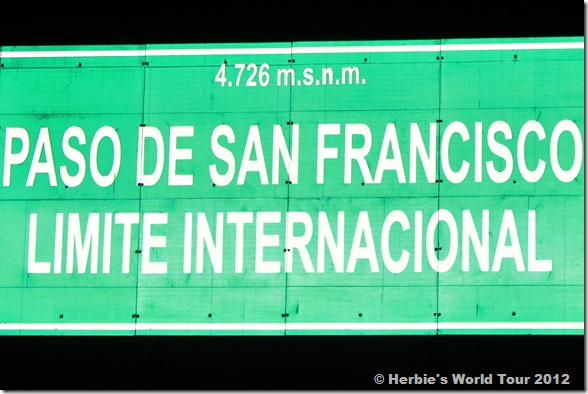
The Love Bug made it! The border between Chile and Argentina levels 15,505 feet (or 4,726 meters) and its way up there is called “El Paso de San Francisco” – the toughest section of the world famous Dakar Rally. Paved roads were hard to find and the weather was windy as well as freezing cold. Oxygen was quite rare and Zainab even got a bit of an euphoria. Here are our last impressions of Chile.

It took us hours to reach the pass, which is located between the two border posts. It was getting dark and we finally arrived at the frontier of Argentina two hours after its closure. The executives were so kind to do all the immigration formalities, even though they already had off for the day. We stopped for the night in Fiambalá.

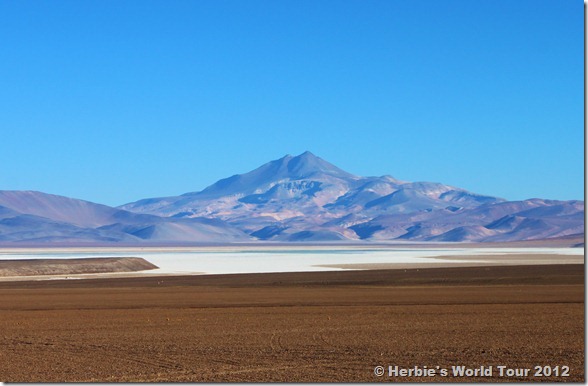


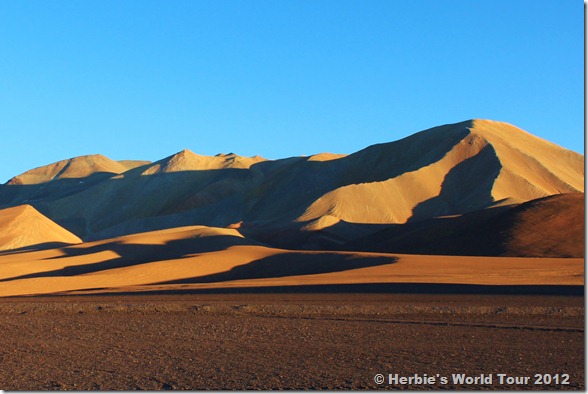

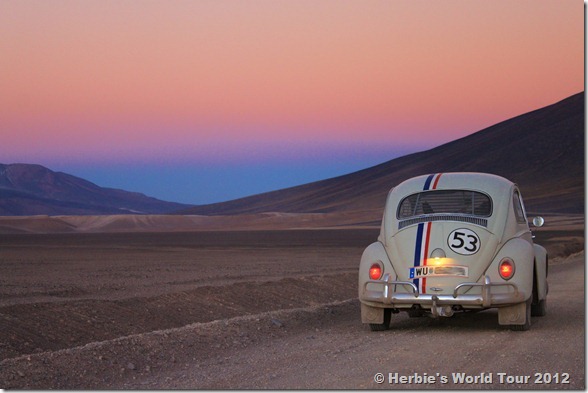
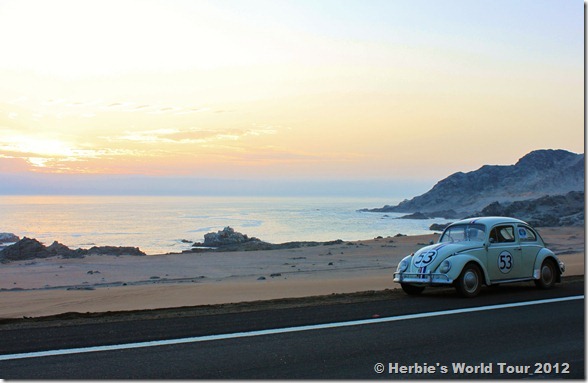
Herbie is driving through the driest area on the earth – the Atacama Desert in Chile. We’re heading further south besides the Pacific ocean. Right after we’ll leave the “Panamericana”, climbing the Andes a very last time, going to Argentina.
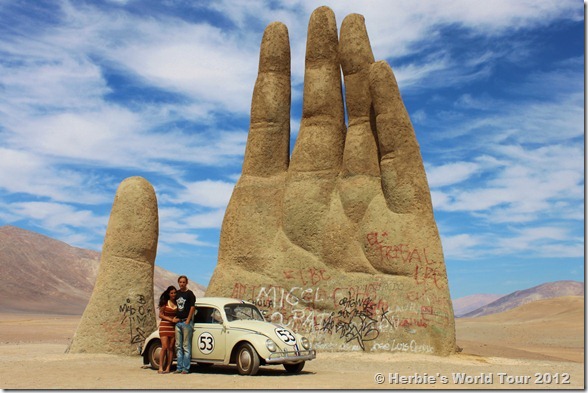


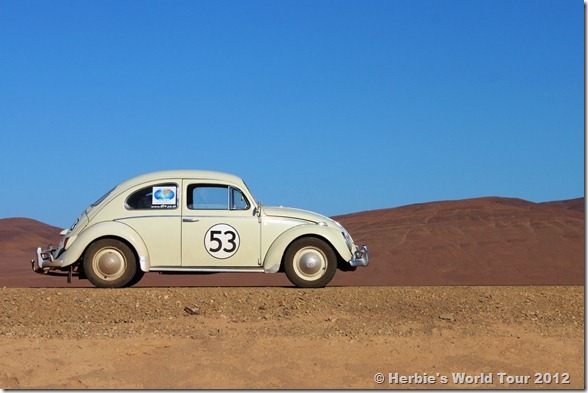
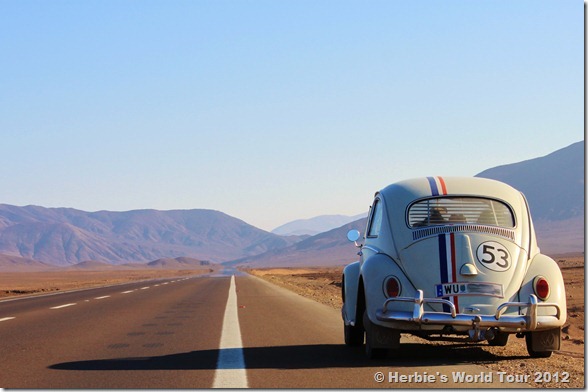
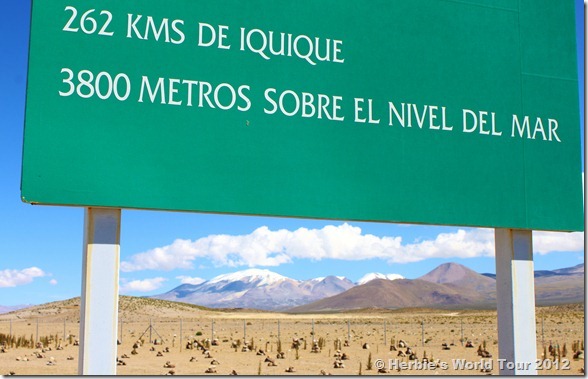
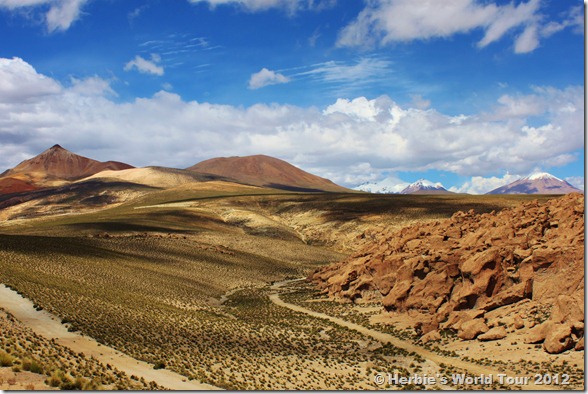
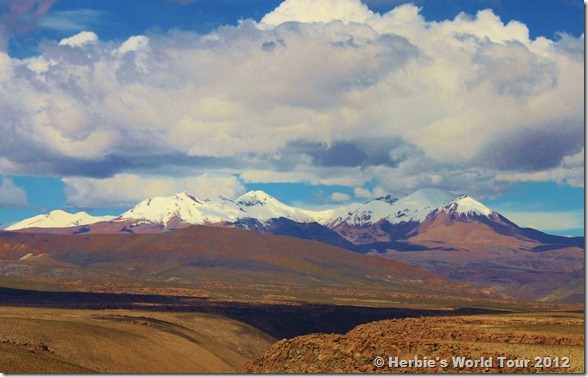
After meeting the President of Bolivia, we finally entered Chile at Colchane and headed downhill towards the Pacific. We are now following the coast line further south, before we’ll cross over to Argentina.
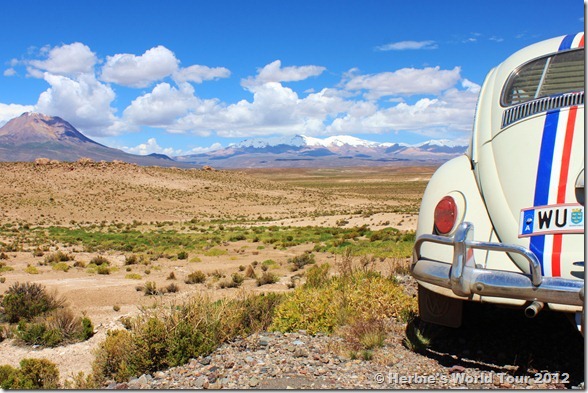
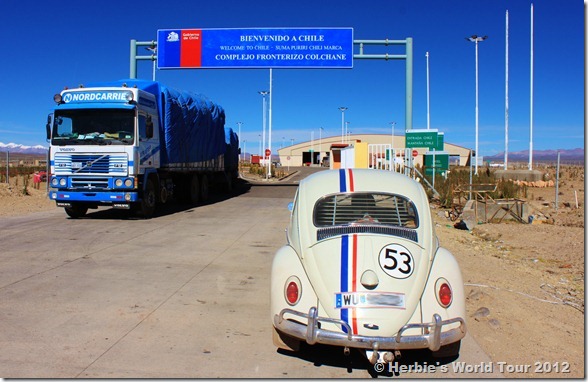

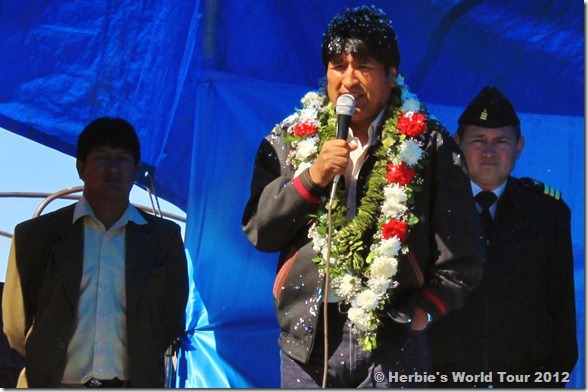
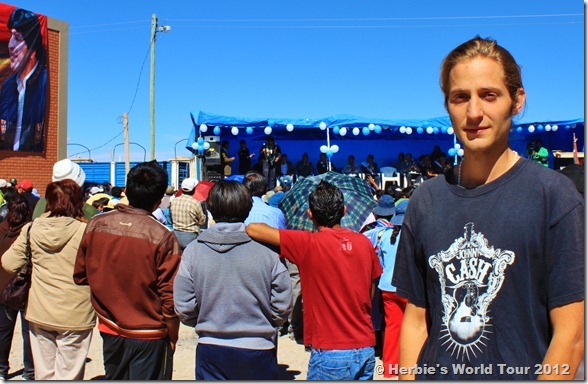
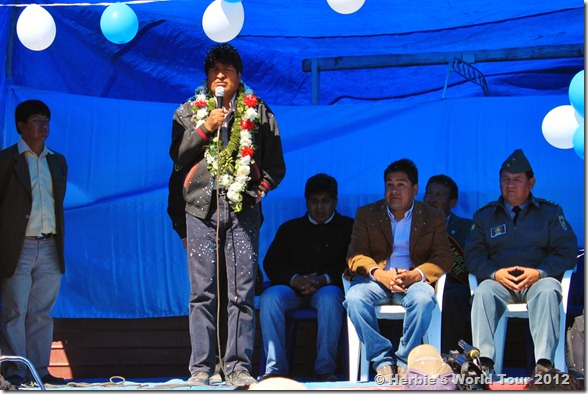
The Bolivian border at Pisiga was closed for two hours, while we wanted to cross over to Chile. The reason was an official visit of Bolivian’s President Evo Morales, who arrived by helicopter in the little border town for the grand opening of a market hall. We were very surprised to meet the President himself in the middle of nowhere in Bolivia.
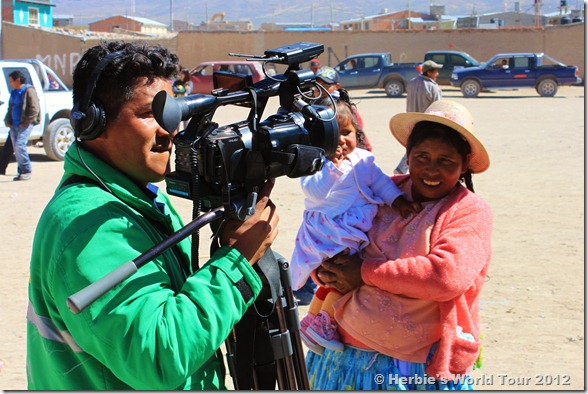
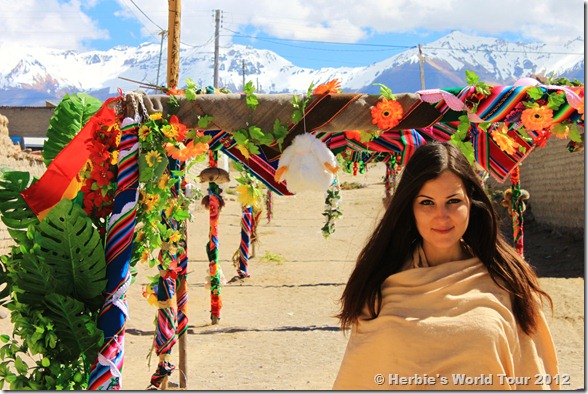

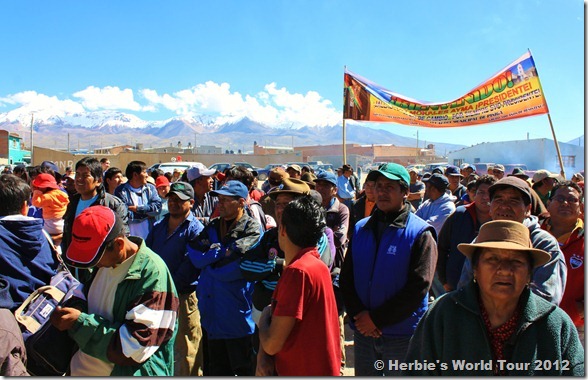
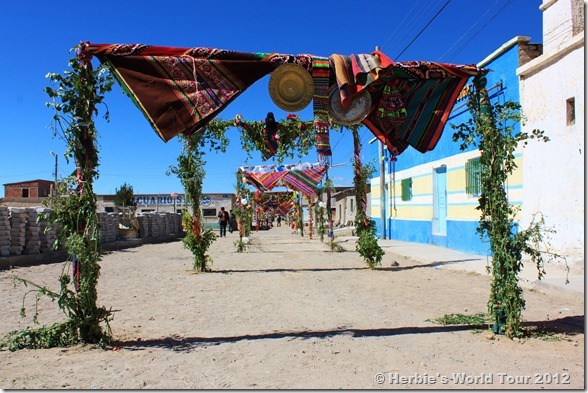
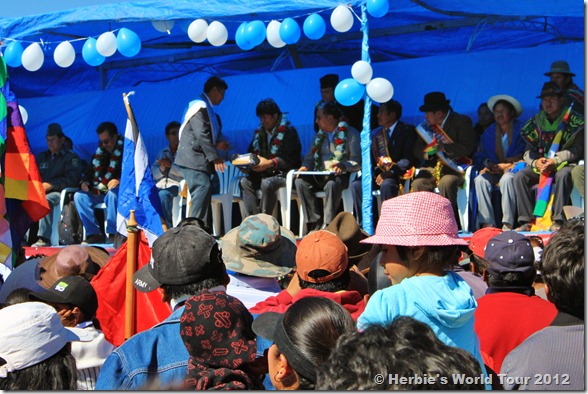
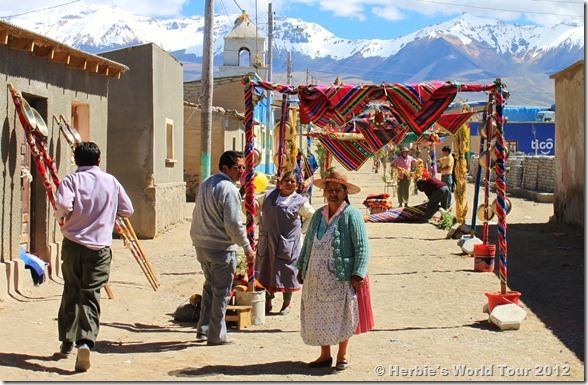
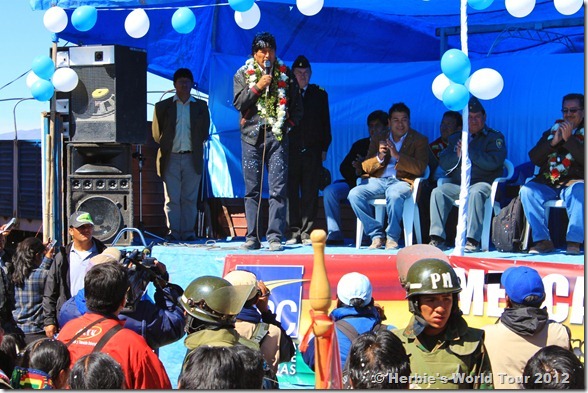
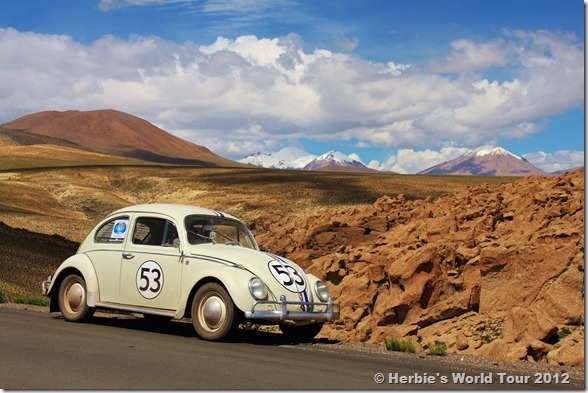
Herbie made it to the end of the road in Bolivia. According to our maps and the natives we’ve spoken to, the street towards the border should be totally paved and in perfect condition, but we got surprised! We had to drive parts of it on an unpaved path for hours until we reached the Bolivian border town Pisiga on Highway No. 12.
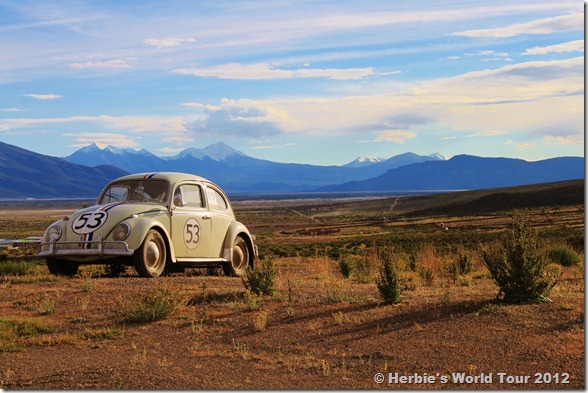
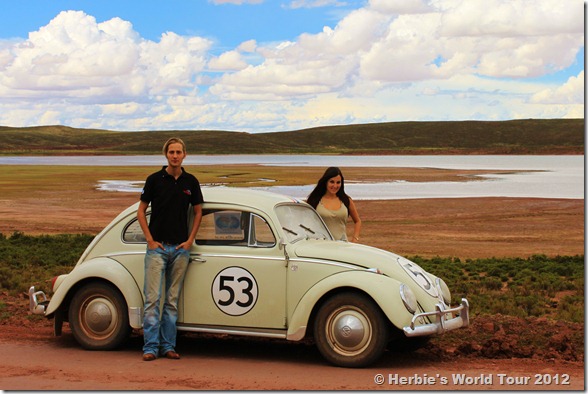

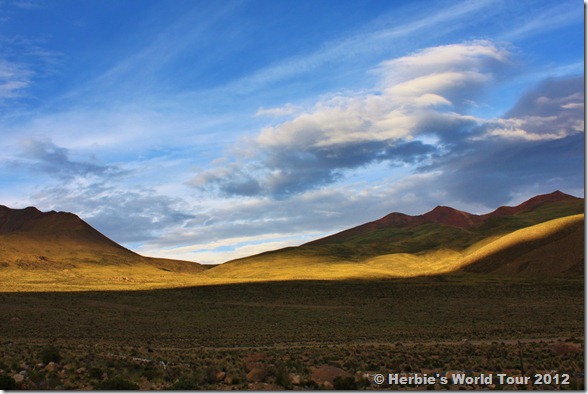
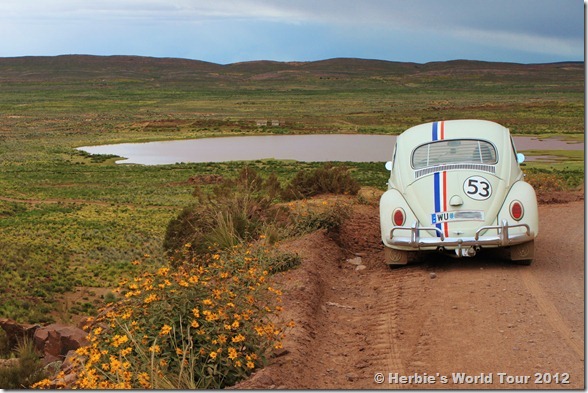
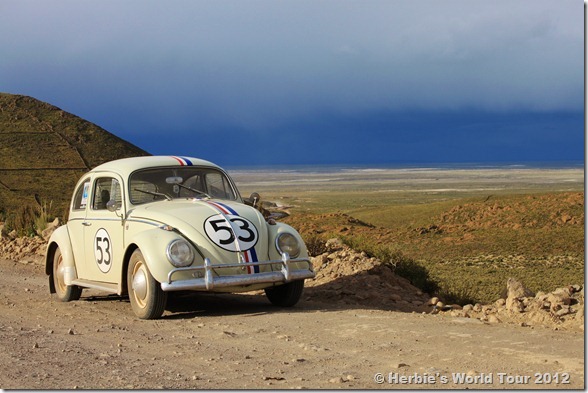
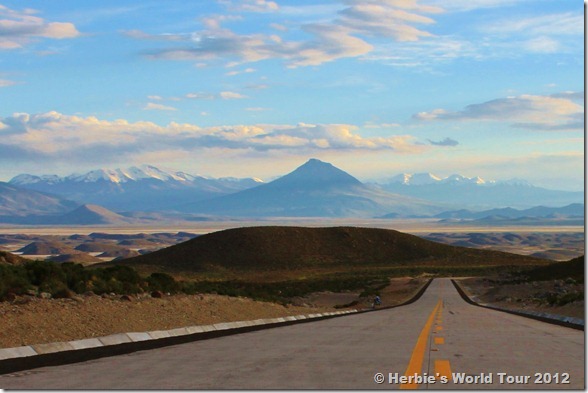

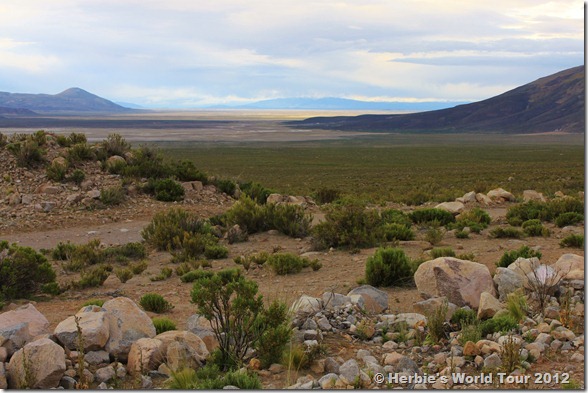
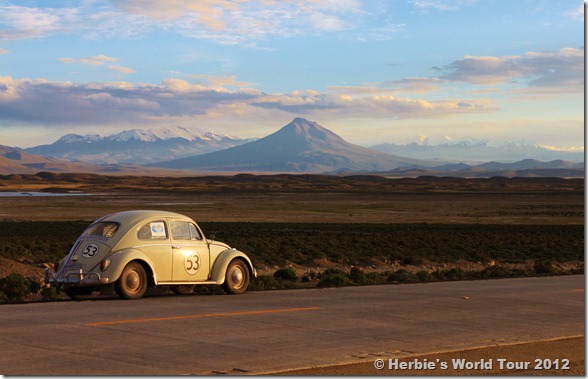
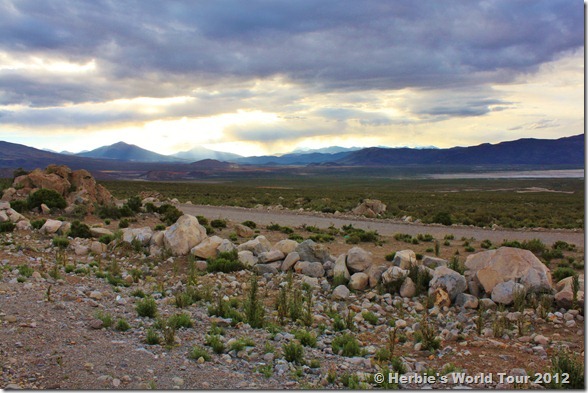

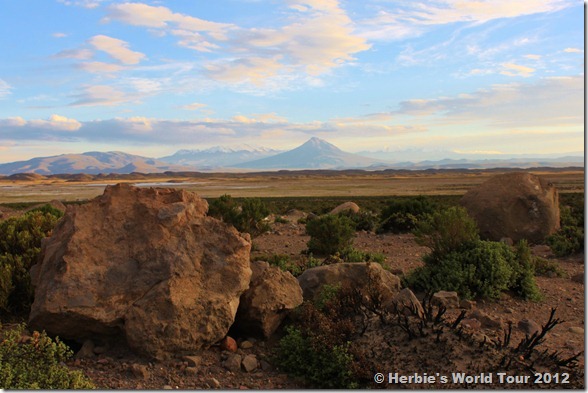

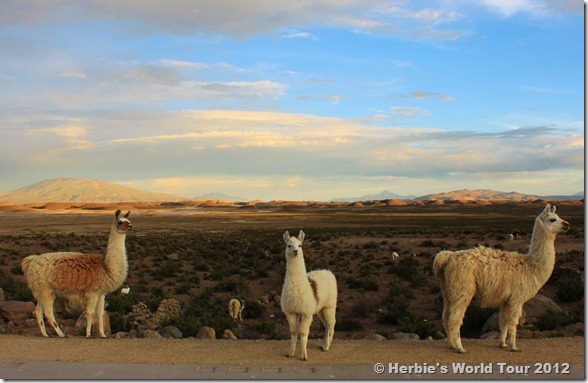
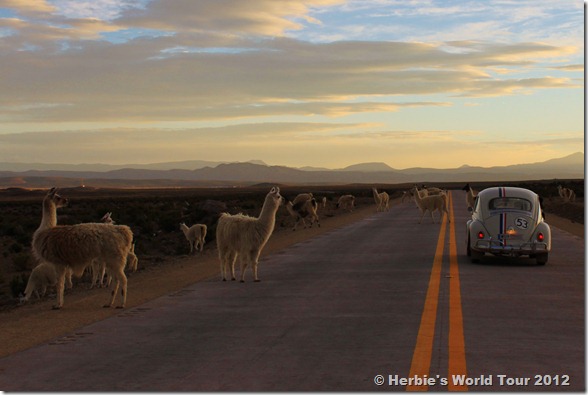
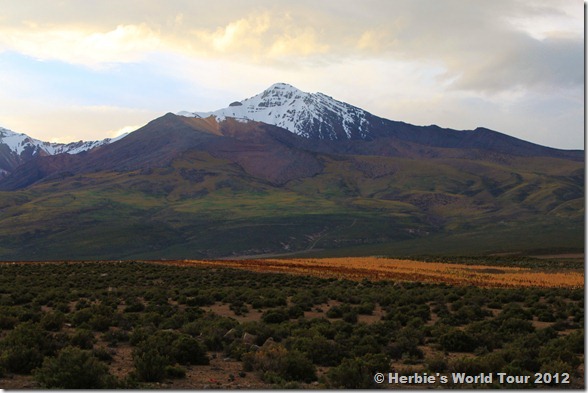

After spending three nights in Oruro, in the South of La Paz, we’re going to leave this town for good, heading towards Chile. Tomorrow we’ll probably cross its border.
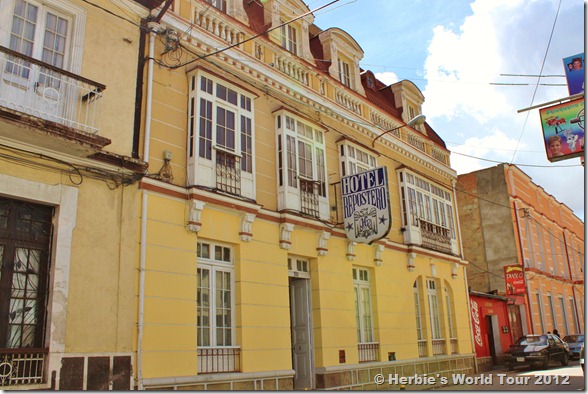
We had a good time in Oruro, taking a rest from rallying across the Peruvian Andes.
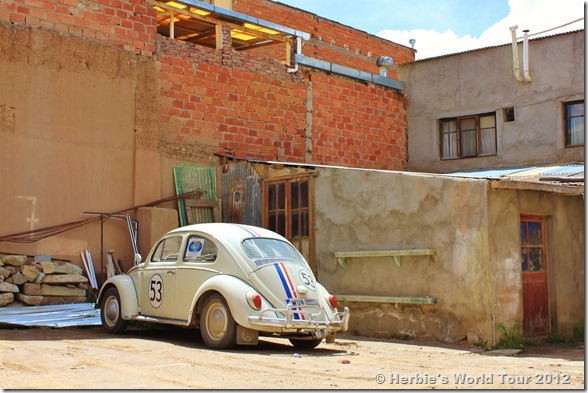
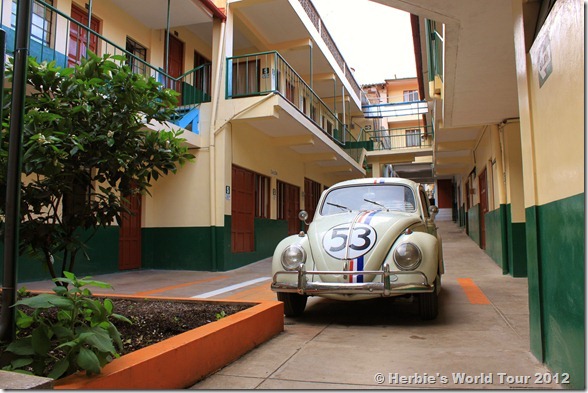
We stayed at an old hotel right in the center. And Herbie parked in the courtyard.
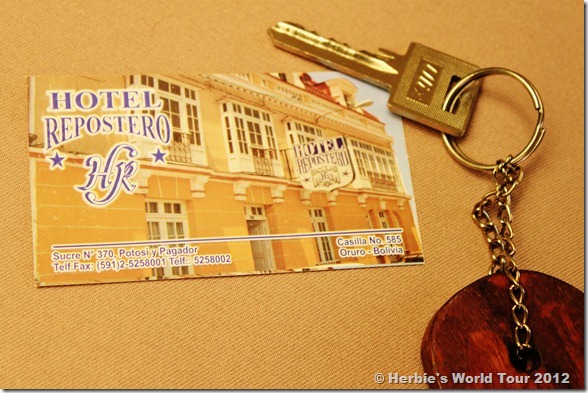
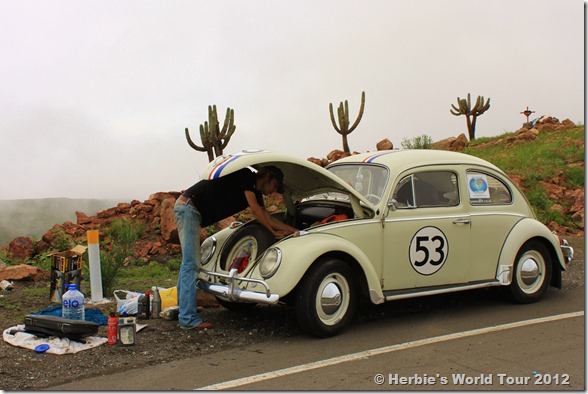
It was also time for a small motor service, after driving so many miles since California.
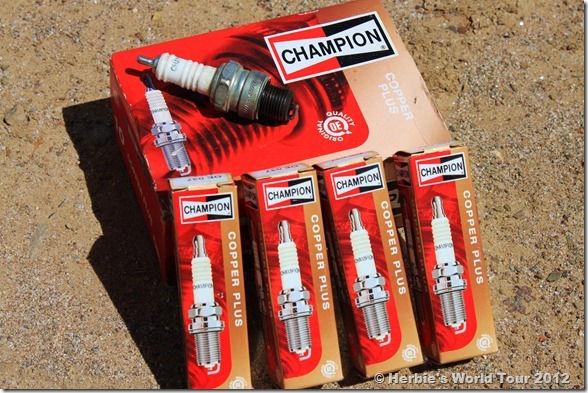
Domi changed spark plugs (Champion “Copper Plus” L86C) and tightened Herbie’s belt.

Furthermore Herbie got a new distributor rotor and cap (made in the European Union).
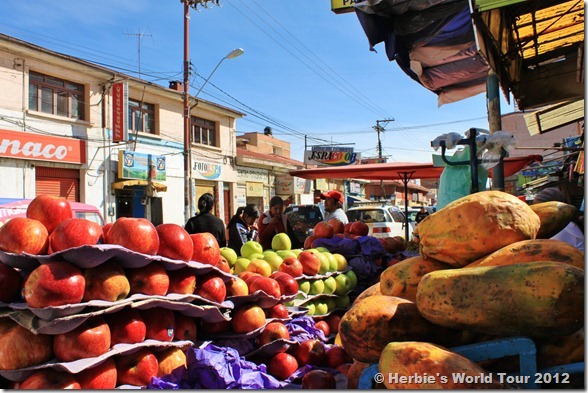
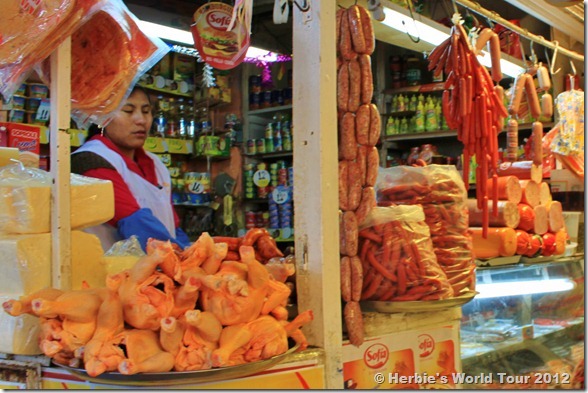
We’re taking a little rest from driving cross country in Oruro, Bolivia. Today we went a bit shopping and Domi took some pictures, so you can get a taste of it too. Tomorrow we’ll take off heading west towards the border of Chile, where we want to continue following the Pan-American Highway further south down to Santiago de Chile.

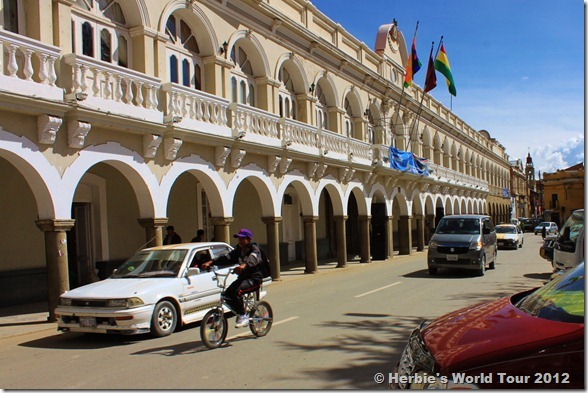


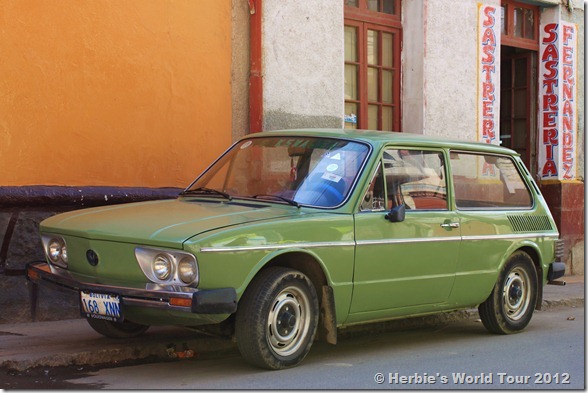
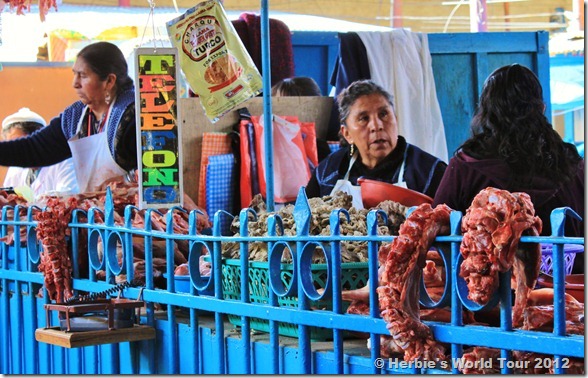
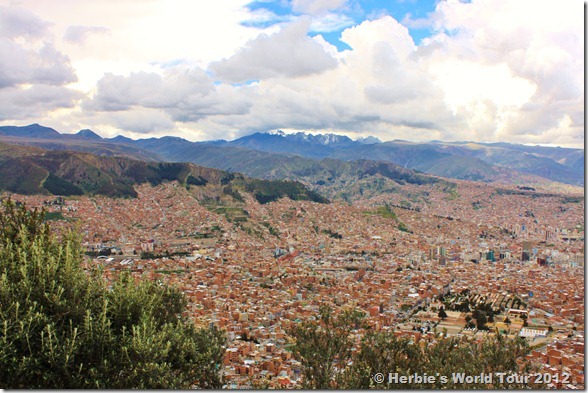
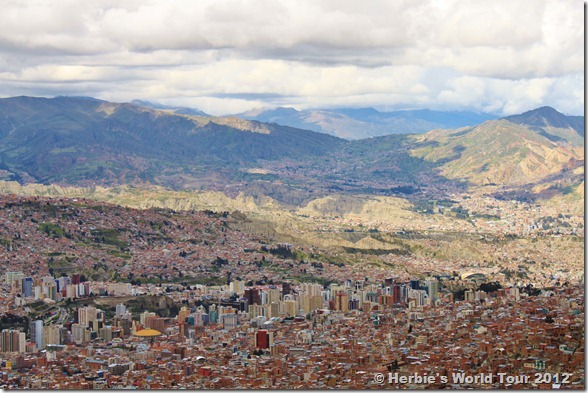
After entering Bolivia we had a short visit in La Paz – with 11,975 feet (or 3,650 meters) the highest capital in the world. “Nuestra Señora de La Paz” is the official name of the second largest city in Bolivia. We are already in Oruro, a little bit further south.

In the next days we’ll probably cross the border to Chile in order of heading south along the Pacific coast towards its capital, Santiago de Chile.
Herbie is doing well after driving in extreme high altitudes, always above 10,000 feet. Today Domi will change spark plugs, distributor cap and rotor.
We spent our last Peruvian night in a small town named Juli and entered Bolivia right besides Lake Titicaca. Bolivia is obviously different: Here you get two different gas prices, one for the natives and one for foreigners like us. The so-called “international price” is three times higher. Meanwhile we filled up Herbie already two times. Domi had long discussions at the pump, but finally succeeded – we got treated like “Bolivianos”.
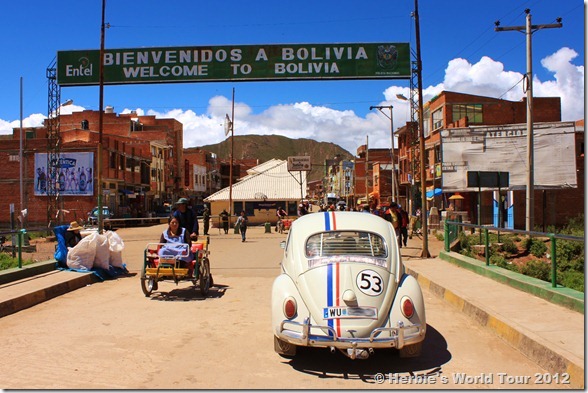
Back in Europe we read some good things about Bolivia and its president Juan Evo Morales Ayma, who is in charge since 2005. So far we were lucky regarding the gas prices but we cannot understand why tourists should be treated differently.
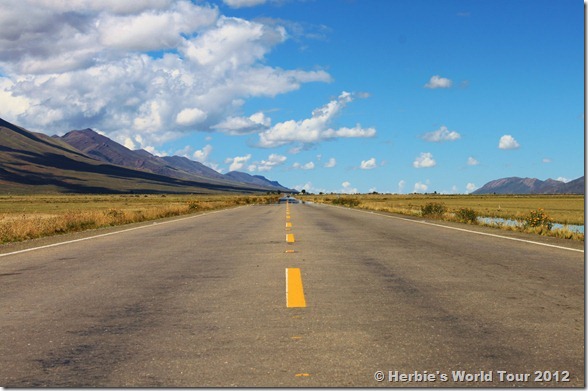
We headed south via Oruro to Santiago de Huari, because we were planning to cross the border to Chile as far as south as possible in order to see more of Bolivia. But suddenly the street changed into an unpaved one.
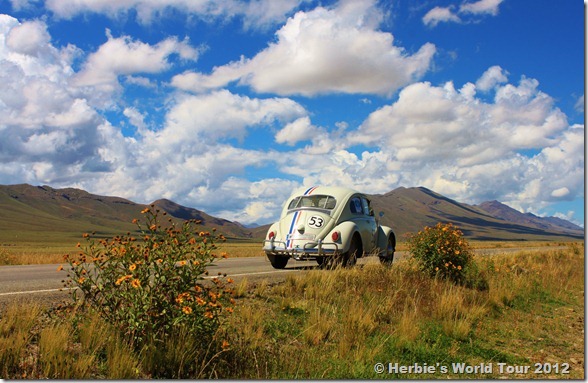
We got told that the road won’t change back into a paved one until the border. We had to choose if we should drive hundreds of miles without pavement or if we should go back. We decided to make a u-turn and drove back to Oruro.
We are glad to inform you that our ocean carrier Wallenius Wilhelmsen Logistics made amends and paid for Herbie’s damages. Therefore we’re probably going to ship the Love Bug back from Colombia to Mexico with the same company. Many thanks to Mr. Bakker from New Jersey who took care of our case!

We listened to Simon & Garfunkel’s version of “El Cóndor Pasa” – originally a Peruvian folk song, which means “The Condor Goes By” – while we were climbing passes higher than 14,000 feet (or 4,000 meters) and visited cities like Cusco and Puno, right at Lake Titicaca. Tomorrow we’ll enter another part of the ancient Inca Empire – Bolivia.


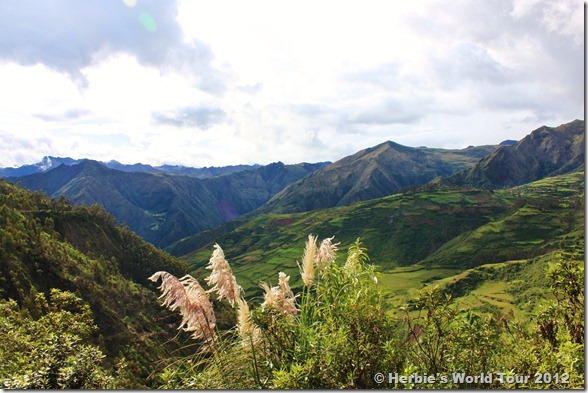
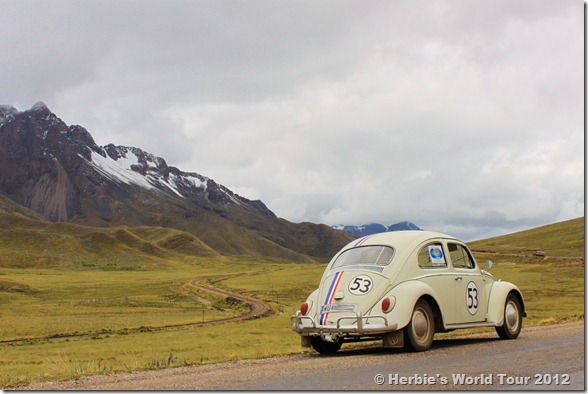
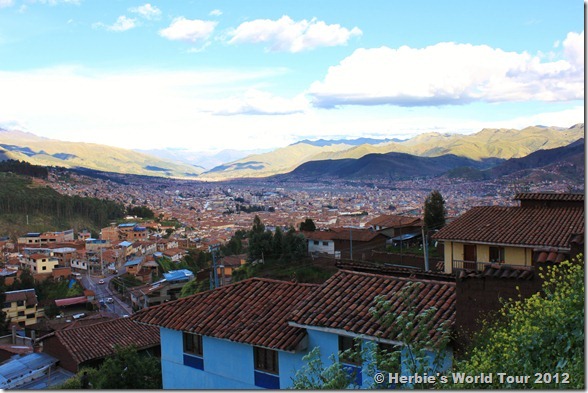
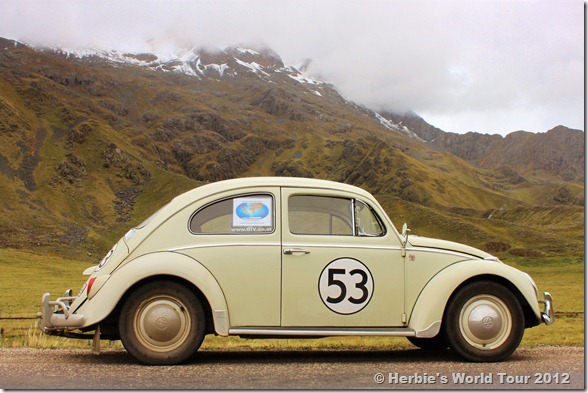
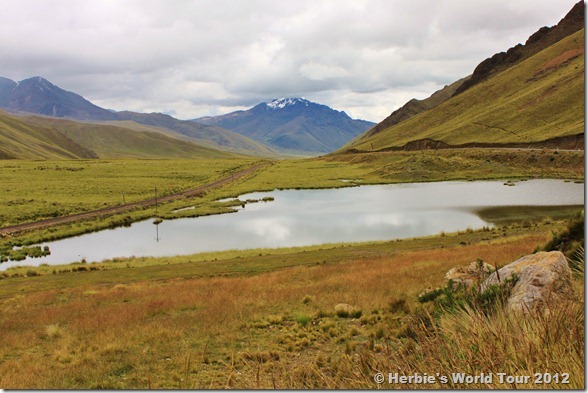
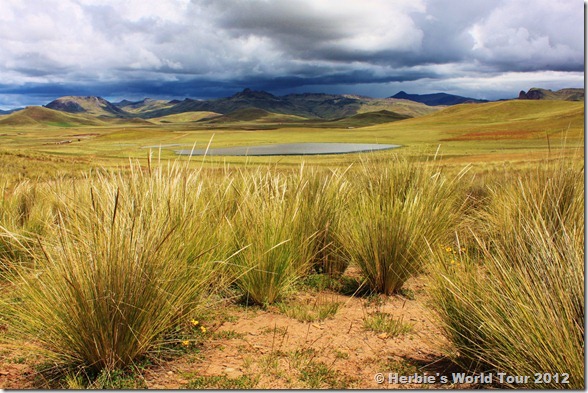
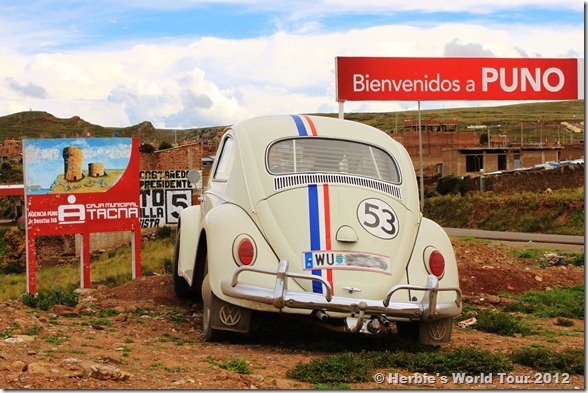
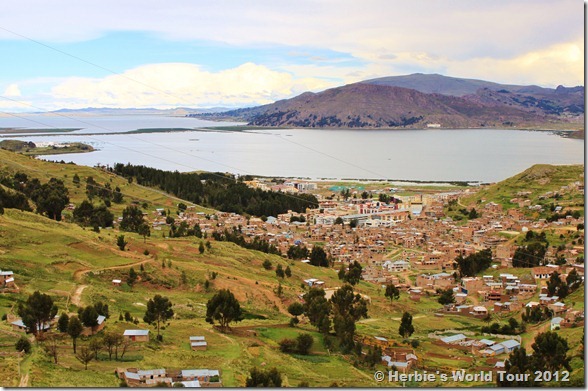
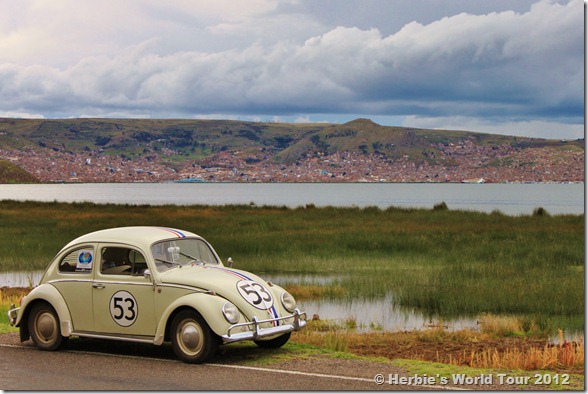

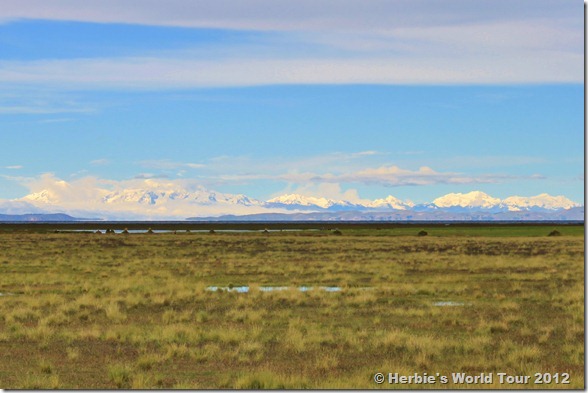
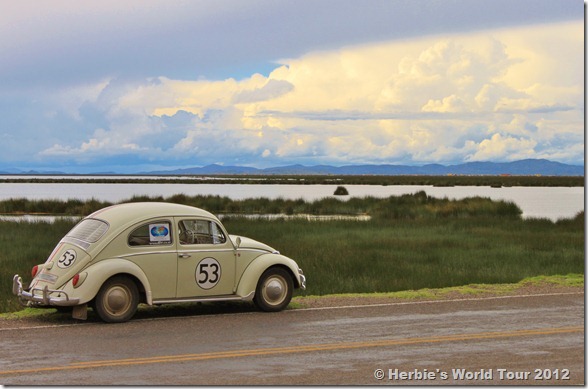

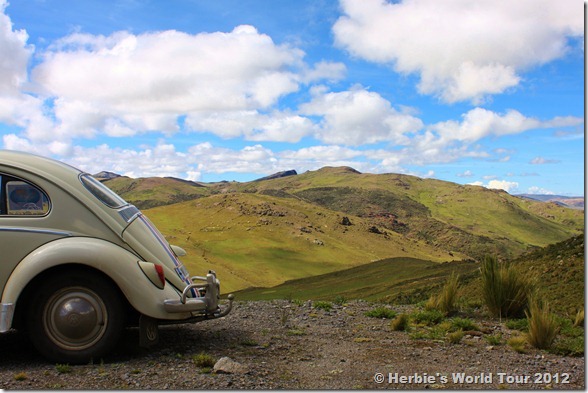
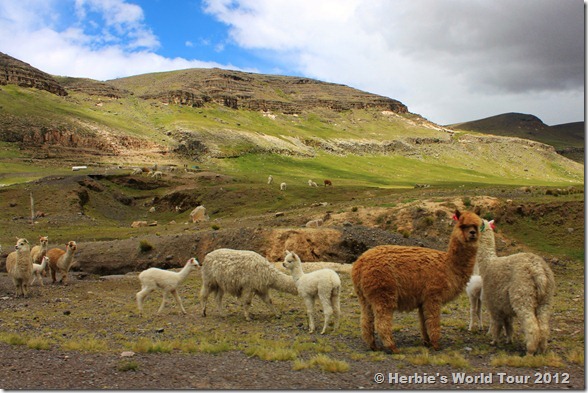
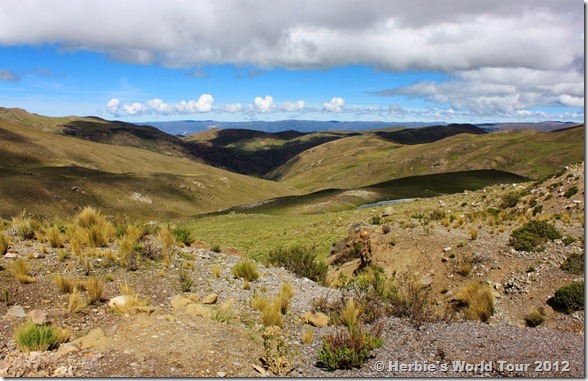
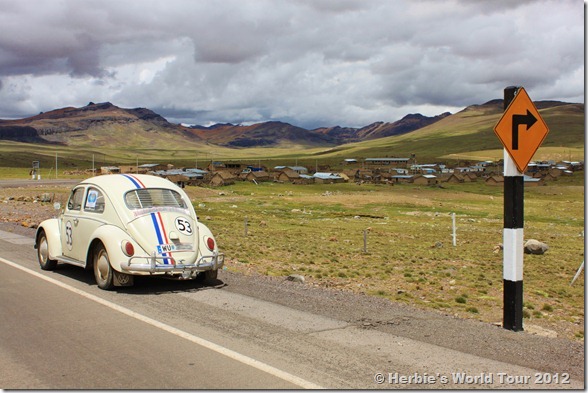
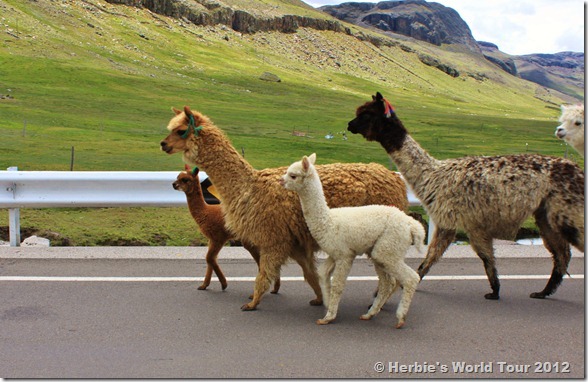
As we left the “Panamericana” by the coast, we followed Highway No. 26 across the Andes towards Lake Titicaca and Bolivia. Yesterday we started from a town called Puquio and headed to Abancay, where we stayed for last night. We passed by many amazing views and for the first time we also spotted countless flocks of alpacas.
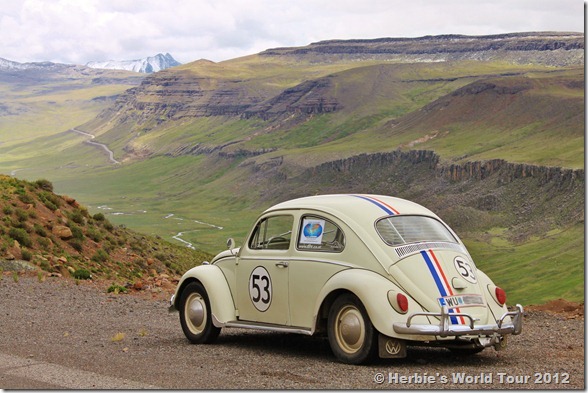





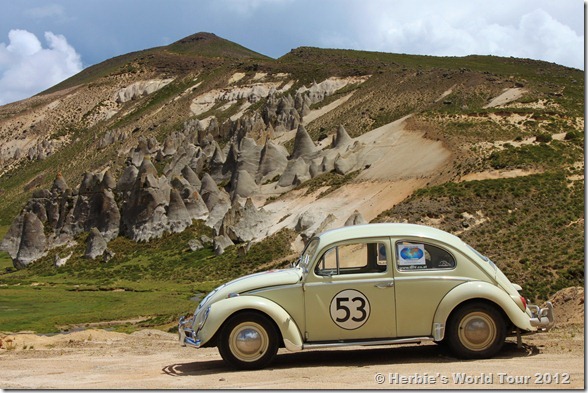

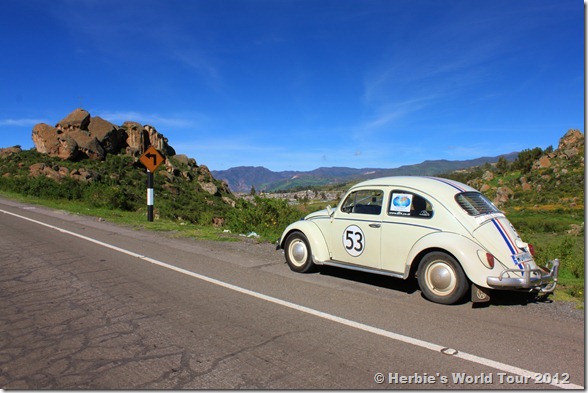
It is always hard to say good-bye, but finally we left Lima for good and followed the Pan-American Highway further south. We visited the so-called Nazca Lines near Nazca.

After changing motor oil (fully synthetic 15W-50) and gear fluid (fully synthetic 75W-90) as well as adjusting the valves, we took off in order to travel on across South America.
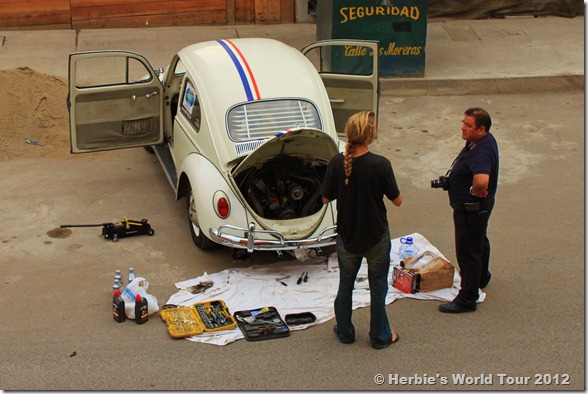
Our new friend and VW Bug enthusiast, Miguel Angel, escorted us out of the city.

Cops are often not as nice as this one here (see below). Corruption is a common habit.

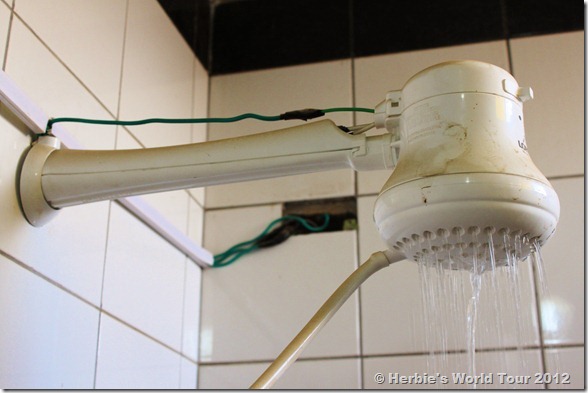
After leaving Lima, we spent our first night in Ica. We didn’t take a shower for once.

We are both adventurers, but we’re trying to avoid such showers in Latin America.
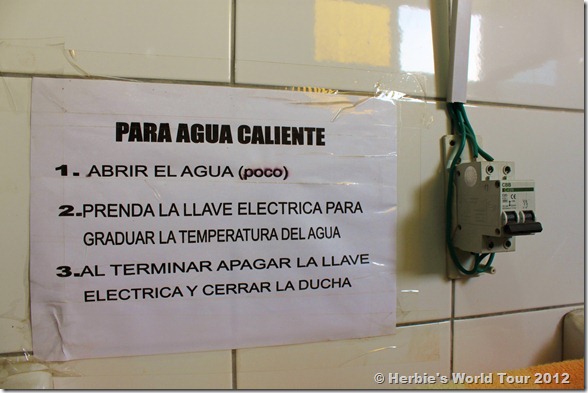
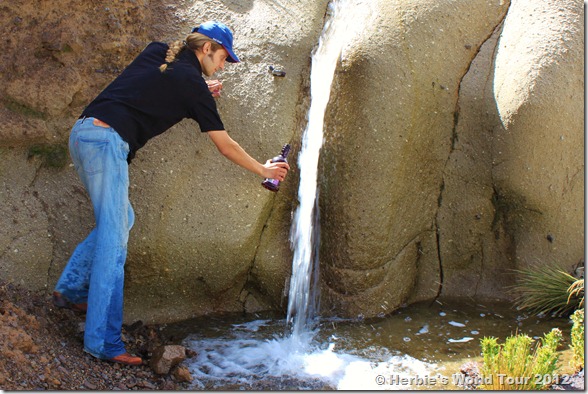
415 Volt and a lot of water are probably no good combination while getting wet.

Such “boiler showers” are pretty in vogue here in South America.
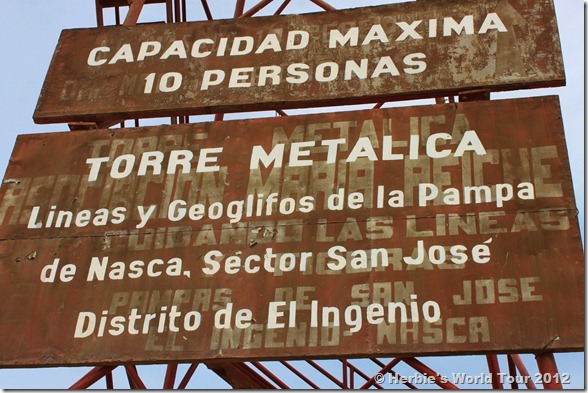
In the morning we left Ica and got to the ancient geoglyphs of Nazca.

Better known as the Lines of Nazca – a UNESCO World Heritage Site since 1994.

The Nazca Lines were created by the Nazca culture between 400 and 650 AD.

Maria Reiche, a German archaeologist studied the Lines of Nazca for decades.
During her field studies she was driving a Volkswagen T1 and a split-window Bug.

The Nazca Desert was Maria Reiche’s life. She spent almost every moment outside.

Maria Reiche also sponsored the tower these pictures were taken from.

In her later years, Maria Reiche had to use a wheelchair and she also lost her sight.
She died of ovarian cancer in 1998 and was buried near Nazca.
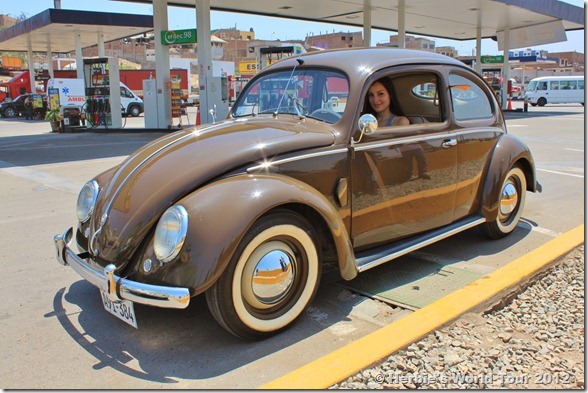
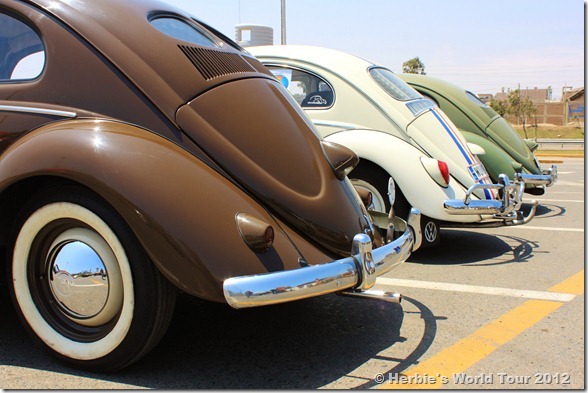
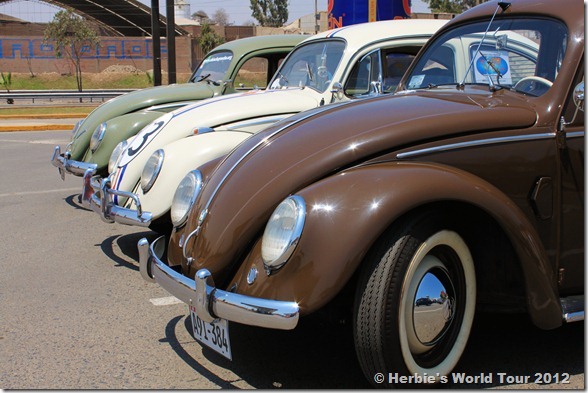
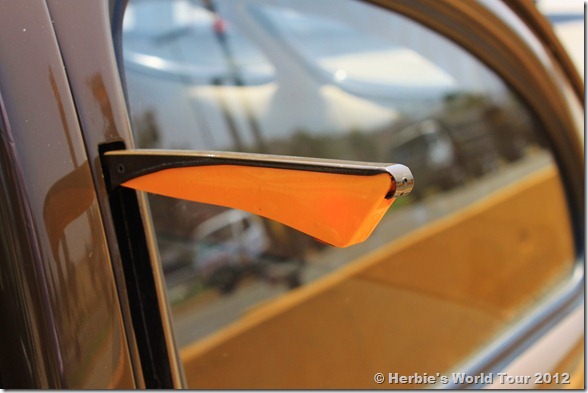
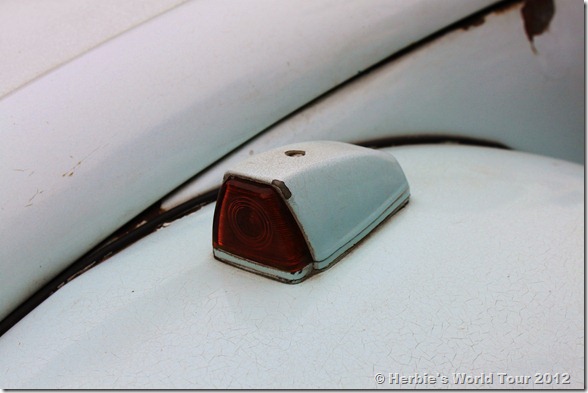
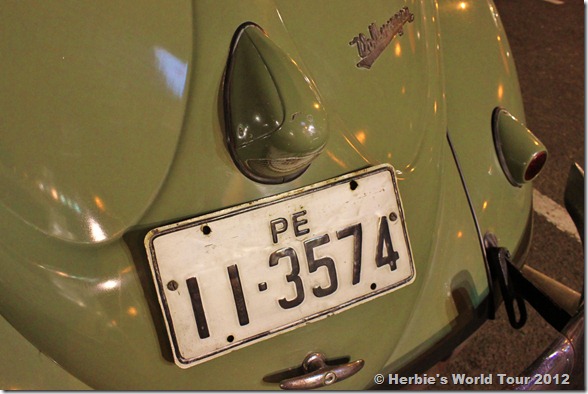
Just before we left Lima today, we had a meeting with two Volkswagen “Brezel” from the early 1950ies. The split windows in the rear made those cars very special. These vintage Beetles also have the original trafficators instead of flashers.

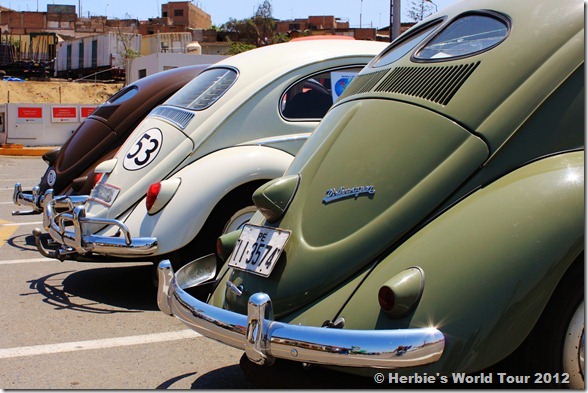

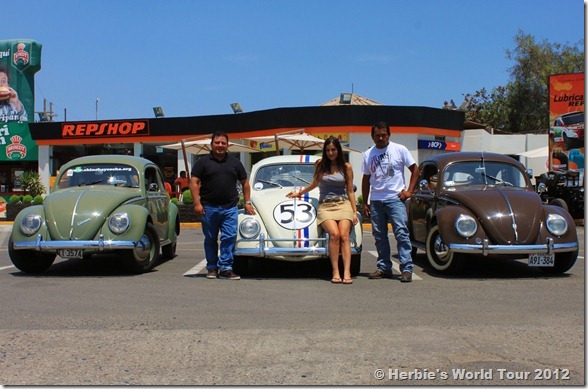
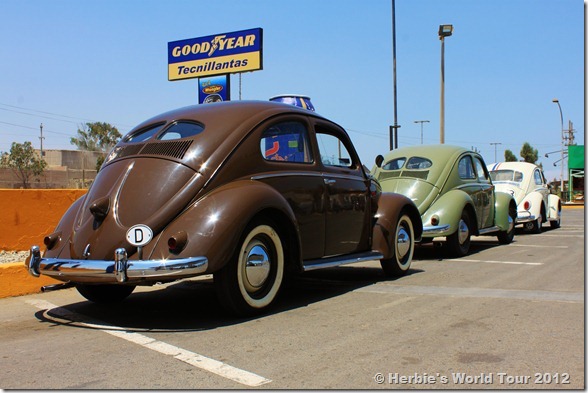

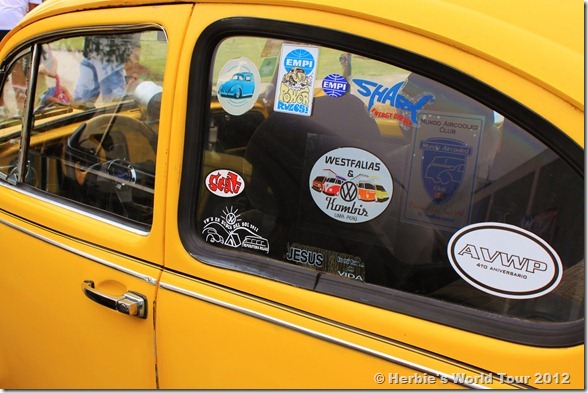
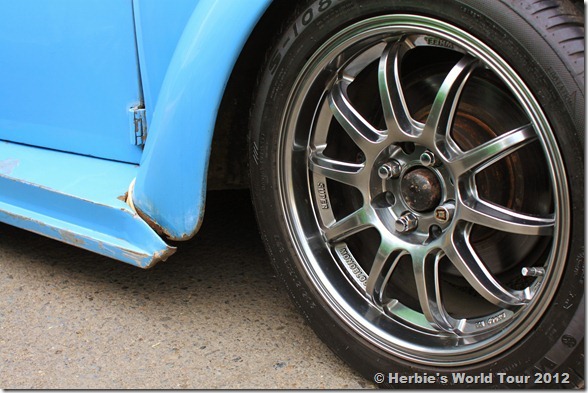
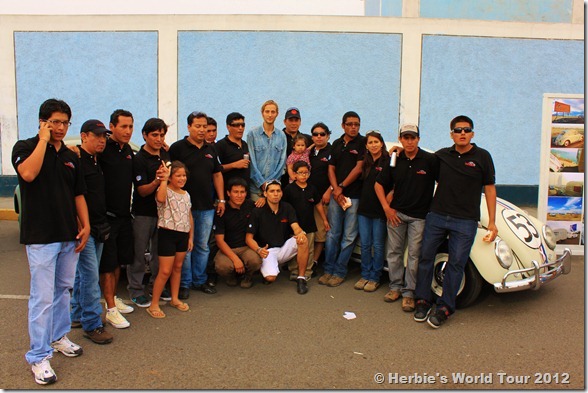
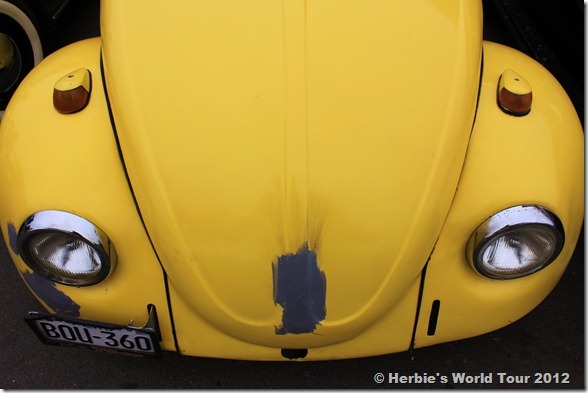
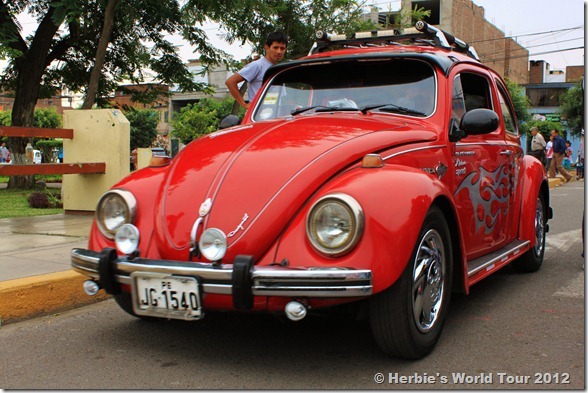
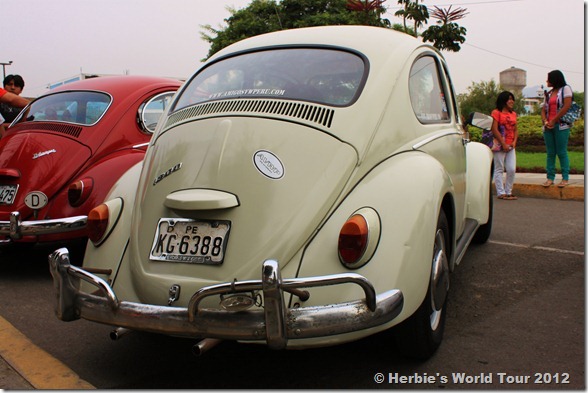
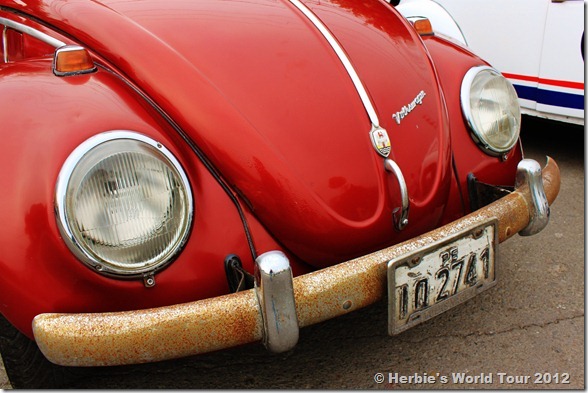
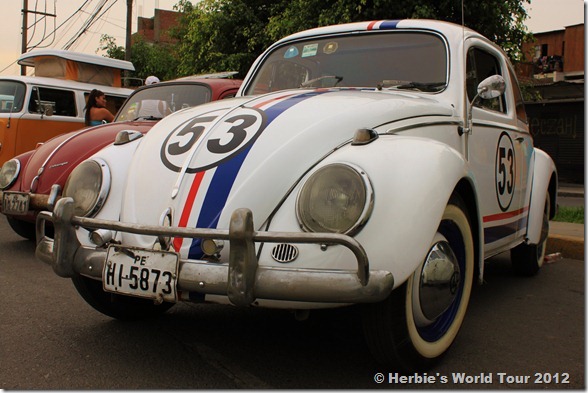
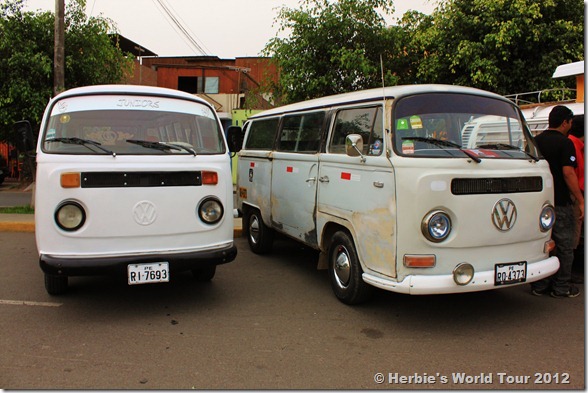
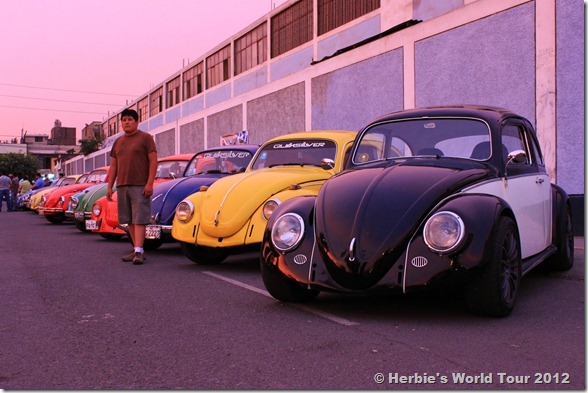
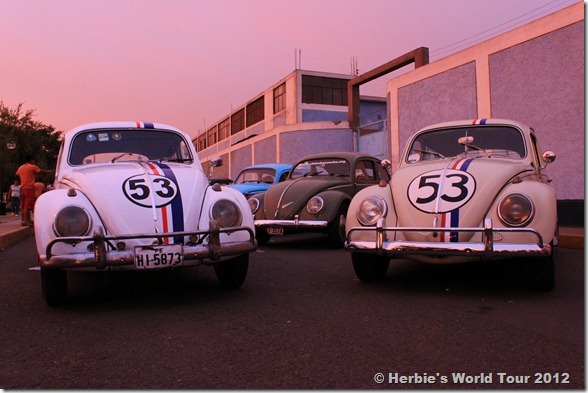
Domi was a special guest at the annual Volkswagen meeting of Santa Anita, a district of Lima. Many presents were given and countless photos taken. Many thanks to the District of Santa Anita and its superintendent Leonor Chumbimune Cajahuaringa! And thank you, Miguel Angel Chávez Luna, who invited me to this event!

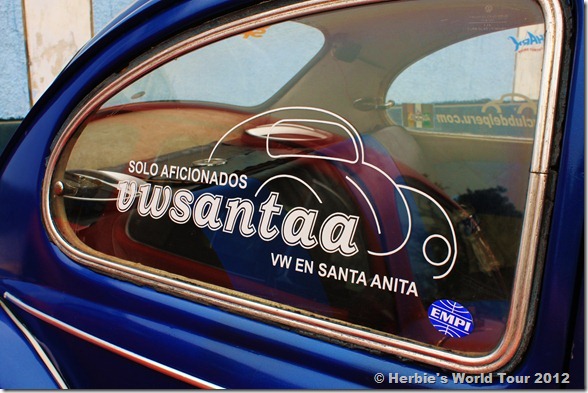
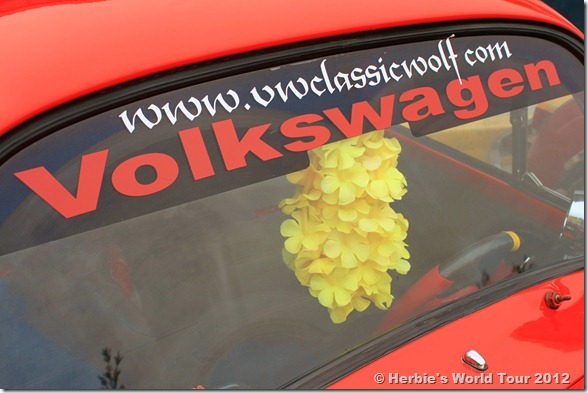
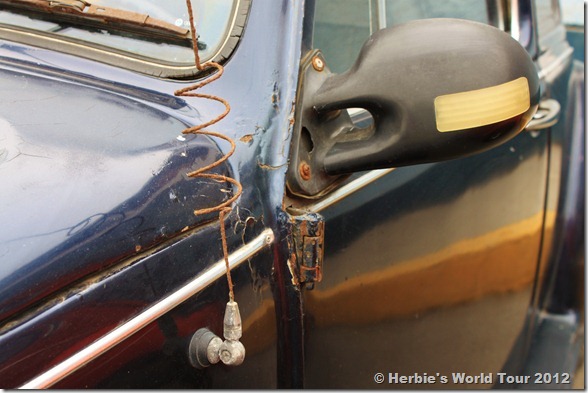
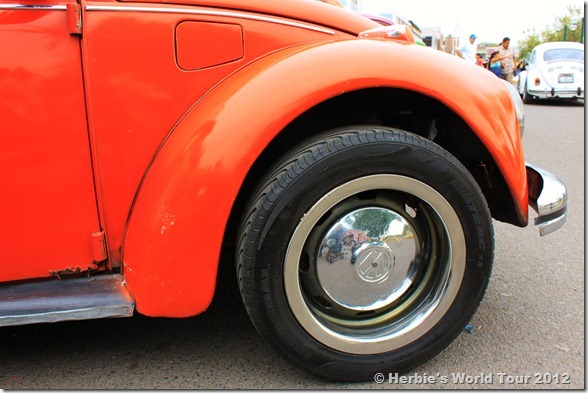
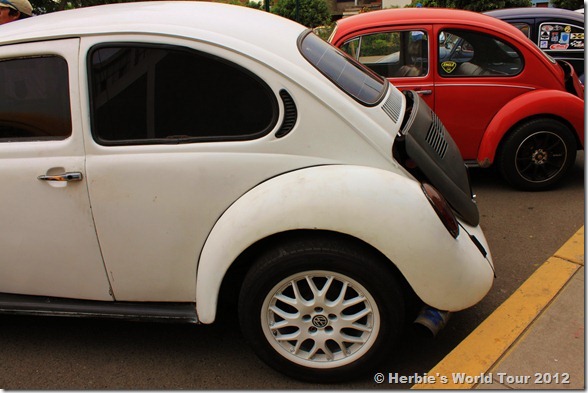
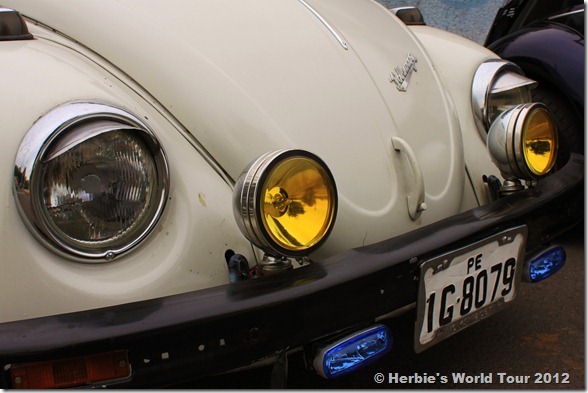
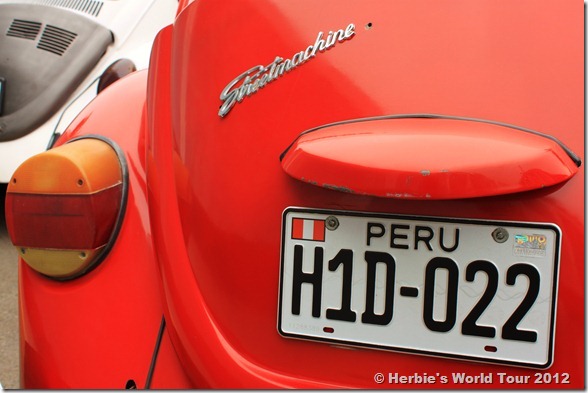
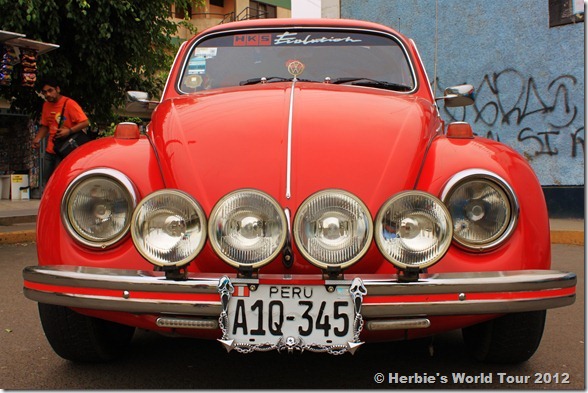
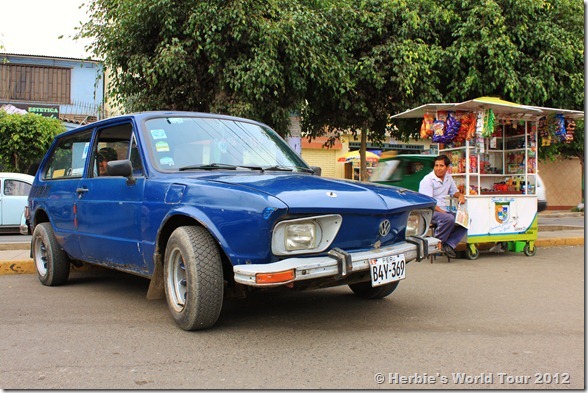
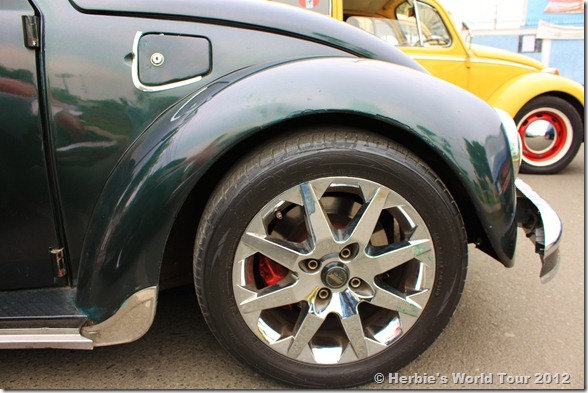
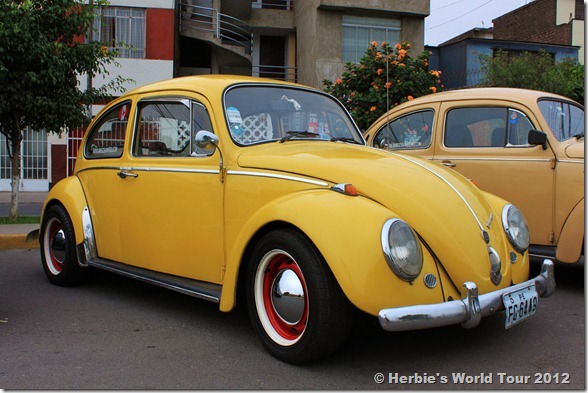
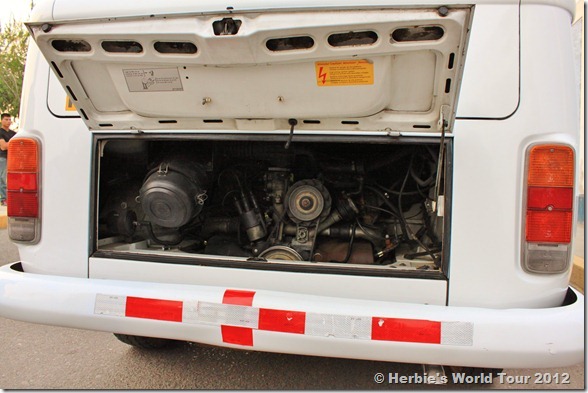
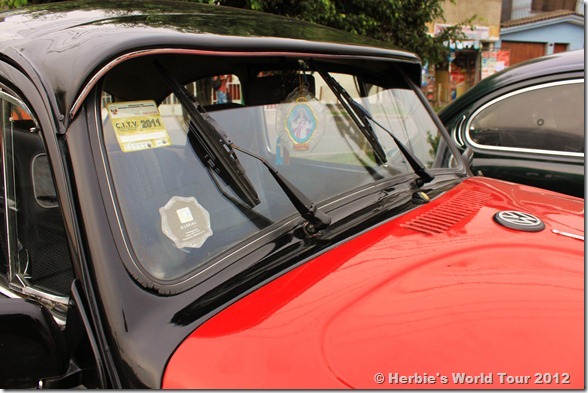
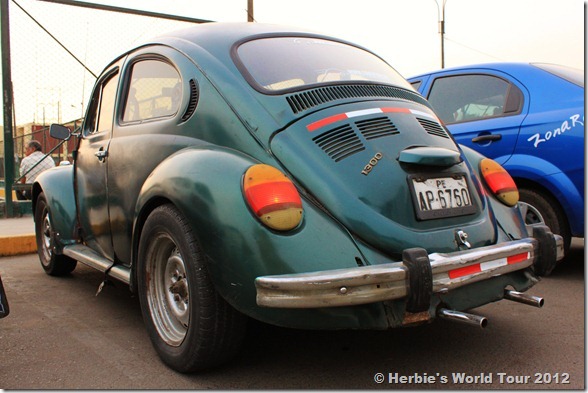
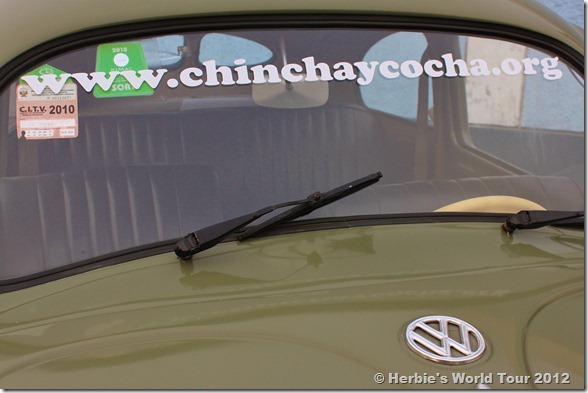
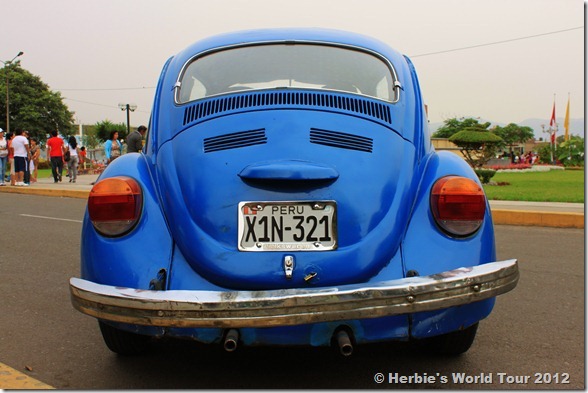
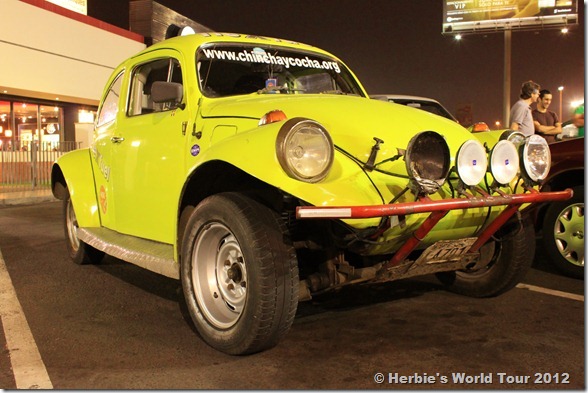
In the following you’ll find pictures of the cars from all the different clubs, just as “Amigos VW Perú”, “CAVE”, “Mundo Aircooled Club Perú” (MAC), “VW Club Chinchaycocha”, “VW Club del Perú” and “Kombis y Westfalias del Perú”. The gathering was organized by the local VW Club called “VW SANTAA” and their promotor Mario Leo Diograf.


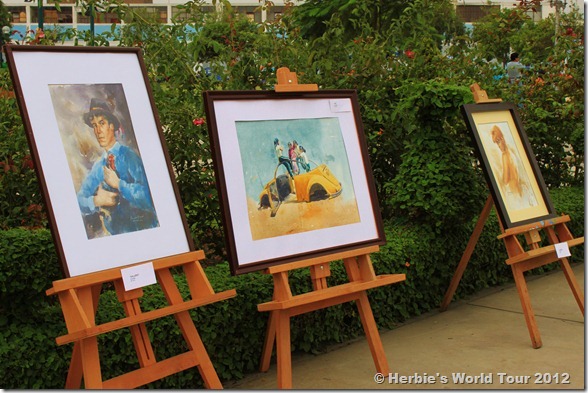
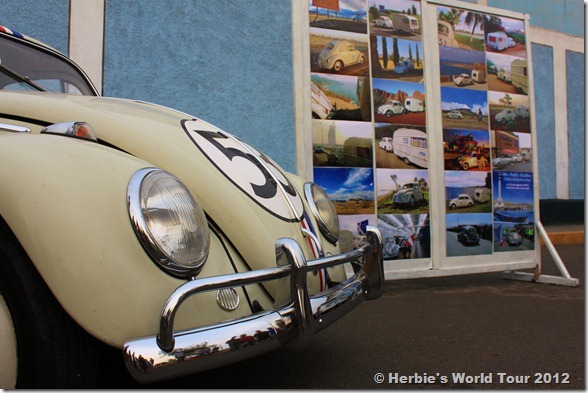
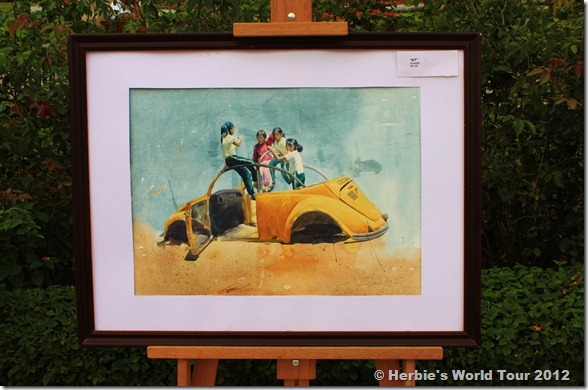
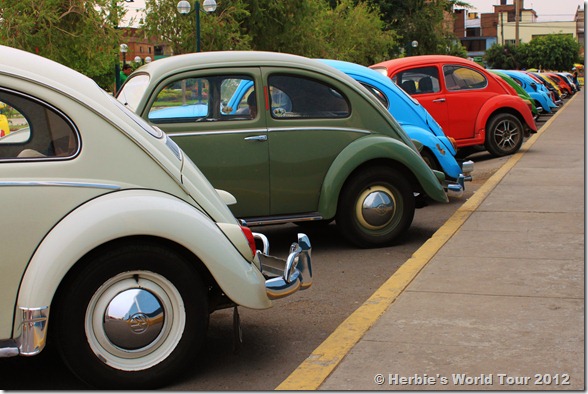


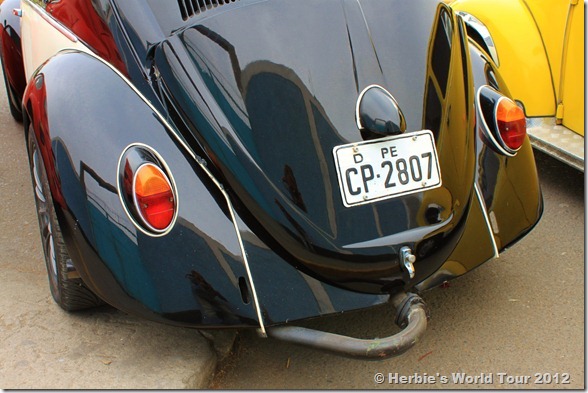
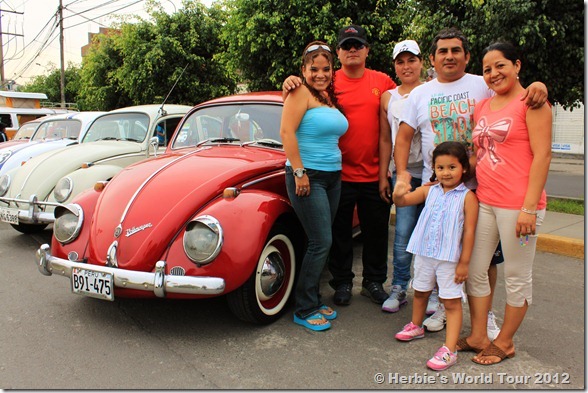
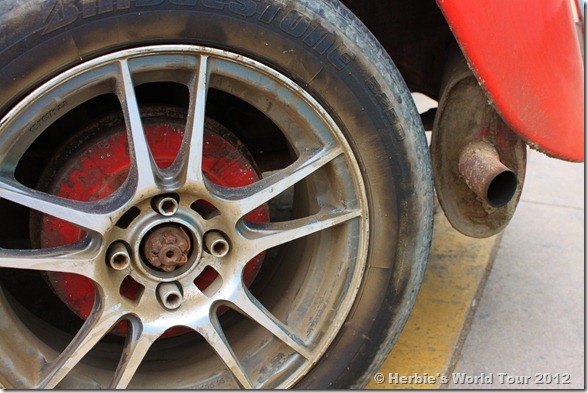


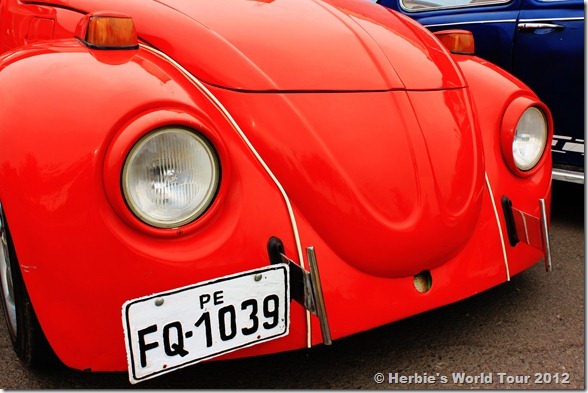
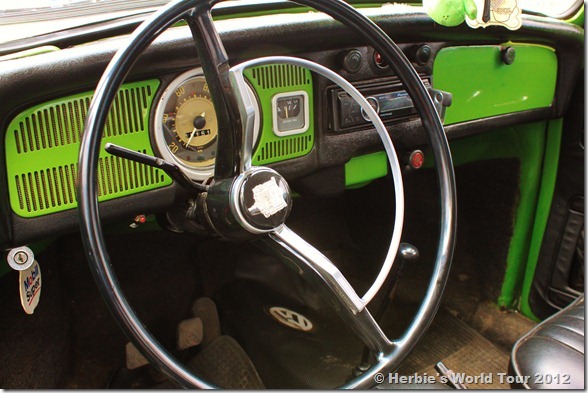
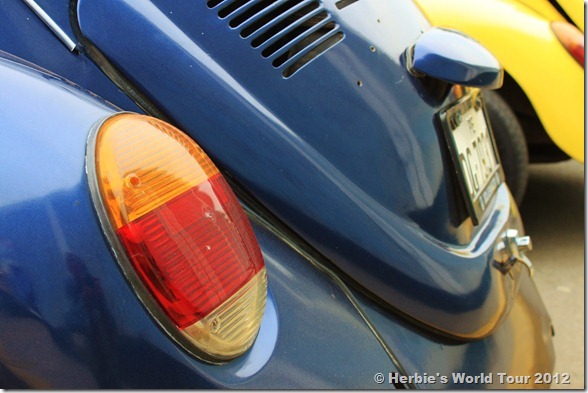
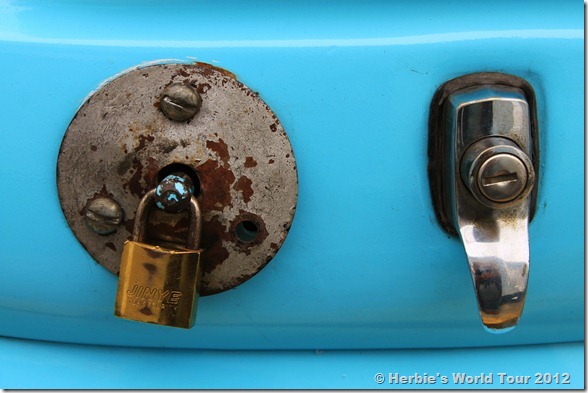
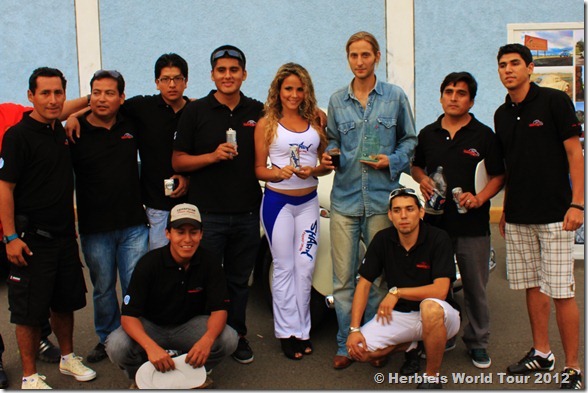
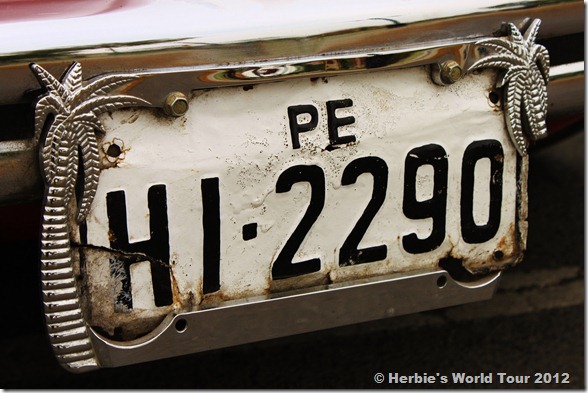












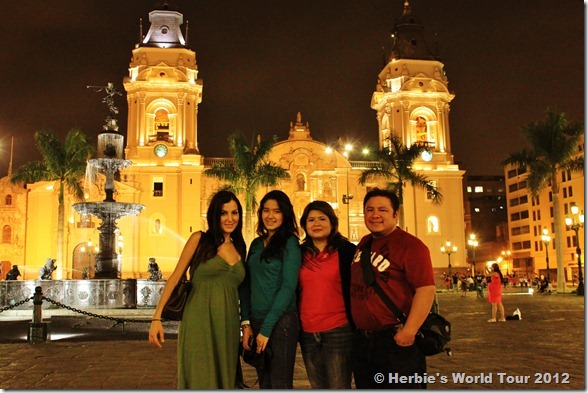
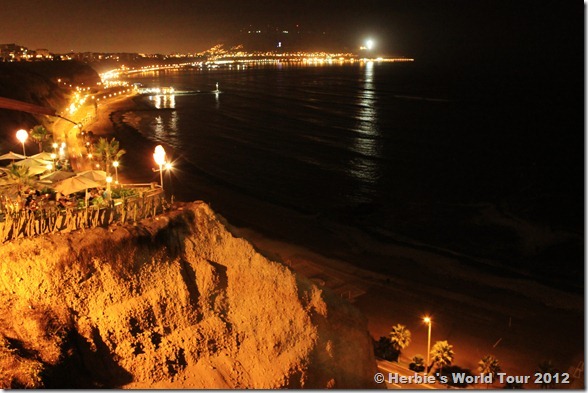
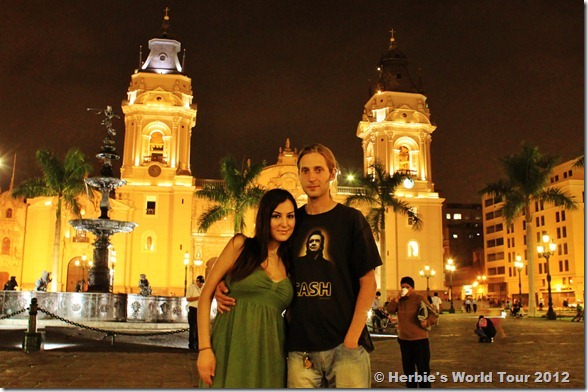
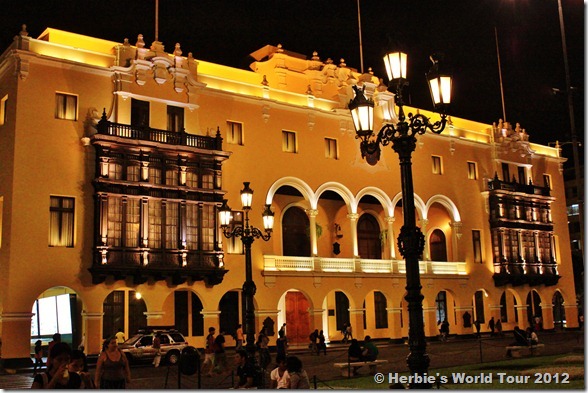
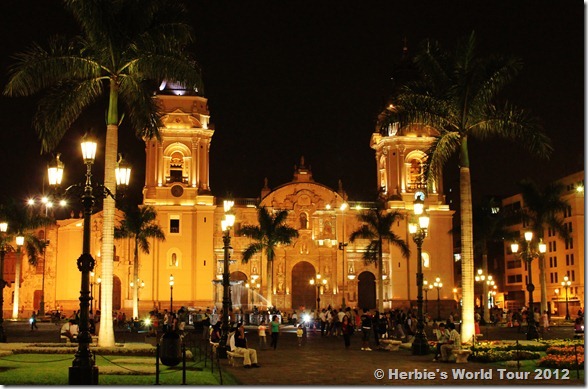
Yesterday we were a little sightseeing in the historic center of Lima. Miguel Angel and his family showed us the hot spots in town. It is so great to know these people! Today Miguel Angel’s mother celebrates her birthday. We want to say: “¡Feliz cumpleaños!”


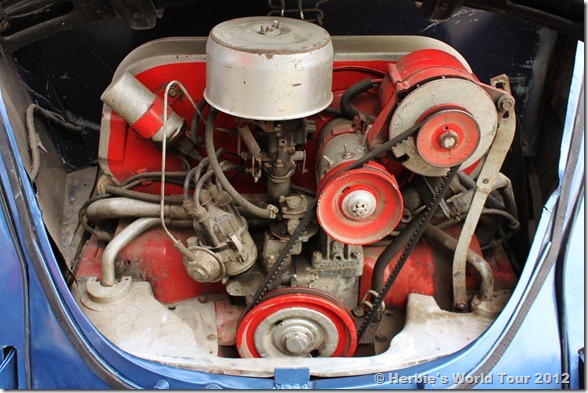
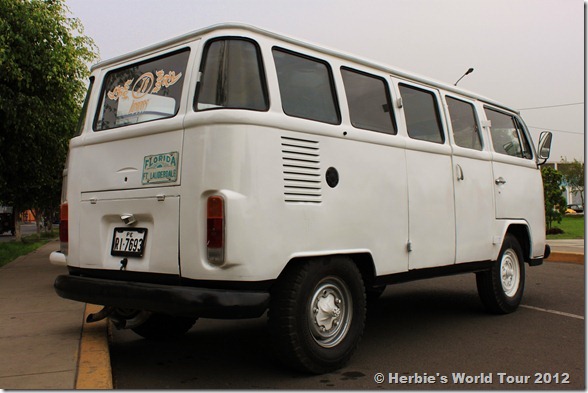
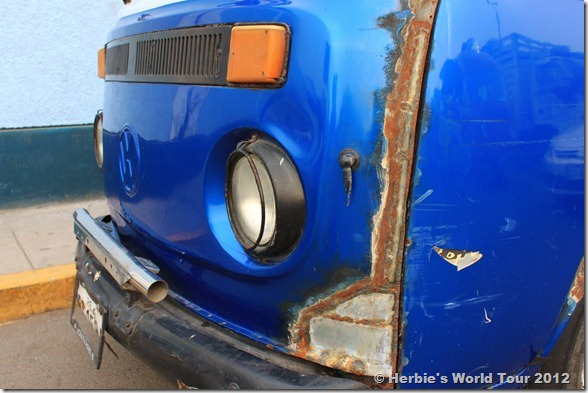
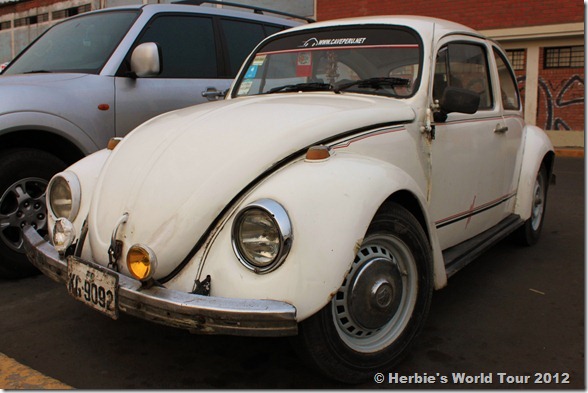
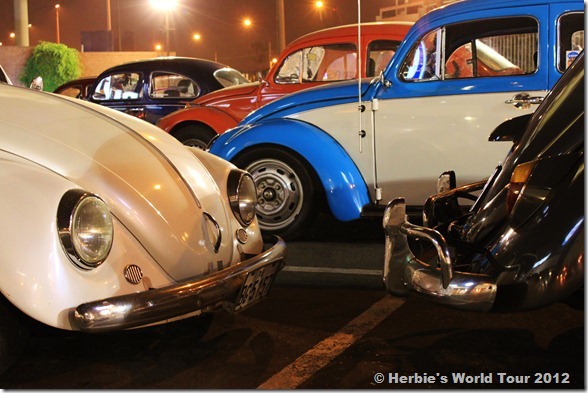
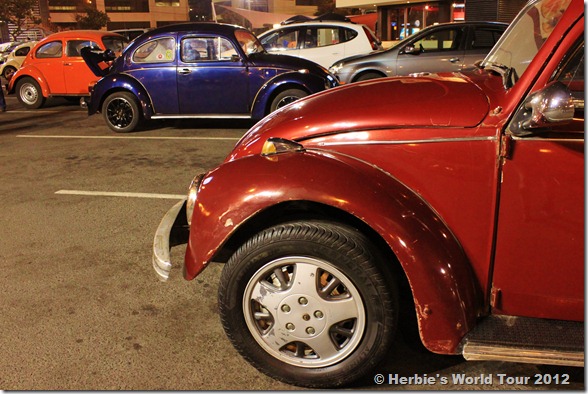
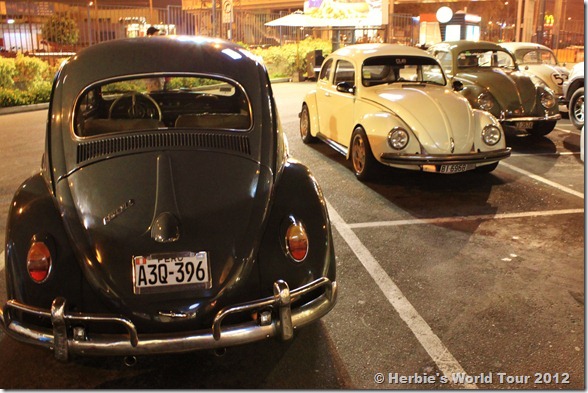
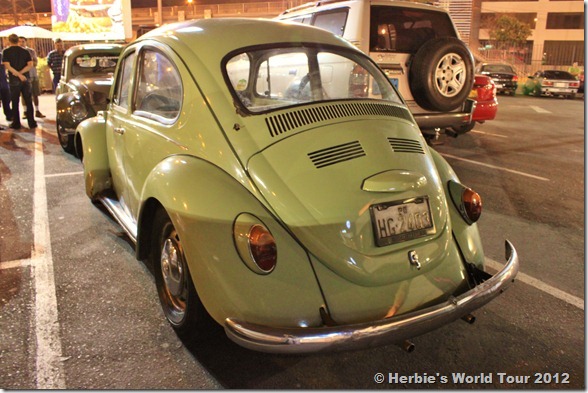
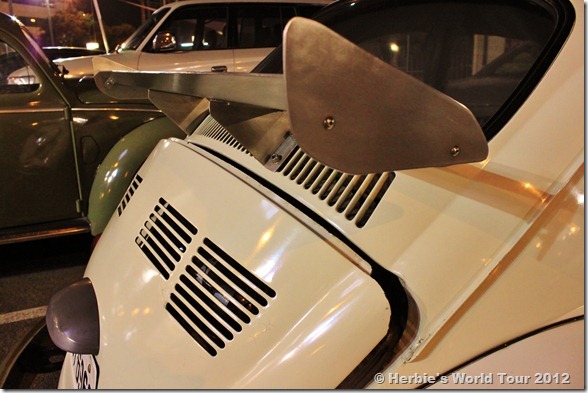
Yesterday we visited air-cooled Volkswagen enthusiasts from Lima. Miguel Angel Chávez Luna, our host here in the capital, invited us to their weekly meeting. We had a good time chatting about “Escarabajos” and other stuff. Thanks to Miguel we got know these “Volks”!





 Herbie's World Tour